Why Our Ancestors Feared the Banyan Tree in Java

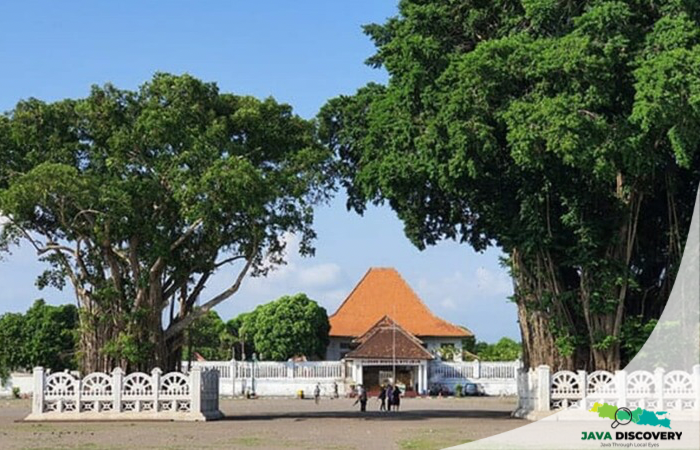
javadiscovery.com – Why Our Ancestors Feared the Banyan Tree — and What Science Later Discovered. Across Java and many parts of Indonesia, there is a tree that almost everyone recognizes instantly. Tall, wide, and often standing alone in village squares or near old crossroads, the banyan tree, locally known as beringin, has long carried an unusual reputation.
It was not simply admired. It was feared, respected, and deliberately left untouched.
For generations, people were warned not to cut it down. Stories spoke of unseen guardians, invisible inhabitants, or sudden misfortune that would follow anyone reckless enough to disturb it. To modern readers, these tales may sound like superstition. Yet when examined carefully, they reveal something far more interesting.
The Silent Giant That People Once Feared
Long before warning signs, fences, or conservation laws existed, communities already understood that some trees should not be disturbed. The banyan tree stood at the center of this understanding.
In many villages, a banyan tree marked important spaces. It shaded meeting areas, guarded water sources, or stood near ancient paths. People lowered their voices near it. Children were told not to play carelessly beneath its branches. Cutting its roots or breaking its limbs was unthinkable.
This fear was not chaotic. It was structured, repeated, and shared across regions that had never exchanged written knowledge. That consistency raises an important question: why this tree?
When Fear Became a Form of Wisdom
Traditional societies did not rely on textbooks or scientific terminology. Knowledge moved through stories, taboos, and rituals. Elders passed down simple rules that were easy to remember and difficult to challenge.
“Do not cut the banyan tree.”
“It is guarded.”
“Something bad will happen.”
From a modern perspective, these warnings sound mystical. From an ecological perspective, they were remarkably effective.
The banyan tree is a keystone species in many tropical landscapes. Its massive structure supports life above and below the ground.
Its deep and wide root systems stabilize soil, especially in areas prone to erosion. During heavy rains, these roots help prevent landslides and soil collapse. Beneath its canopy, moisture is retained longer, protecting surrounding vegetation during dry seasons.
The tree also creates a complex microclimate. Temperatures under a banyan canopy are noticeably cooler. Humidity remains stable. This environment supports birds, insects, fungi, reptiles, and microorganisms that would struggle to survive elsewhere.
Removing a banyan tree does not simply remove a plant. It quietly disrupts water systems, soil stability, and biodiversity networks that depend on it.
Learning Without Naming the Science
Long before ecology became a scientific discipline, people learned through experience. When banyan trees were damaged or removed, the consequences were not immediate, but they were memorable.
Springs dried faster. Soil washed away after rain. Shade disappeared. Certain birds and insects vanished. Crops nearby became less resilient.
Communities did not explain these patterns using data or charts. Instead, they encoded memory into stories. Over time, those stories hardened into belief.
Fear, in this sense, functioned as memory preservation.
Were These Myths Created on Purpose?
Anthropologists studying traditional societies across Indonesia have long debated whether sacred beliefs were intentionally designed as environmental protection tools or whether they emerged organically.
The answer appears to be both.
In some communities, elders consciously declared forests, springs, or large trees keramat or sacred. Doing so established social boundaries. It prevented overuse and discouraged exploitation in the absence of formal governance.
By attaching spiritual consequences to ecological damage, communities created rules that required no police, no written law, and no punishment system. Belief became governance.
In other cases, myths emerged naturally. Repeated observation of cause and effect shaped cultural memory. Over generations, explanation gave way to symbolism.
What matters is not intention, but outcome.
Sacred Sites and Biodiversity
Modern research now supports what traditional practices quietly achieved. Studies of sacred forests and protected natural sites across Asia, Africa, and South America consistently show higher biodiversity levels than surrounding areas.
These spaces often preserve old-growth trees, rare species, and stable ecosystems that would otherwise disappear under agricultural or urban pressure.
The protection is rarely perfect. Not every sacred site survives. Not every myth prevents destruction. Yet statistically, belief-based protection has proven to be surprisingly resilient.
The banyan tree, protected by fear and respect, often became an unintended conservation success.
Not Just Myth, Not Just Science
It is important not to romanticize the past. Not all traditions were environmentally friendly. Not all sacred beliefs served ecological purposes. Many practices caused harm, exclusion, or inequality.
What makes the banyan tree story compelling is the overlap between belief and environmental function.
People did not need to understand groundwater systems or soil mechanics to know that disturbing certain trees led to problems. Observation was enough. Storytelling preserved those observations long after the original causes were forgotten.
Culture, in this way, became a living archive.
The Banyan Tree as a Living Archive
Standing beneath an old banyan tree today is not just a physical experience. It is a historical one.
Above you are branches shaped by decades, sometimes centuries, of growth. Below you are roots that have stabilized land through countless rainy seasons. Around you is an ecosystem quietly shaped by a single organism.
And within the tree itself is the memory of generations who chose restraint over destruction.
Modern science now explains what ancestors protected intuitively. Healthy ecosystems depend on keystone species, stable soil structures, water retention, and biodiversity networks.
The difference is not in truth, but in language.
What We Can Learn Today
The lesson is not to return to superstition or to replace science with myth. It is to recognize that local wisdom often carried environmental intelligence, even when expressed symbolically.
When modern development dismisses traditional beliefs as ignorance, it risks discarding hard-earned ecological knowledge embedded in culture.
Ancient stories do not compete with science. They often point toward the same conclusions, using different tools.
Perhaps the real loss today is not belief, but attention.
We no longer listen carefully to landscapes. We measure them, map them, and extract from them. The banyan tree reminds us that understanding does not always require conquest.
References and Further Reading
Dudley, N., Higgins-Zogib, L., & Mansourian, S. (2009). The Links Between Protected Areas, Faiths, and Sacred Natural Sites. IUCN.
Bhagwat, S. A., et al. (2011). Sacred groves: biodiversity conservation through cultural beliefs. Biological Conservation.
Iskandar, J. (2012). Ekologi Manusia dan Pembangunan Berkelanjutan.
Tsing, A. (2015). The Mushroom at the End of the World.
Stories once protected what laws did not yet exist to guard. Perhaps the question today is not whether those myths were true, but whether we are still listening.