Why Wedi Awu Beach Is Malang’s Hidden Surfing Escape Today

On the southern edge of Malang Regency, the landscape changes slowly. The busy streets give way to plantations, villages and winding roads before the hills finally open toward the Indian Ocean.
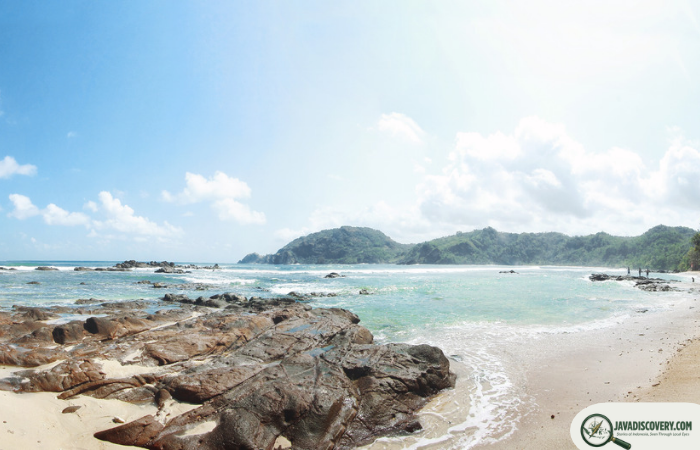
At the end of that journey lies Wedi Awu Beach, a coastal landscape in Tirtoyudo where grayish sand, green hills and powerful waves meet. It is one of the places where Malang feels distinctly different from the mountain resorts and urban attractions for which the region is better known.
Wedi Awu is also part of a wider coastal landscape known as Bowele, a name formed from Bolu-Bolu, Wedi Awu and Lenggoksono. All three lie within Purwodadi Village, Tirtoyudo District, and together they form one of the more distinctive marine tourism areas in southern Malang.
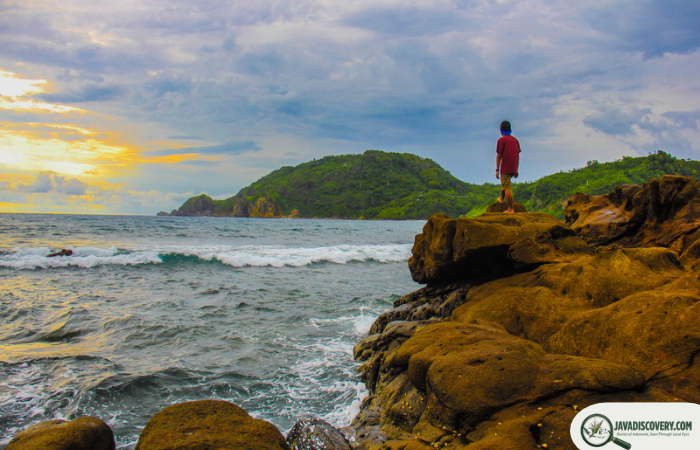
For surfers, however, Wedi Awu has a reputation of its own. Its waves have attracted local and international surfers for years, while its relatively remote setting gives the beach an atmosphere that feels far removed from the crowded destinations closer to Malang.
Where Wedi Awu Beach Lies on Malang’s Southern Coast
Wedi Awu is located in Balearjo Hamlet, Purwodadi Village, Tirtoyudo District, Malang Regency, East Java. The beach faces the Indian Ocean and sits within a rugged section of Malang’s southern coastline.
Administratively, the beach is part of the same village as Lenggoksono and Bolu-Bolu. The Malang Regency government identifies these three beaches as the principal attractions of the Bowele tourism area. :contentReference[oaicite:0]{index=0}
The geography is important to understanding Wedi Awu. The beach is not simply a broad strip of sand beside a road. It sits beyond a network of hills and rural settlements, with the sea appearing almost as a final revelation after the inland journey.
A Journey Through Hills Before the Sea
Reaching Wedi Awu is part of the experience. The main approach passes through Bululawang, Turen and Dampit before continuing toward Tirtoyudo and Purwodadi. From the Malang area, the journey can take several hours depending on traffic, road conditions and the starting point. :contentReference[oaicite:1]{index=1}
The final section becomes more dramatic. Visitors encounter bends, descents and climbs before reaching the coastal settlement. A recent account published through the Malang Regency government described the final road as containing steep descents and sharp bends, and advised visitors to make sure their vehicles are in good condition before travelling. :contentReference[oaicite:2]{index=2}
That sense of remoteness is part of Wedi Awu’s appeal. The beach does not reveal itself immediately. Instead, the road moves through a landscape of hills and villages until the sound and sight of the ocean gradually take over.
What the Name Wedi Awu Reveals About the Beach
The name Wedi Awu is commonly explained through two Javanese words: wedi, meaning sand, and awu, meaning ash. The name is generally associated with the beach’s grayish or ash-like sand.
The color gives Wedi Awu a different visual character from the bright white beaches often associated with tropical Indonesia. Here, the shoreline can appear softer and more muted, especially beneath cloudy skies or in the late afternoon.
It is a small detail, but it helps explain why the beach has developed a distinctive identity. The landscape is not built around brilliant white sand and turquoise water. Its beauty is more restrained: gray sand, deep green vegetation, blue-gray ocean and dark rocks framed by hills.
Why Surfers Know Wedi Awu
Wedi Awu’s strongest reputation comes from the sea.
The southern coast of Java faces the Indian Ocean, exposing it to powerful swells that create very different conditions from sheltered beaches elsewhere on the island. Wedi Awu has long been recognized as a surfing destination, particularly for surfers looking for more challenging waves.
Older reporting from detikTravel quoted the head of the Malang Surfing Association describing Wedi Awu as a location suitable for experienced surfers, with waves that can form point breaks and reach more than two metres under certain conditions. :contentReference[oaicite:3]{index=3}
This distinction matters. Wedi Awu should not simply be described as a universal beginner surfing beach. Ocean conditions change with swell, wind, tides and weather, and the southern Java coastline can be powerful.
The Character of the Waves
Wave height is never a permanent feature of a beach. A figure mentioned in a travel article may describe one particular set of conditions rather than what visitors should expect every day.
At Wedi Awu, the attraction lies in the combination of open-ocean exposure and the shape of the coastline. Experienced surfers have been visiting the area for years, while the surrounding Bowele beaches offer different conditions and experiences.
Government planning documents for Malang Regency specifically list surfing as a special-interest tourism activity in Tirtoyudo, alongside natural attractions such as Wedi Awu, Lenggoksono and Bolu-Bolu. :contentReference[oaicite:4]{index=4}
From Local Surfers to International Visitors
Wedi Awu’s surfing story is not a recent phenomenon. Earlier reports described the beach as a destination for professional surfers and noted visitors from Bali, Surabaya and overseas countries including Japan and several European nations.
The international connection is also reflected in tourism activities organized in the area. In 2019, Malang’s tourism authorities hosted an international student camping programme at Wedi Awu, bringing foreign students to experience the coast, visit surrounding beaches and take part in a beach-cleaning activity.
These encounters show how surfing can function as more than a sport. Along remote coastlines, it can become a bridge between local communities and visitors who might otherwise never travel this far into southern Malang.
Wedi Awu Is More Than a Surfing Beach
Although surfing is the activity most closely associated with Wedi Awu, the beach itself offers a slower experience for visitors who are not carrying a surfboard.
The broad coastal setting invites visitors to walk along the sand, watch fishing boats, photograph the hills or simply sit facing the ocean. The absence of a dense urban backdrop changes the rhythm of the visit.
For travellers accustomed to Bali’s heavily developed coastal areas, this can be one of Wedi Awu’s greatest attractions. The beach feels connected to the landscape around it rather than separated from it.
Camping Beside the Southern Sea
Camping has long been associated with Wedi Awu. Earlier tourism programmes held camping activities here, and the beach has also appeared in travel coverage as a place where visitors can spend more time beside the sea rather than making a quick daytime stop. :contentReference[oaicite:7]{index=7}
Camping changes the experience completely. During the day, the beach belongs to the movement of waves, surfers and boats. As evening arrives, the landscape becomes quieter, and the sound of the ocean becomes more dominant.
Anyone planning to camp should nevertheless check current local conditions and facilities before travelling. A remote beach should not be approached with the same expectations as a fully developed resort destination.
The Unusual Story of Night Surfing
One of the more unusual stories associated with Wedi Awu is night surfing.
Several travel reports have documented night surfing at the beach, describing it as an activity made possible by the relatively consistent character of some waves and the enthusiasm of local surfers. Wedi Awu was also used for Malang Night Surfing during the 2019 Malang Beach Festival.
But night surfing should not be interpreted as an ordinary activity available to every visitor after sunset. Ocean safety becomes considerably more complicated in darkness, and lighting, supervision, weather and sea conditions all matter.
For most travellers, watching the last light disappear over the water is a safer and more accessible way to experience the beach after a day beside the sea.
The Landscape That Makes Wedi Awu Different
Wedi Awu’s visual identity comes from the relationship between land and water.
The beach is framed by green hills and rocky formations, while the shoreline curves beneath an open southern sky. From certain viewpoints, the coastline creates the impression of a natural amphitheatre, with the ocean occupying the centre.
This setting also explains why photographs of Wedi Awu can look so different depending on the weather. Under strong sunlight, the sea becomes intensely blue. Beneath clouds, the palette becomes darker and more atmospheric, with the gray sand blending into the muted tones of the Indian Ocean.
The surrounding vegetation adds another layer. Unlike beaches where development dominates the horizon, Wedi Awu retains a strong sense of landscape continuity. Hills, village roads, vegetation and the sea remain visually connected.
That is perhaps the beach’s most compelling quality: it feels like a part of southern Malang rather than a destination artificially placed within it.
Wedi Awu and the Wider Bowele Coast
Wedi Awu becomes even more interesting when viewed as part of Bowele.
The name Bowele combines the names of Bolu-Bolu, Wedi Awu and Lenggoksono, three coastal destinations within Purwodadi Village. Each has its own character, allowing visitors to experience different sides of the same southern coastline.
Lenggoksono is associated with marine activities and provides access to other coastal attractions, while Bolu-Bolu is known for its calmer waters and snorkeling possibilities. Wedi Awu, meanwhile, has developed the strongest reputation among the three for surfing.
The result is a landscape that rewards travellers who stay longer. Instead of treating Wedi Awu as an isolated beach, visitors can understand it as one part of a broader coastal ecosystem involving villages, fishing communities, hills, boats and several beaches.
What Travelers Should Know Before Visiting Wedi Awu
Wedi Awu is more remote than many of Malang’s better-known tourist beaches. That is precisely why preparation matters.
First, allow enough time for the journey. The route from Malang passes through inland areas before reaching the southern coast, and the final approach includes winding sections. Recent local reporting specifically recommends checking vehicle condition before making the trip.
Second, do not underestimate the ocean. The Indian Ocean can change quickly, and the fact that a beach is visually calm does not necessarily mean the water is safe for swimming. Visitors unfamiliar with local conditions should follow advice from lifeguards, local residents or beach operators.
For surfers, checking the forecast and swell conditions before travelling is essential. Wedi Awu’s reputation is based partly on the strength of its waves, which is exactly what makes ocean awareness so important.
It is also sensible to carry sufficient cash, drinking water and basic personal supplies. Facilities in remote coastal destinations can be more limited than in central Malang, and current conditions can change over time.
Most importantly, visitors should treat the beach as a living coastal environment. Take rubbish away when possible, avoid damaging vegetation or marine life, and respect fishing activities and local community spaces.
The Quiet Side of Malang’s Southern Coast
Malang is often introduced to international travellers through Mount Bromo, Batu’s mountain attractions, waterfalls and the heritage streets of Malang city. Yet the southern coastline tells another story.
Here, the landscape is shaped not by volcanic peaks alone but by the Indian Ocean. Roads climb and descend through hills before arriving at beaches where fishing boats, surfers and village life exist beside a powerful natural environment.
Wedi Awu is one of the clearest examples of that contrast.
It is easy to call the beach a “hidden paradise,” as many travel articles have done. But the phrase becomes less useful as more visitors discover the southern coast. Wedi Awu is no longer unknown. Surfers have known it for years, and government tourism programmes increasingly recognize the wider Bowele area as an important coastal destination.
What remains special is not complete isolation, but a sense of distance from the heavily developed tourist centres of Java. The road is part of the story. The hills are part of the story. The gray sand, the fishing boats and the sound of waves breaking against the shore are all part of it.
At Wedi Awu, the journey south ends not with a grand resort or a carefully constructed attraction, but with the ocean itself. For surfers, that ocean is a challenge. For other travellers, it is a reminder that some of Malang’s most memorable landscapes are still found where the road becomes quieter and the horizon becomes wide.
Writer: Sari Mahendra