Beyond the Theme Parks The Untold Story of Batus Economy

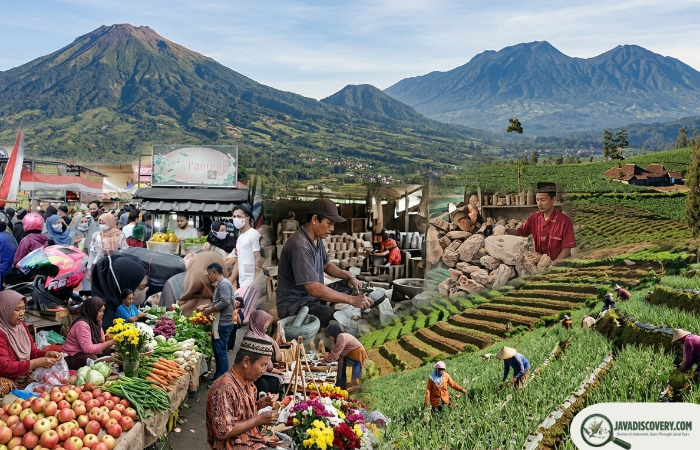
Java Discovery – High in the cool mist of the Arek highlands, Kota Batu was once known throughout East Java as a serene agricultural refuge. Terraced orchards yielded bright green apples, and family plots produced fragrant vegetables nurtured by rich volcanic soil and mountain springs. Over the past two decades, however, this quiet highland valley underwent a rapid and dramatic transition, evolving into a high-density entertainment hub dominated by massive theme parks, luxury resorts, and commercial attractions.
While this rapid commercial evolution turned Batu into one of East Java’s most prominent tourism engines, it also fundamentally altered the local economy, physical landscape, and social fabric of the valley. Beneath the colorful neon lights, crowded food markets, and bustling holiday traffic lies a complex story of shifting land ownership, ecological pressure, and community adaptation. As annual tourist arrivals continue to swell, the city faces a critical turning point in balancing rapid commercial expansion with environmental sustainability and local well-being.
The Shift from Mountain Agriculture to Commercial Tourism
The economic transformation of Batu accelerated significantly in the early 2000s following its administrative separation from Malang Regency. Seeking a distinct economic identity to stand apart from neighboring urban centers, local policymakers shifted municipal priorities toward large-scale recreation and modern commercial hospitality. Within a decade, prime agricultural land, long held by generations of highland farming families, began giving way to sprawling parking plazas, concrete attractions, and resort complexes.
This rapid shift created immediate economic opportunities across the valley, generating substantial municipal tax revenue and providing service-sector employment for younger residents. However, it also initiated a sharp rise in regional land values. Many smallholder farmers, facing rising costs and changing economic incentives, experienced intense financial pressure to sell their inherited plots to real estate developers. This trend led to a steady decline in traditional apple orchards—a crop historically symbolic of Batu’s cultural identity and ecological heritage.
The decline of agriculture in favor of tourism has reconfigured the local labor market. Where youth once learned specialized horticultural practices suited to high-altitude farming, many now work in seasonal service roles within the hospitality industry. While these roles provide immediate income, they often lack the long-term stability and security that agrarian self-reliance historically provided to highland households.
The Hidden Environmental and Social Costs
Water Resource Pressure and Agricultural Land Loss
The concentration of large recreational centers, artificial water parks, and high-capacity resort hotels has placed unprecedented demand on Batu’s fragile natural water systems. Deep commercial wells and heavy daily consumption have reduced the flow of natural mountain springs, altering natural water tables that local communities have relied on for generations for domestic use and agricultural irrigation.
Farmers operating in rural hamlets downstream frequently report reduced water flow during peak dry months, forcing them to alter cropping cycles or invest in costly pumping infrastructure. Furthermore, replacing permeable agricultural soil and natural vegetation with paved surfaces, concrete parking lots, and artificial structures significantly reduces natural rainwater absorption. During the annual monsoon season, rapid surface runoff from mountain developments increasingly contributes to localized soil erosion and flooding in lower valley basins, demonstrating the broad ecological footprint of highland urbanization.
Traffic Congestion and Seasonal Economic Fluctuation
Batu’s primary transport arteries were originally designed for modest mountain traffic and rural agricultural transport. During weekends, national holiday periods, and school vacations, thousands of private automobiles and tourist buses flood these narrow mountain corridors. Severe gridlock stretches for kilometers along major access roads, disrupting daily transit for local residents, emergency services, and agricultural suppliers.
In addition to physical infrastructure strain, the local economy struggles with deep seasonality. While major commercial operators maintain financial reserves to endure quiet mid-week periods and low-season months, smaller street vendors, local drivers, and village warungs experience volatile income swings. Furthermore, the rising cost of living—driven by tourist-oriented retail pricing and real estate speculation—creates ongoing financial pressure for non-tourism workers across the highland basin.
Community Adaptation and Sustainable Horizons
In response to these growing commercial and environmental pressures, local communities, agricultural collectives, and grass-roots leaders are pioneering alternative economic models. In rural hamlets surrounding the dense commercial core, village-owned enterprises (BUMDes) are actively investing in community-based eco-tourism initiatives that honor the valley’s agrarian roots.
These initiatives emphasize organic farming tours, heritage culinary experiences, and watershed conservation rather than high-density infrastructure development. By allowing visitors to engage directly with local farmers and experience traditional highland life, these community enterprises retain economic value directly within the neighborhood while preserving remaining agricultural lands.
At the same time, regional urban planners, academic researchers, and environmental advocates continue to advocate for stricter zoning laws and ecological protection zones to preserve remaining green spaces and spring catchments. By recalibrating policy focus toward sustainable land management, fair resource distribution, and community empowerment, Batu seeks to protect its unique highland identity while securing a resilient economic future for all its residents.
Writer: Sari Mahendra