Bird Sanctuary Islands of Banten Migratory Stopovers Java Tip

javadiscovery.com – Salty equatorial winds sweep across the turquoise waves of the Sunda Strait, where the northwestern coast of Banten province meets the open ocean. Just offshore from the historic port city of Serang, small coral islets and mangrove-ringed archipelagos rise above shallow, emerald waters. Among these isolated sanctuaries, Pulau Dua—historically known as *Cagar Alam Pulau Dua* or Bird Island—stands as one of Southeast Asia’s most vital avian crossroads. Every year between August and April, thousands of migratory waterbirds braving the grueling East Asian-Australasian Flyway descend upon these sheltered islands. Flying thousands of kilometers from the freezing tundra of Siberia, China, and North America, these weary travelers find safe haven, rich foraging grounds, and dense nesting habitats along Java’s western tip.
The Geography of a Flyway Sanctuary
The strategic positioning of Banten’s offshore islets creates a natural ecological magnet for migratory and resident bird populations. Situated along narrow maritime corridors between Sumatra and Java, these islands sit directly beneath global avian migration highways:
- The East Asian-Australasian Flyway: Millions of shorebirds, waders, and waterfowl migrate south along this corridor annually to escape harsh northern winters, using Java’s northern coast as an indispensable refuel stop before continuing toward Australia and New Zealand.
- Mangrove and Mudflat Dynamics: Over decades, dynamic coastal siltation connected the former island of Pulau Dua to the main Banten coastline. Its unique environment features a mosaic of dense mangrove swamps, coastal lagoons, mudflats, and dry tropical woodland that supply abundant food sources like small fish, mudskippers, crabs, and aquatic larvae.
- Sheltered Nesting Canopies: Dense stands of native mangrove species, including *Avicennia*, *Rhizophora*, and *Excoecaria agallocha*, offer protective, predator-free canopy nesting platforms safe from coastal waves and land-based carnivores.
The Avian Travelers: Species of the Banten Islands
During peak migration months, the quiet mangrove canopies and tidal mudflats of Banten transform into a bustling, high-density avian metropolis hosting over sixty species of resident and migratory waterbirds:
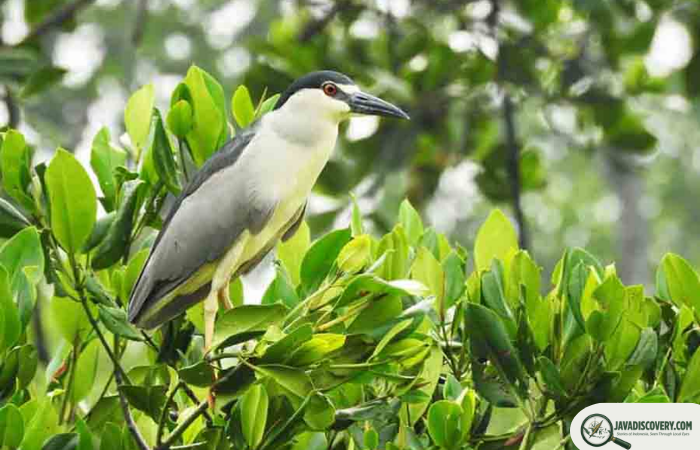
- Herons, Egrets, and Ibises: Massive colonies of grey herons (*Ardea cinerea*), purple herons, and little egrets blanket the mangrove crowns, while striking black-headed ibises (*Threskiornis melanocephalus*) probe deep into low-tide mudflats with curved beaks.
- Rare and Endangered Migrants: The islands serve as a critical refuge for globally threatened species, including the endangered milky stork (*Mycteria cinerea*) and the elusive Asian openbill (*Anastomus oscitans*), which feed heavily on freshwater snails in nearby coastal wetlands.
- Lesser Frigatebirds and Cormorants: High above the canopy, soaring packs of lesser frigatebirds (*Fregata ariel*) ride thermal currents over the Sunda Strait, diving down to snatch surface fish or steal catches from returning cormorants.
Ecological Challenges and Coastal Conservation
Despite its protected status as one of Indonesia’s oldest nature reserves—first established during the Dutch colonial era in 1937—the bird sanctuary islands of Banten face expanding modern environmental pressures:
- Siltation and Habitat Change: Heavy sediment deposition from nearby rivers permanently attached Pulau Dua to the mainland, allowing terrestrial predators like wild dogs and monitor lizards easier access to ground-nesting bird sites.
- Coastal Aquaculture and Urbanization: The conversion of surrounding buffer zones into commercial shrimp and fish ponds (*tambak*) reduces foraging space, while industrial runoff along the Banten coast threatens delicate marine food chains.
- Community Guardianship: In response, local forestry officials (*BKSDA*), ornithologists, and coastal village groups actively patrol sanctuary borders, monitor seasonal bird counts, and restore degraded mangrove habitats to maintain safe nesting conditions for returning flocks.
Sustaining Java’s Coastal Haven
The bird sanctuary islands of Banten stand as enduring testaments to the interconnectedness of global ecosystems. A small grove of mangroves off Java’s tip provides the crucial lifeline that keeps species alive half a world away.
By safeguarding these coastal islands, conservationists and local stewards ensure that the majestic seasonal arrivals of international migratory birds will continue to fill the skies of western Java for generations to come.