Cloud Forests of Mount Ciremai Sundanese Mountain Lore Ecology

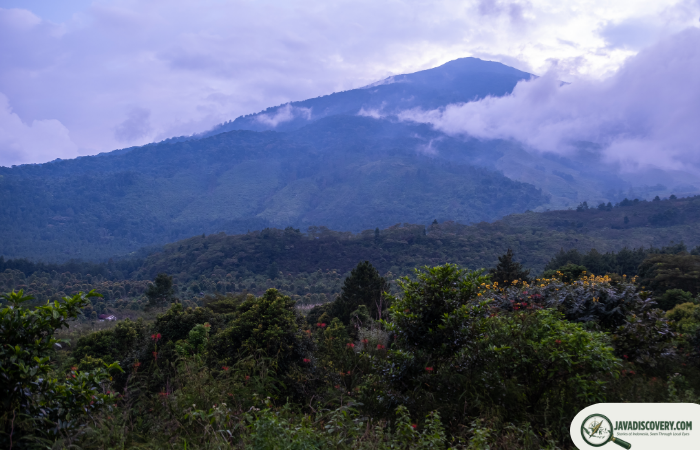
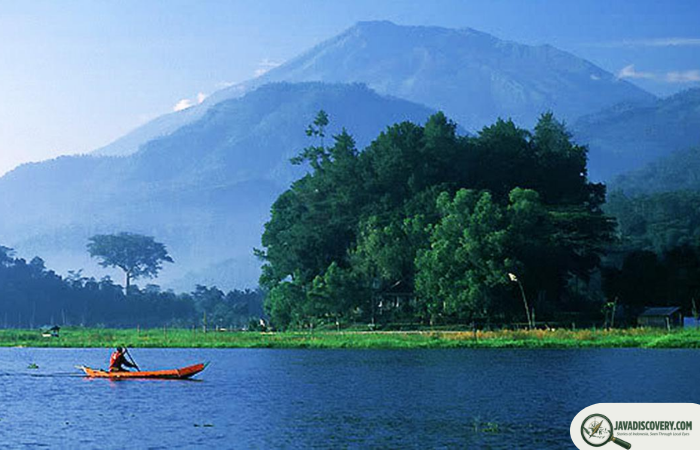
javadiscovery.com – A sharp, wet chill settles over the forest canopy at two thousand meters above sea level, where the muggy heat of West Java’s northern coastal plains dissolves into absolute mountain cold. Towering above the regencies of Kuningan and Majalengka, Mount Ciremai stands as the solitary titan of the region, its peak reaching 3,078 meters to form the highest point in West Java. As morning sunlight breaks over the distant Java Sea, it hits a thick wall of white vapor that clings perpetually to Ciremai’s upper slopes. This is the realm of the high-altitude cloud forest, a moss-draped wilderness where moisture-laden winds from the coast condense against volcanic ridges. Within this atmospheric enclave, ancient evolutionary lineages of flora and fauna thrive alongside deep-seated Sundanese spiritual traditions, creating a landscape where ecological wonder and ancestral mythology are inextricably entwined.
The Ecological Mechanics of the High-Altitude Cloud Realm
Mount Ciremai is a classic stratovolcano whose isolated, conical geometry dictates its surrounding climate. Unlike mountain ranges where ridges buffer one another, Ciremai rises sharply from low alluvial plains. This geographic isolation triggers a pronounced Orographic Lift effect: humid air masses blowing inland from the Java Sea are forced rapidly upward along Ciremai’s northern and eastern flanks. As the air ascends, it cools rapidly, condensing into a persistent, heavy fog bank that blankets the forest between 1,500 and 2,800 meters almost daily.
This perpetual mist creates a specialized, high-humidity microclimate distinct from lower tropical rainforest zones. Here, evapotranspiration is low, and moisture is harvested directly from passing clouds through fog drip—a process where trees extract airborne water droplets on their leaves, dripping continuously into the forest floor even during dry spells. The soil, rich in volcanic ash and decomposing organic detritus, acts as a sponge, regulating water flow to hundreds of lowland springs that sustain surrounding agricultural communities.
Navigating the upper trails of Apuy in Majalengka or Palutungan in Kuningan reveals a dramatic shift in forest structure. The tall, straight dipterocarp trees of the lower valleys give way to gnarled, dwarfed oaks (Lithocarpus) and wild laurels (Litsea). Their limbs are encrusted with thick carpets of emerald Sphagnum moss, liverworts, and delicate climbing ferns. The air carries a clean, sharp scent of pine resin, damp stone, and crushed vegetation, punctured only by the rhythmic drips of water falling from the canopy onto giant tree fern fronds below.
A Hotspot of Endemic Biodiversity
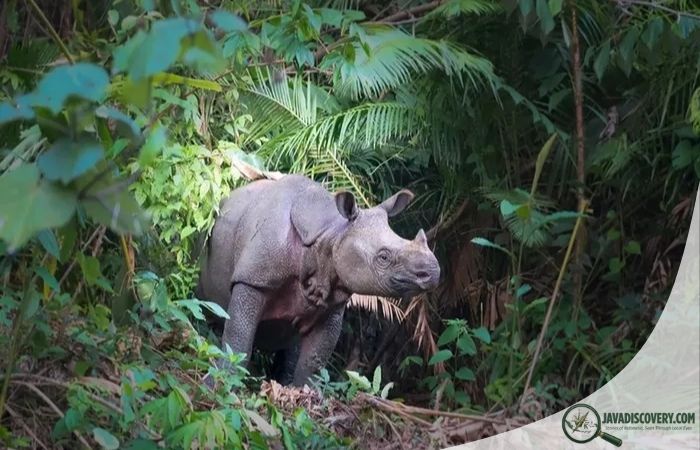
Because Mount Ciremai acts as an ecological island surrounded by heavily developed lowland landscapes, its cloud forests serve as a vital refuge for endemic Javanese wildlife. The vertical layering of the ecosystem creates micro-habitats that support species found nowhere else on the globe.
Suspended high in the moss-draped branches, family groups of the endangered Javan gibbon (Hylobates moloch)—known locally as the Owa Jawa—move silently through the mist. Their melodic, echoing territorial calls travel across deep ravines early in the morning, serving as an acoustic barometer of the forest’s health. Alongside the gibbon, the elusive Javan surili (Presbytis comata), with its distinctive crest of dark fur, feeds on young, mineral-rich cloud forest leaves.
The botanical richness of Ciremai’s upper cloud belt is equally extraordinary. Epiphytic orchids cling to the damp bark of ancient trees, including rare species of Dendrobium and Coelogyne whose delicate, pale blooms open in response to temperature drops within the mist. Along the floor of the sub-alpine zones, pitcher plants (Nepenthes gymnamphora) dangle beneath dwarf rhododendrons, trapping insects in their fluid-filled digestives to supplement nutrients lacking in acidic mountain soils.
Deep within the quietest corridors of Mount Ciremai National Park, apex predators still hold sway. The critically endangered Javan leopard (Panthera pardus melas) navigates the rocky ridges and thick undergrowth, tracking prey like the Javan muntjac deer (Muntiacus muntjak). Camera traps monitored by park rangers continue to record the presence of both the spotted and melanistic (black) variants of the leopard, proving that Ciremai’s high cloud forests remain intact enough to support top-tier predators.
Sundanese Mountain Lore: The Sacred Topography of Sunan Gunung Jati
To the Sundanese communities residing along Ciremai’s base, the mountain is not merely a geological formation or a ecological park; it is a sacred cosmic pillar (*Gunung Keramat*) imbued with spiritual power (*sakti*). For centuries, Ciremai has served as a sanctuary for ascetics, hermits, and spiritual seekers pursuing *Tapa Brata*—intense meditation aimed at purifying the mind and aligning human life with the divine order.
Central to Ciremai’s oral history is its connection to the *Wali Sanga*, the nine Islamic saints who spread Islam across Java during the 15th and 16th centuries. Local tradition holds that Sunan Gunung Jati, the revered saint of Cirebon, held high-level spiritual councils with other saints inside the cloud-shrouded caves near the summit. Sites along the Palutungan and Linggarjati ascent routes bear names linked to these legends, such as *Pos Ciganeca* and *Gua Pengasingan*, where pilgrims stop to pray, burn aromatic benzoin resin (*menyan*), and pay respects to unseen guardians (*danyang*).
Old Sundanese cosmology views Ciremai as the home of *Nyi Lingga Ratu*, a legendary ancestral matriarch associated with fertility, mountain waters, and forest protection. Traditional rules (*pamali*) strictly govern human behavior inside the cloud forest. Hikers and foragers are admonished never to speak loudly, use profanity, cut living trees needlessly, or relieve themselves near mountain springs. Breaking these taboos, according to local belief, invites sudden, impenetrable mists (*halimun*) sent by mountain spirits to disorient travelers and lead them astray.
Pak Otong, a veteran guide from Cigugur who has climbed Ciremai for over thirty years, pauses beside an ancient, moss-covered stone marker along the trail. “The mountain tests your heart before it tests your legs,” he says softly, adjusting his woven bamboo hat. “When the heavy cloud comes down and you cannot see your own boots, that is not just weather. That is the mountain telling you to slow down, be quiet, and listen.”
The Sacred Waterways: Geothermal Springs and Lowland Life
The cloud forest above acts as an enormous water collector that feeds the communities below. Rain captured by the mossy canopy trickles down through volcanic basalt, emerging at lower elevations as crystal-clear, mineral-rich springs that sustain human settlements and agricultural life in Kuningan and Majalengka.
Among the most famous of these hydrological features is *Cibulan*, a sacred spring site at the foot of Ciremai where cool, subterranean water fills stone basins teeming with *Ikan Dewa* (God’s Fish) or Tor douronensis. Local villagers consider these large, dark-scaled river fish to be sacred beings—the transformed soldiers of Prabu Siliwangi, the legendary king of the ancient Sunda Kingdom of Pajajaran. The fish are protected by strict cultural taboos; they are never caught or eaten, and their presence in the spring water is viewed as a sign of continued ecological and spiritual harmony.
Higher up the flanks, geothermal heat interacting with groundwater produces natural hot springs like those at Sangkanhurip. Rich in sulfur and natural minerals, these thermal waters attract visitors seeking relief from ailments, linking the deep, volcanic heat beneath Ciremai to the daily health and well-being of the region’s inhabitants.
Conservation Challenges and Community Guardianship
Despite its protected status as a National Park established in 2004, the cloud forest ecosystem of Mount Ciremai faces persistent pressures from human expansion along its perimeter. Agricultural encroachers clearing land for vegetable terraces on steep lower slopes threaten to erode the buffer zone, while seasonal dry spells increase the risk of forest fires near the summit crater.
In response, a hybrid model of conservation has emerged—one that marries formal environmental management with indigenous Sundanese wisdom. Local volunteer groups, known as *Masyarakat Mitra Polhut* (Forest Police Partner Communities) and indigenous collectives from Cigugur, actively patrol mountain access points, enforce zero-waste trekking protocols, and lead reforestation efforts using native trees like *Puspa* (Schima wallichii) and *Saninten* (Castanopsis argentea).
These community guardians recognize that protecting Ciremai’s cloud forest is not merely about preserving biodiversity for its own sake, but about safeguarding the water, weather stability, and cultural identity of West Java. By respecting the ancient taboos and maintaining the physical integrity of the high-altitude forest, they ensure that the sacred mountain continues to gather the clouds and nourish the lands below.
The Enduring Crown of West Java
As dusk approaches on Mount Ciremai, the temperature drops rapidly. The cloud layer that hovered midway up the peak rises, enveloping the entire summit in a quiet, white blanket. Wind rustles through gnarled, moss-draped branches, carrying the faint, sweet scent of mountain blossoms and wet earth.
Mount Ciremai remains a sanctuary where the physical realities of high-altitude tropical biology meet the living heart of Sundanese lore. High above the crowded highways and sprawling towns of the lowlands, its ancient cloud forests stand as a timeless testament to nature’s resilience—a place where clouds are born, spirits reside, and the wild heart of Java continues to beat.