The Peatland Guardians of Rawa Pening Central Java Ecology

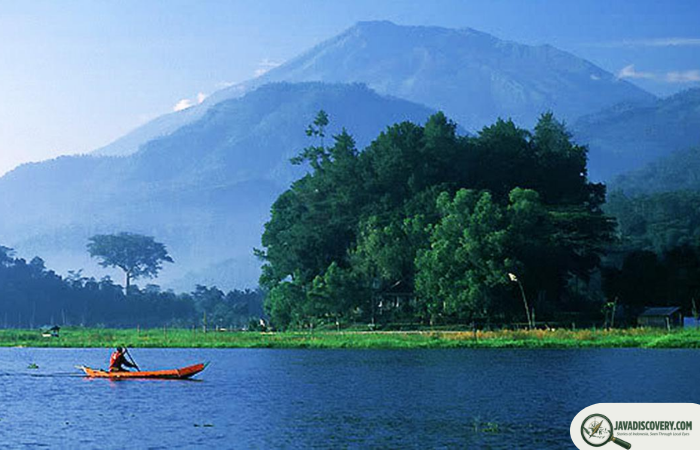
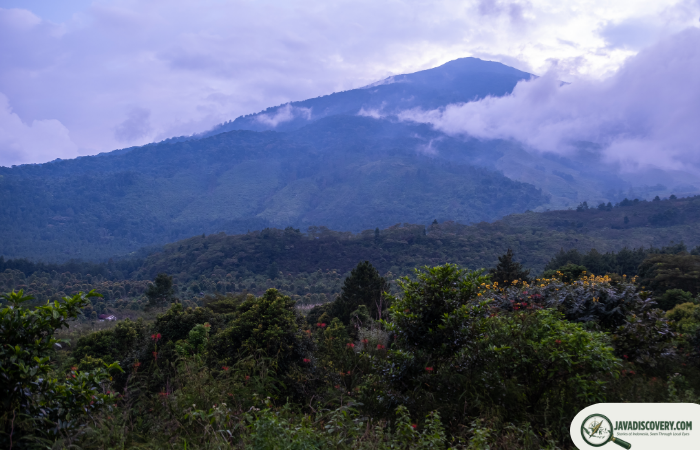
javadiscovery.com – Thick grey mist hangs heavy over the water at five in the morning, drifting across a vast freshwater expanse enclosed by the sharp blue ridges of Mount Merbabu, Mount Telomoyo, and Mount Ungaran. The air in Ambarawa, Central Java, carries a cool, damp chill scented with decaying vegetation, wet earth, and the faint metallic tang of volcanic runoff. A long wooden canoe slices through dark water, its narrow bow pushing aside dense clusters of floating greenery that stretch as far as the eye can see. Beneath the surface lies Rawa Pening, a semi-natural lake covering over two thousand hectares of the Ambarawa basin. For centuries, this shallow basin has existed in a delicate balance between water and earth, defined by strange floating islands of peat and a perpetual struggle against invasive aquatic plants. At the heart of this shifting aquatic landscape are local fishermen and peat harvesters who navigate these floating mats daily, serving as informal guardians of an ecological sanctuary under pressure.
The Living Crust: Peat Formations and Floating Islands
To understand Rawa Pening is to understand a landscape that refuses to stay solid. The lake is not merely a basin filled with open water, but a complex mosaic of open channels, submerged peat beds, and buoyant vegetation masses known locally as pulau terapung or floating islands. These structures are born from deep layers of organic peat accumulated over hundreds of years from dead plant material that decomposed slowly in oxygen-deprived water.
During heavy seasonal rains or periods of intense thermal shifting within the lake bed, gas bubbles generated by anaerobic decomposition collect within the dense fibrous peat. Entire sections of peat, along with the living roots of water hyacinths, coarse grasses, and small shrubs, detach from the lake floor and float upward. These floating islands range in size from small patches the width of a fishing boat to massive platforms covering several hundred square meters, strong enough to support the weight of several adult men.
Pak Sutrisno, a sixty-two-year-old fisherman from the village of Tuntang, has spent forty years maneuvering his long wooden paddle through these shifting mazes. “The lake moves while you sleep,” he explains, pointing toward a grassy knoll twenty meters away that was not there three days ago. “If the wind blows hard from the south, an entire island can drift across the channel and block the passage to the open water. You have to read the wind and the currents to know where the lake will allow you to fish.”
These floating peat islands form a distinct ecological habitat. Underneath their tangled roots, the dark, sheltered waters offer ideal breeding grounds for native fish species such as the snakehead (channa striata), known locally as gabus, and the freshwater climbing perch (anabas testudineus), or betok. Small invertebrates, freshwater snails, and insect larvae thrive in the root systems, creating a rich food web that sustains waterbirds, including herons, egrets, and kingfishers that hunt along the edges of the floating vegetation.
The Infiltration of Enceng Gondok
While floating peat islands represent an ancient natural process, Rawa Pening faces a continuous modern challenge from a far more aggressive green invader: enceng gondok, or water hyacinth (eichhornia crassipes). Introduced to Southeast Asia decades ago, this fast-growing aquatic plant found an ideal home in the shallow, nutrient-rich waters of Rawa Pening.
Feeder streams running down from surrounding agricultural slopes transport fertilizers, nitrogen, and domestic waste straight into the lake basin. This inflow of nutrients fuels explosive plant growth. Under peak summer sunlight, water hyacinth populations can double in size in less than two weeks, covering thousands of square meters of water with a dense, green carpet that completely blocks sunlight from reaching the lower depths.
When the surface becomes fully choked by water hyacinth, sunlight cannot penetrate to native submerged plants, halting photosynthesis across the lake floor. As dead plant mass sinks and decays at the bottom, oxygen levels in the water drop rapidly. This process, known as eutrophication, leads to localized fish kills and accelerates the buildup of organic silt, causing the lake basin to grow shallower year by year.
The dense weed cover also halts local water transport. Narrow wooden boats powered by small tail-propeller engines quickly become tangled in the tough, fibrous stems of the plants. Fishermen are often forced to use long bamboo poles to push through thick green fields, turning a twenty-minute journey across the bay into a grueling two-hour ordeal.
Hands in the Mud: Community Management and Resource Recovery
In response to the spread of water hyacinth, the communities surrounding Rawa Pening have developed a practical relationship with the plant, turning an environmental burden into a usable resource. Rather than relying solely on large government dredging machines, local villagers engage in daily, hands-on weed harvesting.
Along the shores of Kesongo and Bejalen, rows of wooden frames hold thousands of long water hyacinth stems hanging in the sun to dry. Local artisans harvest the long-stemmed plants directly from canoes, slicing them at the base and stripping away the leaves before bringing them ashore. Once thoroughly dried by the sun, the stems turn a light tan color, becoming tough, pliable, and resistant to moisture.
In home workshops across the district, craftsmen weave these dried fibers into mats, baskets, furniture, and decorative crafts. This cottage industry provides a vital alternative income for farming families during seasons when fish yields drop. “We cannot eliminate the weed completely,” says Ibu Maryati, a weaver from Rowoboni. “So we harvest it every morning. Every basket we weave means a few kilograms of plant material removed from the water before it rots on the lake bed.”
Beyond weaving, farmers utilize harvested hyacinth and organic peat mud as natural compost. Rich in nitrogen and organic carbon, the decomposed plant matter is mixed with livestock manure and spread over terraced vegetable fields along the lower slopes of Mount Telomoyo, reducing the need for synthetic fertilizers that would otherwise wash back into the lake.
The Legend of Baru Klinthing and Cultural Memory
The ecological reality of Rawa Pening is deeply woven into local folklore. According to central Javanese legend, the lake was created by a dragon boy named Baru Klinthing. Storytellers relate that after being rejected by arrogant villagers during a feast, the boy planted a small wooden stick in the ground and challenged anyone to pull it out. When no one could move it, he pulled the stick out himself, causing a massive fountain of subterranean water to burst forth, submerging the village and creating a clear lake named Rawa Pening, meaning the Clear Swamp.
This legend reflects an ancient awareness of the valley’s hydrogeological vulnerability. Geologists note that Rawa Pening sits within a natural tectonic depression formed thousands of years ago, fed by nine distinct river systems but drained by only one major outlet, the Tuntang River. When heavy rainfall hits the surrounding volcanic peaks, the basin fills rapidly, transforming dry agricultural land back into a marshy lake bed.
The legend of Baru Klinthing serves as a cultural reminder to respect the water and maintain ecological balance. Elders in the lakeside villages still perform traditional gratitude offerings, known as merti dusun or sedekah rawa, before major fishing seasons. Small wooden trays filled with flowers, yellow rice, and crop samples are placed on floating platforms and pushed out toward the deeper channels, symbolizing a request for safe passage and steady catches.
Hydro-Engineering and the Tuntang Gate
Managing Rawa Pening requires balancing multiple human and ecological demands. The lake functions as a major water storage reservoir for Central Java, feeding hydro-electric power stations downstream, providing irrigation for thousands of hectares of lowland rice fields in Demak and Grobogan, and supplying raw municipal water to surrounding towns.
At the northern edge of the lake, the Tuntang water gate controls the outflow. When heavy monsoon rains arrive, engineers must adjust the gates to prevent surrounding villages from flooding while ensuring enough water remains stored for the dry summer months. Managing water levels is a delicate task: if the water level drops too low, floating peat islands crash onto the shallow bottom and root themselves permanently, shrinking the open water surface. Conversely, if the water remains too deep for extended periods, wave action erodes the edges of shoreline agricultural plots.
In recent years, government agencies have introduced heavy aquatic excavators mounted on floating pontoons to scoop out large masses of peat and weed from critical navigation corridors. While these mechanical harvesters keep main channels clear, local conservationists emphasize that long-term recovery depends on controlling nutrient runoff from the surrounding agricultural catchment area.
Refuge in the Mist: Biodiversity of the Marshland
Despite the environmental challenges, Rawa Pening remains one of Central Java’s most important wetland ecosystems. The combination of open water, floating peat beds, and dense reed swamps creates a refuge for aquatic birdlife and small mammals.
Early in the morning, before boat engines start up, the marsh is filled with sound. The sharp calls of purple swamphens echo across the reed beds, while small flocks of bronze-winged jacanas step carefully across floating lily pads on long, slender toes. In the quietest corners of the lake, where human access is blocked by thick peat walls, rare migratory birds rest during their seasonal journeys along the East Asian-Australasian Flyway.
Local fishermen have adapted their techniques to match these conditions. Instead of using large drag nets that would catch on submerged roots, they employ traditional bamboo traps called wuwu and long hand-cast nets. Dropped precisely into small openings between floating weeds, these nets yield consistent catches of freshwater shrimp, tilapia, and native carp without disturbing the delicate plant beds below.
Looking Ahead: Sustaining Java’s Living Lake
As afternoon approaches over Rawa Pening, the wind shifts direction. The sun pierces through the morning cloud cover, turning the surface of the lake into a sheet of silver crossed by dark green ribbons of floating vegetation. Fishermen slowly row their laden canoes back toward small bamboo docks, their hulls filled with freshwater fish and bundles of harvested hyacinth stems.
Rawa Pening is not a static body of water, but a living, changing organism shaped by natural volcanic forces, water currents, and human activity. The future of this wetland relies on the daily effort of those who live along its shores. By combining traditional local knowledge with active weed harvesting and modern watershed management, the custodians of Rawa Pening continue to protect their floating home, ensuring that the ancient basin remains a vital, living heart for Central Java.