Savannas of Baluran East Java Little Africa Weather Systems Management

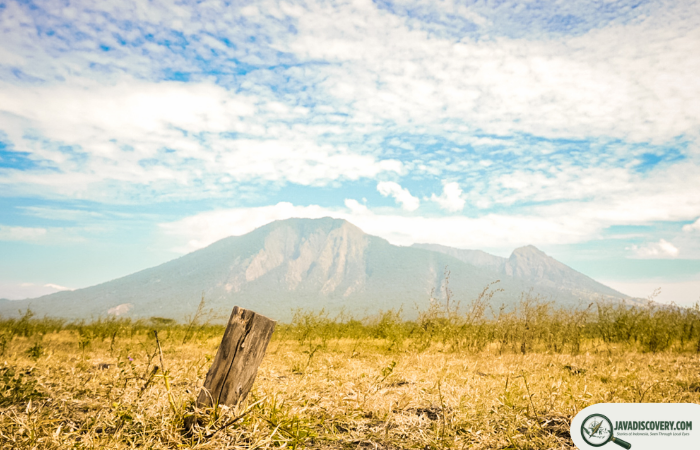
javadiscovery.com – Situated at the northeastern tip of East Java in Situbondo Regency, overlooking the narrow Bali Strait, lies a landscape that seems entirely alien to the typical lush, tropical rain-forested imagery of Java. Spanning over 25,000 hectares beneath the silent volcanic silhouette of Mount Baluran, Baluran National Park is world-renowned as Africa in Java or Java’s “Little Africa.” At its heart lies the vast Bekol Savana—a wide-open, undulating expanse of golden grasslands dotted with flat-topped acacia trees (*Acacia nilotica*), watering holes, and herds of endangered wild ungulates. Formed by the unique rain-shadow effect of the surrounding East Javanese mountain ranges, Baluran represents Java’s most distinctive monsoon ecosystem. Yet, as global climate dynamics shift and local weather systems become increasingly volatile, park rangers, ecologists, and local conservationists face the complex challenge of managing and preserving this delicate savanna habitat.
Exploring the savannas of Baluran reveals the intricate ecological balance between natural fire regimes, invasive plant species, seasonal hydrology, and climate adaptation on Java’s easternmost frontier.
The Rain-Shadow Genesis: How Java Created a Savanna
Baluran’s dry, savanna-dominated environment is a natural marvel created by a combination of regional geography and monsoon air currents:
- The Rain-Shadow Effect: During the southeast monsoon (April to October), dry, moisture-depleted air masses blowing from Australia travel across East Java. Blocked by the massive volcanic ridges of Mount Raung, Mount Ijen, and Mount Baluran itself, rain falls heavily on the western and southern slopes, leaving the eastern coastal plain of Situbondo in an intense, protracted dry season.
- Monsoon Forest and Grassland Mosaic: This microclimate gives rise to a mosaic ecosystem—a combination of dry deciduous monsoon forests, coastal mangroves, evergreen hill forests, and wide open grassland plains dominated by native grass species (*Themeda*, *Dichanthium*, and *Cynodon*).
- Refuge for Endangered Megafauna: The Bekol Savana is a critical sanctuary for Java’s rare native wildlife, including the endangered Javan banteng (*Bos javanicus*), Javan deer (*Rusa timorensis*), wild boar, green peafowl (*Pavo muticus*), dholes (Asian wild dogs), and the elusive Javan leopard (*Panthera pardus melas*).
Ecological Crisis: The Acacia Nilotica Invasion and Shifting Rains
Over the past four decades, the ecological integrity of Baluran’s savanna has faced a dual crisis: human-introduced invasive flora and increasingly erratic weather systems caused by climate change:
- The Acacia Invasion (*Acacia nilotica*): Originally introduced in the late 1960s as a firebreak species to protect surrounding teak plantations, the thorny African prickly acacia (*Acacia nilotica*) adapted too aggressively. Spreading rapidly across the grassland via seed dispersal by foraging animals, dense acacia thickets began choking out native grasses, shrinking the open grazing lands required by banteng and deer herds.
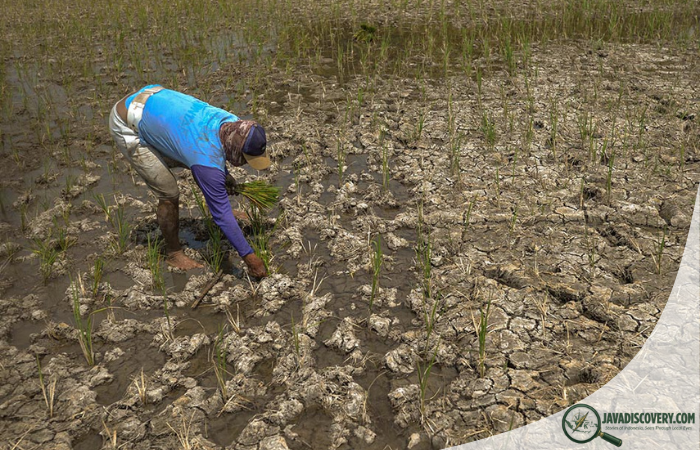
- Disrupted Monsoon Rains: Historical weather patterns in Situbondo were predictable, with distinct 8-month dry spells followed by 4 months of heavy monsoon rains. In recent years, unpredictable rain patterns—extended droughts punctuated by sudden, intense downpours—have altered seed germination cycles and dried up seasonal natural watering holes (*kubangan*) prematurely.
- Declining Grazing Capacity: The combined impact of bush encroachment and prolonged drought reduced open grassland cover in Bekol, forcing native herbivore populations into closer proximity and placing severe stress on the park’s carrying capacity.
Adaptive Ecosystem Management: Preserving “Little Africa”
To prevent the complete loss of the Bekol Savana to thorny scrubland, park authorities and conservation scientists have implemented innovative, active management strategies:
- Mechanical Eradication and Control: Park rangers utilize heavy machinery, manual clearing, and targeted stump treatments to remove dense *Acacia nilotica* thickets, systematically reopening historical grassland zones for grazing ungulates.
- Controlled Prescribed Burning: Re-establishing natural ecological fire regimes through carefully managed prescribed burns during the early dry season destroys invasive acacia saplings while encouraging the rapid regeneration of fresh, nutrient-rich native grass shoots.
- Artificial Watering Hole Management: To mitigate the impacts of severe droughts caused by changing weather systems, park management established solar-powered groundwater pumps to feed permanent artificial watering holes, ensuring wild herds have constant access to clean water year-round.
Ecotourism and the Future of Java’s Frontier Wilderness
Baluran’s transformation into a premier eco-tourism destination plays a vital role in funding and sustaining its conservation efforts. Visitors traveling to the Bekol watchtower or the pristine coastal waters of Bama Beach gain an immediate appreciation for Java’s ecological diversity, proving that the island’s heritage extends far beyond tropical rainforests and rice terraces.
By balancing active habitat restoration with adaptive climate management, the guardians of Baluran National Park are safeguarding an irreplaceable sanctuary—ensuring that East Java’s “Little Africa” continues to roar, graze, and thrive for generations to come.