javadiscovery.com – On a quiet Sunday morning, the familiar hum of old engines echoes through the narrow streets of Yogyakarta. A convoy of vintage scooters glides past, their chrome details glinting under the tropical sun. Among them is Edu, a lifelong Vespa enthusiast riding his 1968 Vespa 150 Super — a piece of history on two wheels.
The Arrival of Vespa in Indonesia

The story of Vespa in Indonesia began in the early 1950s when the Italian-made scooter first rolled onto the archipelago’s roads. Its compact design, fuel efficiency, and elegant curves quickly won the hearts of many. By the 1970s, Vespa had become a cultural icon, thanks to the establishment of a local assembly plant by PT Danmotors Vespa Indonesia in Pulogadung, East Jakarta. From this factory came legendary models such as the Sprint, Super, and PX series — machines that would later define an entire generation of riders.
From Daily Ride to Priceless Classic
Decades later, those same scooters have transformed from everyday commuters into highly sought-after collectibles. A well-preserved Vespa 150 Super or PX can now fetch tens of millions of rupiah, depending on its originality and condition. For many, restoring an old Vespa is not just a hobby but an act of preserving memory and craftsmanship that modern motorcycles can rarely match.
The Historic Vespa Kongo
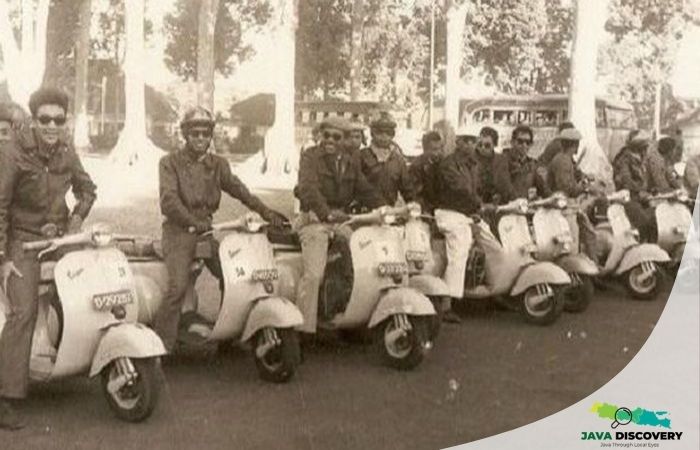
Among the most legendary models in Indonesia’s Vespa heritage is the Vespa Kongo. Unlike ordinary Vespas, this one carries a unique national story. In the early 1960s, Indonesian soldiers from the Kontingen Garuda were sent to the Republic of Congo as part of a United Nations peacekeeping mission. Upon returning home, these brave servicemen were awarded a Vespa scooter by the Indonesian government as a token of appreciation for their service. The gift soon became known as “Vespa Kongo.”
Produced by Vespa GmbH Augsburg in Germany around 1963–1964, Vespa Kongo had distinctive features — thicker body panels, a 10-inch wheel setup, square speedometer, and a Garuda emblem proudly displayed on its front. Some units even bore official documents marked “ex Brigade Garuda,” symbolizing their direct connection to national history. Today, the few surviving Vespa Kongo units are considered national treasures among collectors, with prices reaching extraordinary levels for their rarity and patriotic value.
Voices from the Road: Edu’s Story

“My love for Vespa started when I was a little boy,” Edu says, gently patting the handlebar of his 1968 Vespa 150 Super. “My father had a Vespa just like this one. He used to take me on rides around the village — the sound of the engine, the smell of two-stroke oil… those moments stayed with me.”
Years later, Edu found and restored a Vespa identical to his father’s. “When I ride it now, it feels like I’m reliving my childhood,” he smiles. “Many vintage Vespa owners in Java share that same story — it’s nostalgia that brings us together.”
The Brotherhood of Vespa Riders
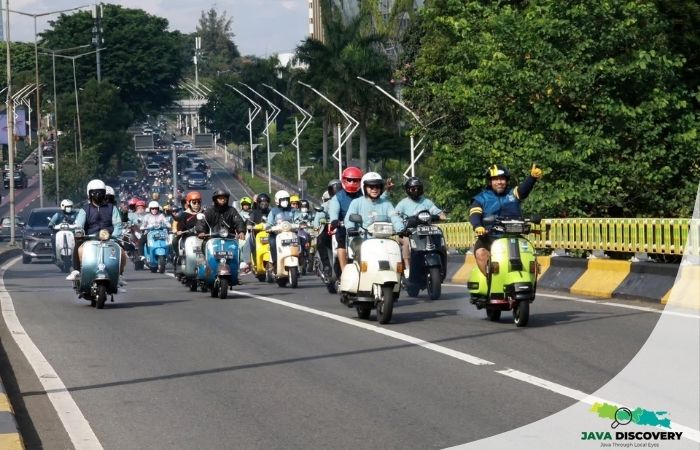
Across Java — from Jakarta’s bustling streets to the quiet lanes of Malang — Vespa clubs thrive as symbols of unity and camaraderie. Riders gather for sunmori (Sunday morning rides), long-distance tours, or charity runs. Whether it’s a student riding an old Sprint or a craftsman on a customized PX, every Vespa rider belongs to one big family that values togetherness and simplicity.
It’s common to see a fellow rider stop to help another on the roadside — no questions asked. This spirit of solidarity, inherited from Indonesia’s communal culture, is what keeps the Vespa brotherhood alive even after seven decades.
Vespa in Modern Java
Today, Vespa is once again in vogue among the younger generation. Many see it as a timeless symbol of style, creativity, and freedom. In cities like Bandung and Yogyakarta, custom workshops transform classic Vespas into modern art pieces — merging nostalgia with innovation while keeping their soulful hum intact.
Rolling Through Time
From post-war Italy to the sunlit roads of Java, Vespa has traveled not just through distance but through generations of emotion. It carries the echoes of laughter from childhood rides, the pride of soldiers returning from peace missions, and the enduring spirit of freedom. For many on this island, Vespa is not merely a motorcycle — it’s a living memory on two wheels.