Storytellers Who Preserved Law in Ancient Javanese Society

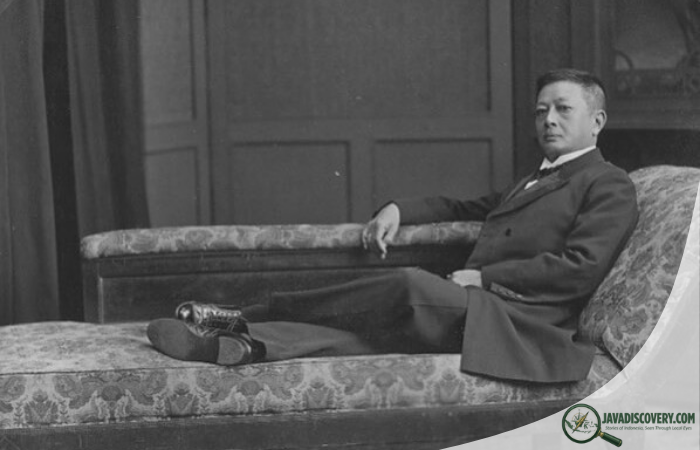
javadiscovery.com – As night settles over a village, the air cools and the sounds of daily labor fade into a softer rhythm. People gather in an open space, sitting in a loose circle beneath dim light. At the center, a storyteller begins. His voice moves slowly at first, then deepens with rhythm and pause. The story he tells is familiar, yet each telling carries weight. Within its flow of characters and events lies something more than entertainment. It carries rules, expectations, and consequences.
Long before laws were written in formal codes or recorded in official documents, societies in Java relied on oral tradition to maintain order. Storytellers played a central role in this system. Through narrative, they preserved not only history and belief, but also the principles that governed behavior. Law, in this context, was not separate from culture. It was embedded within it.
Stories became a vessel for structure.

Law Without Written Codes
In early Javanese society, formal written legal systems were limited. Instead, communities depended on shared understanding of what was acceptable and what was not.
Rules existed in practice.
They were reinforced through repetition.
They were understood collectively.
Law was lived rather than documented.
Storytelling as a Medium of Instruction
Storytellers conveyed these rules through narrative. Rather than stating laws directly, they embedded them within stories of characters facing consequences.
Actions led to outcomes.
Behavior was illustrated.
Lessons were implied.
Stories guided understanding.
Memory and Continuity
Without written records, memory was essential. Storytellers developed the ability to recall long narratives with consistency and detail.
Stories were repeated across generations.
Key elements were preserved.
Variation allowed adaptation.
Memory sustained the system.
Symbolism and Indirect Teaching
Stories often used symbolism rather than direct instruction. Characters, settings, and events represented broader principles.
Meaning required interpretation.
Listeners engaged actively.
Understanding developed over time.
Law was communicated indirectly.
Reinforcing Social Norms
Through repeated storytelling, social norms were reinforced. Individuals learned what behavior was expected within the community.
Respect was emphasized.
Balance was encouraged.
Consequences were understood.
Stories shaped behavior.
Role of the Storyteller
The storyteller was more than a performer. He or she was a custodian of knowledge, responsible for maintaining accuracy while engaging the audience.
Authority came from trust.
Skill ensured attention.
Responsibility required discipline.
The role carried weight.
Public and Communal Setting
Storytelling often took place in communal settings, allowing many individuals to hear and internalize the same narratives.
This created shared understanding.
It reinforced collective memory.
It ensured consistency.
Law became communal knowledge.
Adaptation to Context
Storytellers could adjust narratives to reflect current situations. While core elements remained, details might shift to address contemporary issues.
This kept stories relevant.
It allowed flexibility.
It connected past and present.
Law remained responsive.
Integration with Ritual and Performance
Storytelling was often integrated into rituals or performances, enhancing its impact. Music, gesture, and timing added depth to the narrative.
Performance reinforced memory.
Emotion strengthened understanding.
Ritual gave context.
Law became experiential.
Transmission Across Generations
New storytellers learned from older ones, continuing the chain of transmission. This ensured that knowledge did not disappear.
Apprenticeship maintained continuity.
Practice refined skill.
Stories endured.
Law persisted through succession.
Transition to Written Systems
As written legal systems became more prominent, the role of storytelling changed. However, oral tradition did not disappear.
Stories continued to reinforce values.
They complemented formal law.
They preserved cultural perspective.
Both systems coexisted.
A Voice That Carries Order
As the storyteller’s voice fades into the night, the audience disperses quietly. The story lingers, not as a fixed set of rules, but as a framework for understanding behavior.
In ancient Java, law was not confined to documents or enforced solely through authority. It lived within stories, carried by voices that moved through generations.
Through narrative, communities maintained order, not by command, but by shared understanding. In this way, the storyteller became a guardian of balance, preserving law through the enduring power of story.