Marriage Alliances and Power in Ancient Javanese Kingdoms

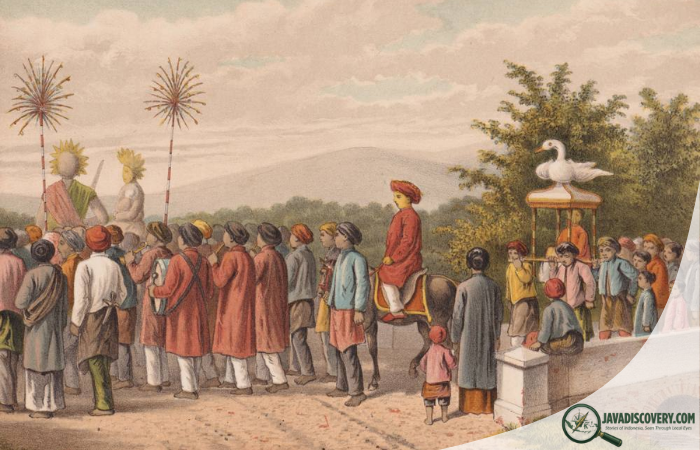
javadiscovery.com – In the inner courtyard of a royal compound, preparations unfold with careful precision. Silk garments are arranged, offerings are placed in quiet symmetry, and musicians begin to tune their instruments. At the center of this gathering stands a bride and groom, their union framed not only by ritual, but by expectation. This marriage is not simply a personal bond. It is a connection between families, territories, and interests that extend far beyond the ceremony itself.
In ancient Java, marriage was often more than a social or emotional commitment. Within the circles of power, it functioned as a strategic tool, shaping alliances, securing influence, and stabilizing relationships between kingdoms and noble families. Through these unions, political landscapes could shift without a single battle being fought.
Marriage became a language of diplomacy.

Marriage Beyond the Personal
While marriage in everyday life centered on family and community, within royal and elite circles it carried broader implications. A union could represent agreement, cooperation, or reconciliation.
It linked two houses together.
It created shared interest.
It reduced the likelihood of conflict.
The personal became political.
Strengthening Alliances
One of the primary purposes of marriage alliances was to strengthen relationships between ruling powers. By marrying into another خاندان, a kingdom could secure loyalty and mutual support.
Alliances were formalized.
Trust was reinforced.
Relationships gained stability.
Marriage became a bond of commitment.
Expanding Influence
Through strategic marriages, influence could extend beyond immediate territory. A royal family connected to multiple regions increased its reach.
New connections were formed.
Networks expanded.
Power extended indirectly.
Marriage created pathways of influence.
Conflict Prevention and Resolution
Marriage alliances often served to prevent or resolve conflict. When tensions arose between regions, a union could act as a gesture of reconciliation.
It signaled cooperation.
It reduced hostility.
It provided a framework for peace.
Marriage became a stabilizing force.
Lineage and Legitimacy
Royal lineage was central to authority. Marriage alliances helped strengthen claims to power by connecting bloodlines.
Heirs carried combined heritage.
Legitimacy was reinforced.
Succession gained clarity.
Lineage shaped governance.
Women as Central Figures in Alliances
Women played a crucial role in these political marriages. Their position within the alliance was both symbolic and practical.
They represented connection between families.
They maintained relationships.
They influenced internal dynamics.
Their role was essential, though often understated.
Ritual and Symbolism
Marriage ceremonies themselves reflected the importance of these alliances. Rituals emphasized unity, harmony, and shared purpose.
Symbols conveyed meaning.
Offerings marked intention.
Public ceremonies affirmed the union.
Ritual reinforced politics.
Negotiation Behind the Ceremony
Before any marriage took place, negotiation occurred between families or kingdoms. Terms, expectations, and conditions were carefully discussed.
These discussions shaped the alliance.
They defined obligations.
They ensured mutual benefit.
Marriage followed agreement.
Multiple Alliances and Complexity
Ruling families often formed multiple marriage alliances, creating complex networks of relationships. These connections could both strengthen and complicate political dynamics.
Alliances overlapped.
Interests intersected.
Loyalty required balance.
Power became interconnected.
Risks and Tensions
While marriage alliances aimed to create stability, they could also introduce tension. Differences in expectation or shifts in power could strain relationships.
Conflicts could reemerge.
Alliances could weaken.
Balance could shift.
Marriage did not guarantee peace.
Integration with Cultural Values
These political marriages were shaped by broader cultural values emphasizing harmony, respect, and balance. Alliances were not only strategic, but also embedded within social norms.
Behavior followed tradition.
Expectations were guided by culture.
Relationships reflected shared values.
Politics aligned with social principles.
Legacy in Historical Memory
The impact of marriage alliances is preserved in historical narratives and genealogies. These unions helped shape the structure of kingdoms and their relationships.
Lineages trace connections.
Stories recall alliances.
History reflects their influence.
Memory preserves their role.
A Union Beyond Two Individuals
As the ceremony concludes and the couple steps into their new roles, the significance of their union extends far beyond the moment. Their marriage will influence relationships, decisions, and the balance of power across regions.
In ancient Javanese kingdoms, marriage was not only a personal milestone. It was a strategic act, carefully considered and deeply embedded in the political fabric of society.
Through these alliances, power could be negotiated, extended, and sustained, not through conflict, but through connection. In this way, marriage became one of the most subtle and enduring tools of governance.