Why Indonesians Still Build Dreams Without Bank Loans

javadiscovery.com – In many Indonesian villages, dreams are rarely built alone.
A small food stall appears at the corner of a dusty road because relatives quietly collect money together. A modest brick house slowly rises beside rice fields because neighbors spend weekends carrying sand, mixing cement, and sharing labor without expecting payment. A struggling family survives another month because an arisan group decides to help first and ask questions later.
Across Indonesia, especially beyond major cities, financial survival has long depended on something deeper than paperwork and credit scores. It depends on trust.
For outsiders, this culture can feel unusual. Why would people borrow from neighbors instead of banks? Why rely on rotating community funds instead of formal loans?
The answer is not simply about preference. In many cases, it is about access, dignity, and a social system that existed long before modern banking arrived.
The Village Economy Built on Trust
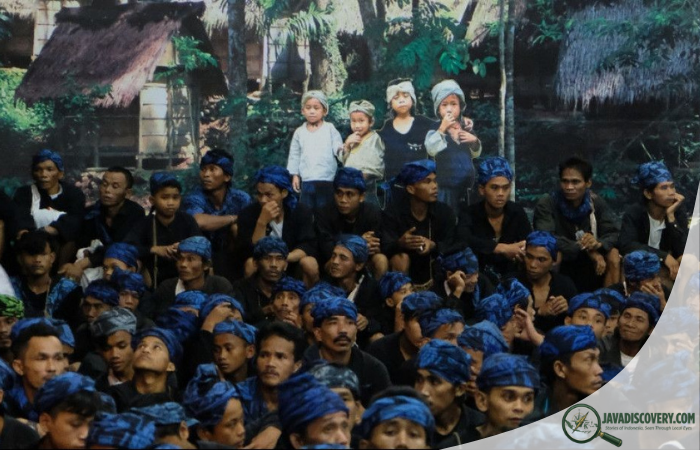
Indonesia has a long cultural tradition known as gotong royong, a philosophy of mutual cooperation deeply rooted in village life. The concept is often translated simply as “working together,” but in reality, it represents an entire social safety net.
In many rural communities, people do not always separate financial life from social life. Helping a neighbor repair a roof, lending money for school fees, or contributing to a wedding celebration are not viewed as extraordinary acts. They are part of maintaining harmony within the community.
For generations, villages across Java developed systems where trust functioned as a form of currency. Reputation mattered more than signatures. Social responsibility often carried greater weight than legal contracts.
Someone who failed to repay borrowed money would not only lose access to future help. They could lose respect within the community itself. In tightly connected villages where everyone knows one another, social accountability becomes incredibly powerful.
This invisible system created an economy built not merely on transactions, but on relationships.
Arisan and the Informal Financial Culture of Indonesia
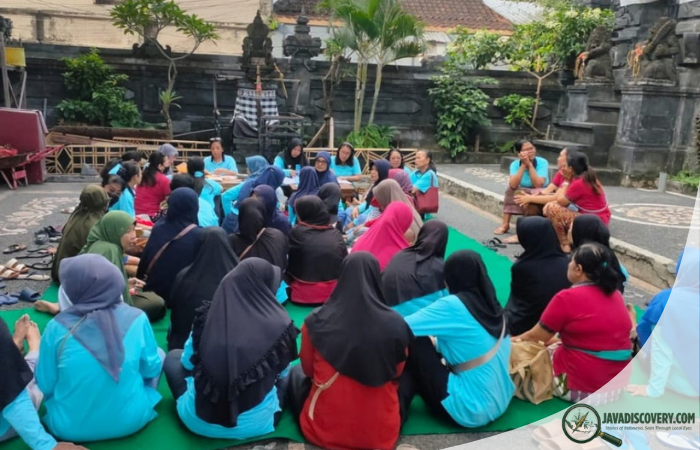
Perhaps no tradition represents Indonesia’s informal financial culture more clearly than arisan.
At first glance, arisan may appear to outsiders as little more than social gatherings involving food, laughter, and monthly contributions. But beneath the casual atmosphere lies one of Indonesia’s oldest forms of community-based finance.
In a typical arisan group, members contribute a fixed amount of money regularly. During each gathering, one participant receives the collected funds, usually through rotation or lottery. Over time, every member eventually receives their turn.
For many Indonesians, especially small traders, housewives, farmers, and informal workers, arisan serves as a practical financial tool.
The money may be used to:
- renovate a house
- pay school tuition
- start a small business
- buy farming equipment
- cover emergency expenses
Unlike formal financial institutions, arisan requires no collateral, no complicated paperwork, and no proof of stable income.
What guarantees the system is not legal enforcement, but social trust.
In many neighborhoods, refusing to honor an arisan commitment would bring embarrassment not only to an individual, but sometimes to an entire family. That social pressure often becomes stronger than financial penalties.
For countless Indonesians, arisan is not merely tradition. It is survival.
Why Formal Loans Remain Difficult for Many Indonesians
Indonesia’s banking sector has expanded significantly over the past decades. Mobile banking applications, digital wallets, and financial technology services continue to grow rapidly, especially in urban areas.
Yet for millions of small-scale workers and informal entrepreneurs, access to formal financing remains difficult.
The problem is not always willingness to repay. Often, it is the structure of the system itself.
Many Indonesians operate businesses without formal bookkeeping. Income may fluctuate daily. Some own no land or assets that can be used as collateral. Others lack salary slips, tax records, or legal business permits.
Economically, they are active and productive.
Financially, however, they often remain invisible.
In villages and smaller towns, stories about complicated loan procedures are common. People speak about long administrative processes, rejected applications, and strict requirements that feel distant from their everyday reality.
This does not necessarily mean banks are unfair. Formal financial institutions operate under regulations designed to manage risk and maintain stability.
But the reality remains that many small communities continue searching for alternatives that feel more reachable, more flexible, and more human.
When Communities Become the Safety Net
As a result, many Indonesians continue relying on social networks instead of formal institutions during difficult times.
Families borrow from relatives. Neighbors create informal savings groups. Communities establish small cooperatives based on collective responsibility.
One system found in several Indonesian cooperatives is known as tanggung renteng, where group members collectively share responsibility for loans. Instead of relying on individual collateral, the system depends on mutual accountability within the community.
The concept reflects a broader cultural belief that economic growth should not leave people isolated.
In many Western financial systems, trust is often measured through credit scores and banking history. In parts of Indonesia, trust is still measured through character, participation, and long-term social relationships.
This approach may appear informal, even fragile, from the outside. Yet in many places, it has helped communities survive economic uncertainty for generations.
A Culture That Still Believes in Collective Growth
Indonesia’s economy is often discussed through statistics, infrastructure projects, and urban development. But beneath the surface lies another story — one built quietly through cooperation between ordinary people.
Across villages, alleyways, traditional markets, and rural communities, millions of Indonesians continue practicing an older economic philosophy: that progress is stronger when shared together.
It is a system imperfect yet deeply human.
And perhaps that is why many dreams in Indonesia still begin not inside corporate meeting rooms or bank offices, but on woven mats beneath dim village lights, where neighbors gather over coffee and decide to help one another build a future together.