The Cirebonan Linguistic Bridge: How Hybrid Sundanese-Javanese Syntax Shapes Java’s Northern Coastal Mindset

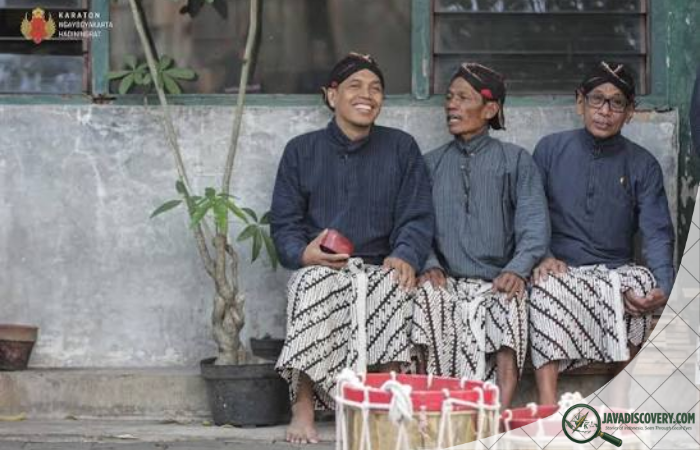
javadiscovery.com – Travel along the sweeping northern coastline of Java (the Pantura) toward the historic port city of Cirebon, and the sharp boundaries that define the island’s cultural geography begin to soften and blur. To the south and west lie the misty, terraced highlands of Priangan, the cultural heartland of the Sundanese people. To the east open up the vast, agrarian plains of Central and East Java. But in Cirebon and its surrounding coastal hinterlands, the population resides in a unique linguistic and cultural third space. Here, the local language—known as Basa Cirebon or Bebasan Cirebon—is neither purely Sundanese nor standard Javanese. It is a highly fluid, synthesized linguistic bridge where Sundanese grammatical structures, Javanese vocabulary roots, and distinct coastal phonetics merge, cultivating a distinct pragmatic mindset unique to Java’s northern frontier.
The Borderland Catalyst: History of a Coastal Crossroads
The origins of Cirebon’s hybrid syntax are rooted in its storied geopolitical history. Founded in the 15th century at the intersection of the Hindu Sunda Kingdom and the expanding maritime trade networks of the Java Sea, the Sultanate of Cirebon quickly became a cosmopolitan melting pot. Malay merchants, Chinese traders, Arab scholars, Sundanese inland farmers, and Javanese coastal sailors rubbed shoulders daily in Cirebon’s harbor and royal court.
While standard linguistic maps categorize Cirebonan as a northwestern dialect of Javanese, its actual spoken form exhibits profound Sundanese influence. Generations of intermarriage, trade partnerships, and shared agricultural labor between Sundanese-speaking inland communities (from Majalengka and Kuningan) and Javanese-speaking coastal dwellers created a bilingual environment where the two dominant languages of Java naturally intertwined.
Rather than adopting one language and discarding the other, Cirebon developed a hybrid linguistic system that allowed its inhabitants to navigate both worlds with effortless agility.
Syntactic Fusion: How Sundanese Structure Meets Javanese Roots
Linguists studying Basa Cirebon often describe it as a classic example of language contact and syntactic convergence. The hybridity operates across multiple levels of speech:
1. Sundanese Grammar with Javanese Lexicon:
In everyday spoken Cirebonan, it is common to hear a sentence constructed using Javanese vocabulary roots that are modified by Sundanese affixes, particle markers, and sentence rhythms. For example, possessive indicators, passive verb markers, and directional prepositions frequently borrow the softer, contextual flow of Sundanese while retaining core Javanese nouns and verbs.
2. Vocalic Balance:
Unlike the rounded open-mid back vowel shift (/ɔ/) of Central Mataram Javanese (where apa becomes apo), Cirebonan preserves the open terminal vowel /a/, aligning phonetically with both Sundanese and ancient pre-Mataram Javanese (similar to its western neighbor, Jawa Ngapak). This produces a bright, crisp acoustic delivery that carries easily across open fishing docks and noisy outdoor markets.
3. Pragmatic Speech Levels:
Cirebonan possesses its own elevated register known as Bebasan, used when addressing elders, religious leaders (kyai), or court officials at the Kanoman and Kasepuhan palaces. However, unlike the rigid, multi-layered Krama system of the inland Central Javanese courts, Cirebon’s Bebasan is more streamlined, accessible, and practical—reflecting a commercial seaport mentality where egalitarian clarity was favored over complex feudal posturing.
The Coastal Mindset: Egalitarian, Adaptive, and Open
Language does not merely reflect a culture; it actively shapes the psychological posture of its speakers. The hybrid syntax of Cirebon has fostered a distinct worldview among its people—a mindset locally summarized by the spirit of Sintren, Tarling, and maritime resilience.
Egalitarian Directness
Living at a commercial crossroads freed Cirebonan culture from the hyper-hierarchical constraints of the inland agricultural kingdoms. Cirebonans are renowned for their straightforward, expressive, and warm communication style. The hybrid language allows speakers to bypass long, circuitous honorific setups, fostering a social climate where trust and business deals can be established quickly between strangers.
Cultural Fluidity and Tolerance
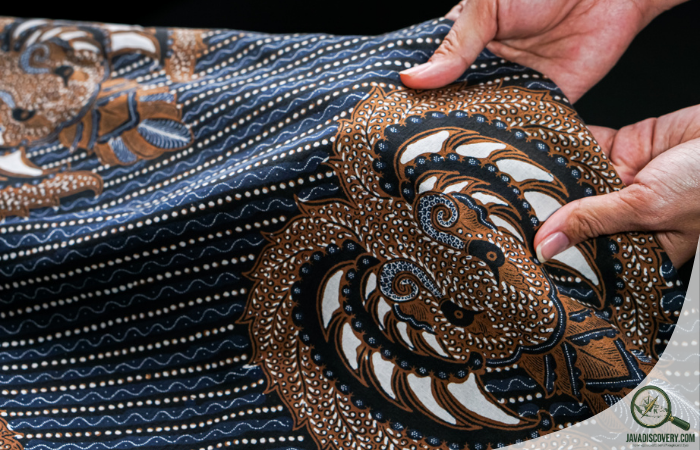
Because every family in Cirebon likely traces its lineage to a mixture of Sundanese, Javanese, Chinese, or Arab ancestors, identity is defined not by rigid ethnicity, but by shared geography and community membership. This hybrid mindset is physically embodied in Cirebon’s iconic Megamendung batik pattern—where Chinese-inspired cloud motifs are rendered in bold, vibrant colors unique to the Javanese coast—and in the architecture of its royal palaces, which seamlessly blend Hindu-Sunda brickwork, Javanese timber framing, and Chinese porcelain ornamentation.
Pragmatic Adaptability
Growing up on a linguistic bridge teaches Cirebonans code-switching from childhood. A typical resident can switch effortlessly between standard Indonesian, Sundanese, Javanese, and Cirebonan depending on who enters their shop or home. This innate cognitive flexibility has historically made Cirebonans exceptionally successful traders, diplomats, and cultural mediators across the Indonesian archipelago.
Preserving the Voices of the Northern Frontier
In contemporary Indonesia, as standardized education and national media increase the use of standard Indonesian, local languages across Java face shifting dynamics. Yet, in Cirebon, Indramayu, and surrounding border towns, the local dialect remains intensely vibrant. It thrives in regional folk theater (Sandiwara Cirebon), popular Tarling Dangdut music, and daily life in bustling coastal fish markets.
The Cirebonan linguistic bridge stands as a testament to the creative power of cultural borderlands. It reminds us that when two distinct heritage traditions meet, the result does not have to be friction or division. Instead, like the meeting of land and sea along the Pantura, it can give birth to a rich, adaptive third culture that honors both roots while forging a distinctive identity of its own.