The Living Rituals of the Tengger People Beneath Mount Bromo

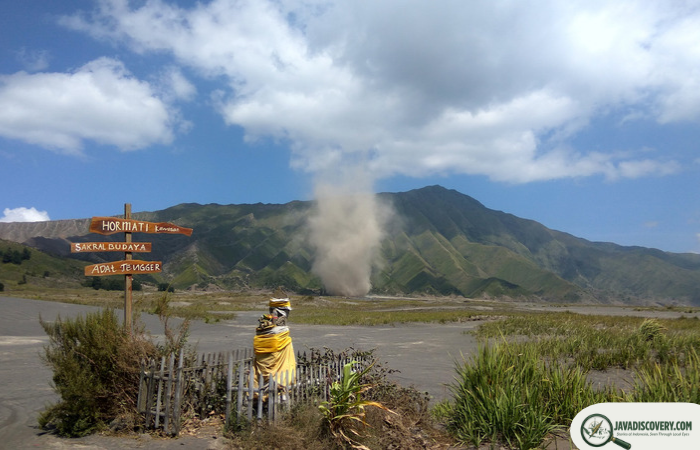
Before the sun reaches the rim of the caldera, the air above Mount Bromo is cold enough to sting. Fine volcanic sand muffles every footstep. Somewhere in the dark, incense burns, and a low murmur of prayer drifts across the plain.
This is the world of the Tengger people, a highland community whose faith, calendar, and daily life are tied to the mountain that towers over them. Most visitors know Bromo as a sunrise postcard. For the Tengger, it is something closer to a living presence.
Who the Tengger People Are
The Tengger live in villages scattered across the highlands of Bromo, Tengger, and Semeru, in the regencies of Probolinggo, Pasuruan, Lumajang, and Malang. Villages such as Ngadisari, Wonokitri, and Ngadas sit on steep, cool slopes where vegetable terraces climb toward the clouds.
On East Java’s cultural map, the Tengger stand apart. They are neither part of the Arek culture of the lowland cities nor the Javanese-Madurese blend of the Tapal Kuda, or Pandalungan, region to the east. They are a distinct highland community with their own customs, village institutions, and religious life.
Their way of speaking also marks them out. Many accounts describe the Tengger dialect as preserving older features of Javanese, though this is a matter for linguists rather than a settled popular claim.
Origins, Between Legend and History
Ask the Tengger where they come from, and the answer often begins with a story. According to local tradition, the name “Tengger” comes from the names of Roro Anteng and Joko Seger, a legendary couple said to have founded the highland community. This folk etymology is cherished locally, but it is tradition, not documented history.
A second popular belief holds that the Tengger are descendants of people who withdrew to the mountains after the decline of Majapahit. Historians treat such accounts cautiously. What is clear is that the highlands have long been regarded as sacred ground, and that the community’s religious practices carry strong echoes of Java’s pre-Islamic Hindu-Buddhist world.
A Hindu Faith with Its Own Character
The Tengger are commonly described as Hindu, and many communities today are formally associated with Indonesia’s Hindu Dharma institutions. Yet it would be a mistake to see their faith as a copy of Bali’s. Ethnographic accounts note that Tengger religious life developed within the highlands’ own social world, and that it does not follow Bali’s caste hierarchy.
The mountain sits at the center of it all. Bromo’s name is widely said to derive from Brahma, the Hindu creator deity, and the volcano is treated as a sacred site rather than a scenic backdrop.
Reverence for ancestors and for the land itself runs through everyday practice. In the Tengger worldview, the people, their forebears, and the mountain share a continuing relationship of obligation and respect.
The Dukun and the Keepers of Tradition
At the heart of Tengger ritual life is the dukun. In many parts of Java, this word refers to a traditional healer or spiritual practitioner. In the Tengger context, the dukun is a village ritual priest who leads ceremonies and recites sacred mantras.
According to accounts of the tradition, a dukun is not simply appointed. The role is taught orally, with mantras learned and memorized, and the candidate must be accepted by the community. It is a position of great responsibility, because a ceremony conducted incorrectly is believed to carry consequences for the whole village.
Worship takes place in village temples and in smaller community prayer spaces, and the great gatherings converge on Pura Luhur Poten, a temple standing in the Sea of Sand directly below Bromo.
The Ritual Calendar
The Tengger follow their own calendar, with months named in a sequence that includes Kasada, Karo, and Kapitu. Their major ceremonies are fixed to this calendar rather than to the Gregorian one, so dates shift from year to year when viewed against it.
Yadnya Kasada
The best known of all Tengger rites is Yadnya Kasada, held on the fourteenth day of the Kasada month. Before dawn, villagers gather at Pura Luhur Poten, and dukun lead prayers and bless the offerings.
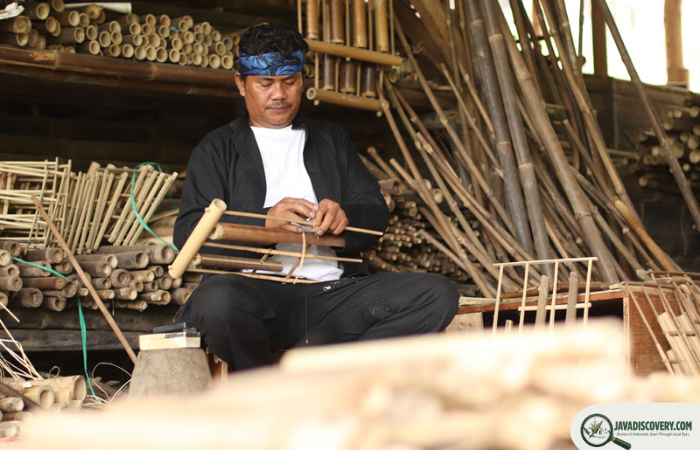
Then the procession climbs to the crater rim. Harvests, flowers, and sometimes livestock are carried in bamboo frames known as ongkek, and thrown into the crater as an offering of gratitude.
Local tradition links the ritual to a legend. Roro Anteng and Joko Seger, long childless, are said to have prayed to the mountain deity for children and promised to offer their youngest child in return. When that child, Kesuma, was grown, he is said to have stepped forward and given himself to the crater. The annual offering remembers that sacrifice.
Below the rim, some people wait with nets to catch the offerings as they fall. Explanations for this vary, and it is best understood as a practice with several local interpretations.
Karo
Hari Raya Karo, named for the second month of the Tengger year, is a time of renewal and community. Families visit one another, share food, and honor ancestors in celebrations that stretch across several days.
Local explanations for the festival’s origins differ from village to village. Some connect it to the Aji Saka legend, but the details of such accounts vary, and the festival is best described through how it is lived today: as a time of visiting, feasting, and mutual forgiveness.
Unan-unan
Roughly every five years, Tengger villages hold Unan-unan, a large purification ceremony intended to cleanse a village of misfortune and restore its balance. Offerings include a buffalo, and the event draws heavy preparation and participation from the whole community.
Life-Cycle Rites
Tengger rituals also mark the stages of a person’s life, from birth and marriage to death. Among them is entas-entas, a rite performed for the deceased, understood as helping the spirit continue on its journey. Details differ between villages, and the ceremony is closely guided by the dukun.
Dress, Food, and Daily Life as Ritual
For the casual visitor, the first sign of Tengger identity is often what people wear. Against the mountain cold, men and women wrap themselves in sarongs, often draped over the shoulders, and men may wear an udeng, a folded headcloth, on ceremonial occasions.
Food is part of the language of ritual. Offerings are built from the highland harvest: vegetables, grains, and fruit grown in the volcanic soil. Cone-shaped rice, known as tumpeng, often appears at ceremonies across Java and is part of how communities express gratitude and prayer.
The farming year and the ritual year are intertwined. Planting, harvest, and offering belong to the same cycle, and a good crop is understood as part of a relationship with the mountain.
Preserving Tradition in a Tourist Landscape
Bromo is one of Java’s most visited landscapes, and the pressures of tourism fall directly on a sacred place. Crowds arrive for sunrise, and large ceremonies such as Kasada attract visitors and photographers from across the world.
Young people face another pull. Education and work often lead them down from the highlands, and communities weigh how to keep ritual knowledge, much of it oral, alive across generations.
Still, the rituals continue. Visitors who attend are guests at a religious observance, not an audience at a performance. Quiet behavior, modest dress, and respect for the dukun and the offerings are the baseline.
When the sun finally clears the crater and the smoke turns gold, the sightseers raise their cameras. Below them, the Tengger finish their prayers and turn back to the day’s work, steady in a faith that has lasted for generations beneath the mountain they hold sacred.
Writer: Sari Mahendra