How Java Negotiated Foreign Influence Across Centuries


javadiscovery.com – At a coastal settlement where ships once anchored after long voyages, traces of distant worlds remain quietly embedded in daily life. A pattern on a piece of cloth hints at another region. A word spoken in conversation carries echoes of a different language. A ritual unfolds with gestures that seem both familiar and foreign. None of these elements stand apart. They have been absorbed, adjusted, and made part of something distinctly local.
Across its long history, Java has never existed in isolation. Traders, scholars, missionaries, and colonial powers have all arrived, bringing with them new ideas, beliefs, and systems. Yet rather than being reshaped entirely by these encounters, Javanese society has consistently engaged in a process of negotiation. Foreign influence was not simply accepted or rejected. It was interpreted, adapted, and woven into existing cultural frameworks.
This process created continuity within change.

Early Encounters and Exchange
Java’s position along major trade routes exposed it to influences from across Asia and beyond. Early interactions brought new religious ideas, artistic forms, and systems of knowledge.
Contact introduced variation.
Exchange expanded perspective.
New elements entered the cultural landscape.
Interaction became ongoing.
Selective Adoption
Not all foreign elements were adopted in the same way. Communities selected aspects that aligned with existing values and practices.
Some ideas were embraced.
Others were adjusted.
Some were set aside.
Adoption was intentional.
Adaptation to Local Context
Foreign influences were rarely preserved in their original form. Instead, they were adapted to fit local conditions, beliefs, and social structures.
Meaning was reinterpreted.
Practices were modified.
Forms were reshaped.
Influence became localized.
Integration with Existing Systems
Rather than replacing existing systems, new elements were often integrated alongside them. This created layered cultural structures.
Old and new coexisted.
Systems overlapped.
Continuity was maintained.
Integration defined the process.
The Role of Local Agency
Communities were not passive recipients of influence. They actively interpreted and reshaped what they encountered.
Agency guided adaptation.
Interpretation shaped outcome.
Choice influenced direction.
Culture remained dynamic.
Religious and Philosophical Synthesis
One of the most visible forms of negotiation occurred in the realm of belief. New religious ideas interacted with existing spiritual frameworks.
Practices blended.
Concepts aligned.
Expressions evolved.
Synthesis created new forms.
Language as a Reflection of Exchange
Language absorbed elements from foreign contact, incorporating new words and expressions while maintaining its structure.
Vocabulary expanded.
Meaning shifted.
Communication adapted.
Language recorded interaction.
Material Culture and Daily Life
Objects, clothing, architecture, and tools reflected layers of influence. Designs and techniques showed both external inspiration and local interpretation.
Forms combined.
Functions adapted.
Styles evolved.
Culture became visible in objects.
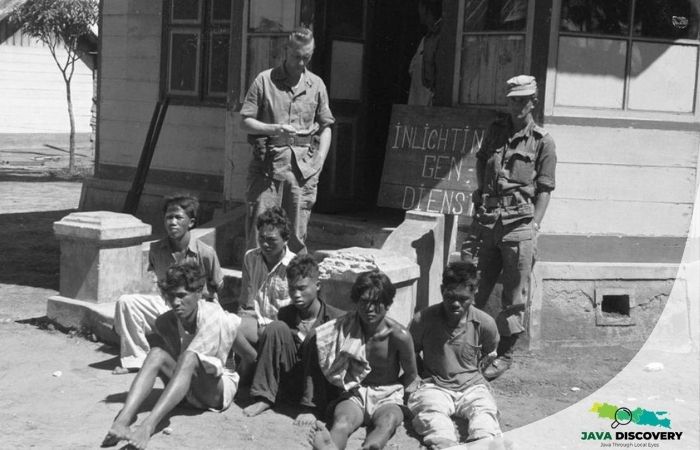
Colonial Influence and Resistance
The colonial period introduced more direct and structured forms of influence. Administrative systems, education, and economic practices were imposed.
This created new pressures.
Communities responded in varied ways.
Some adapted strategically.
Others resisted quietly.
Negotiation became more complex.
Preservation of Core Values
Despite these changes, core cultural values such as harmony, balance, and social awareness remained central. These values guided how foreign elements were interpreted.
Continuity was maintained.
Values shaped adaptation.
Identity remained grounded.
Culture retained coherence.
Modern Expressions of Negotiation
In contemporary Java, the process of negotiating influence continues. Global ideas and technologies interact with local traditions.
Change remains constant.
Adaptation continues.
Identity evolves.
The process persists.
A Culture That Absorbs Without Losing Itself
As the tide moves in and out along the shore, it leaves behind traces of what it has carried. In a similar way, foreign influences have touched Java repeatedly, leaving marks that are visible yet transformed.
What defines this history is not the presence of outside influence, but the way it has been engaged. Through selection, adaptation, and integration, Javanese society has maintained a sense of continuity while remaining open to change.
In this ongoing process, identity is not fixed. It is negotiated, shaped by encounter, and sustained through the careful balance between preserving what is known and embracing what arrives from beyond.