Silence in Family Dynamics Within Javanese Households

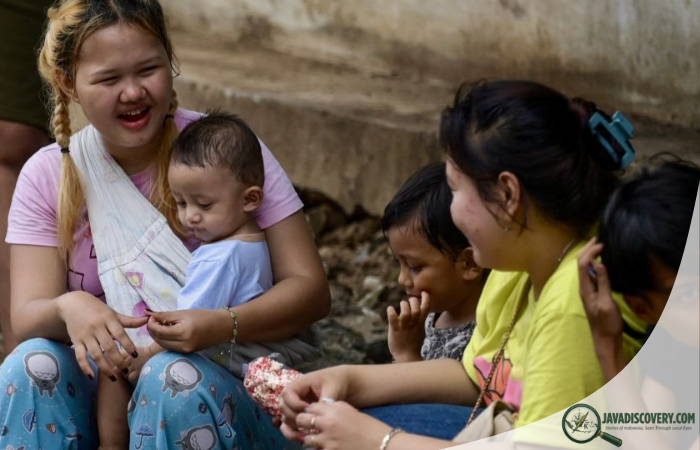
javadiscovery.com – In the early hours before sunrise, a Javanese household stirs quietly. The clink of cups, the soft sweep of a broom across the floor, the distant call of a rooster. Words are few. A mother prepares tea, a father sits on a wooden chair, a child passes by with a slight nod. No instructions are spoken, no greetings elaborated, yet each movement seems to align with an unspoken understanding.
Within Javanese families, silence is not an absence of communication. It is a presence that carries meaning, shaping relationships through subtle awareness and shared rhythms. Conversations do not always rely on words. Instead, they unfold through gestures, timing, and mutual recognition of roles.
To observe these dynamics is to enter a space where silence becomes a language of its own.

Silence as Connection
In many Javanese households, silence functions as a form of connection. Family members do not need to speak constantly to affirm their relationships.
Presence itself becomes meaningful.
Sitting together without conversation, sharing space during daily routines, or working side by side can express a sense of belonging.
This quiet togetherness reinforces bonds.
Unspoken Understanding
Roles within the family are often understood without explicit instruction. Children learn what is expected of them through observation and repetition.
Tasks are carried out without the need for constant direction.
This unspoken understanding creates efficiency and harmony.
It reduces the need for verbal correction.
Emotional Restraint in Close Spaces
Even within the intimacy of family, emotional restraint remains important. Strong emotions are managed carefully to avoid creating tension.
Silence can serve as a buffer, allowing feelings to settle before they are expressed.
This approach prevents escalation.
It maintains a calm environment.
Silence During Conflict
When disagreements arise, silence often plays a role in managing conflict. Rather than immediate confrontation, individuals may withdraw briefly, creating space for reflection.
This pause allows emotions to cool.
It also provides time to consider how to respond appropriately.
Conflict is addressed with care rather than urgency.
Respect Expressed Quietly
Respect within the family is often expressed through quiet behavior. Lowering the voice, choosing not to interrupt, and waiting for the right moment to speak are all forms of consideration.
Silence becomes a sign of awareness.
It reflects sensitivity to others.
Through restraint, respect is communicated.
The Role of Parents
Parents model the use of silence in communication. Their behavior demonstrates when to speak and when to remain quiet.
Children observe these patterns and gradually adopt them.
This modeling shapes long-term habits.
It teaches balance in expression.
Listening Beyond Words
In a silent environment, listening takes on a deeper meaning. Family members learn to pay attention to nonverbal cues, such as tone, posture, and timing.
Understanding emerges from observation.
This attentiveness strengthens relationships.
It allows communication to occur without explicit language.
Daily Rhythms and Routine
Silence is woven into daily routines. Morning preparations, shared meals, and evening rest often occur with minimal conversation.
These rhythms create a sense of stability.
They provide structure to family life.
Within this structure, silence feels natural.
Generational Differences
Younger generations may introduce more verbal forms of expression, influenced by education and media. Conversations can become more open and direct.
Despite this, the value of silence remains present.
Families adapt by blending different styles.
This creates evolving patterns of communication.
Misunderstood Quietness
For outsiders, the quiet nature of Javanese family interaction may be interpreted as distance or lack of closeness.
In reality, it often reflects comfort and familiarity.
Silence indicates that constant verbal reassurance is not necessary.
Connection exists beyond words.
Moments That Speak Without Sound
Some of the most meaningful family moments occur in silence. A shared glance, a small act of care, or a quiet presence during difficulty can convey deep emotion.
These moments do not require explanation.
Their meaning is understood intuitively.
They become part of collective memory.
Balancing Speech and Silence
Silence does not replace speech entirely. Conversations still take place, especially when guidance or clarification is needed.
The balance between speaking and remaining silent is carefully maintained.
This balance allows communication to remain effective without becoming overwhelming.
It reflects awareness of context.
Silence as Cultural Practice
The use of silence is not accidental. It is a cultural practice developed over time, shaped by values of harmony, respect, and emotional control.
It influences how individuals relate to one another.
This practice is passed through generations.
It becomes part of everyday life.
A Shared Quiet
As the day progresses, the household fills with activity, yet the underlying quiet remains. Words appear when needed, then fade again into stillness.
In this environment, silence is not empty. It is filled with meaning, connection, and awareness.
Within Javanese family dynamics, silence becomes a subtle but powerful form of communication, shaping relationships through presence rather than speech, and sustaining harmony through the quiet understanding shared by those who live together.