Tax Systems in Ancient Javanese Kingdoms and Society


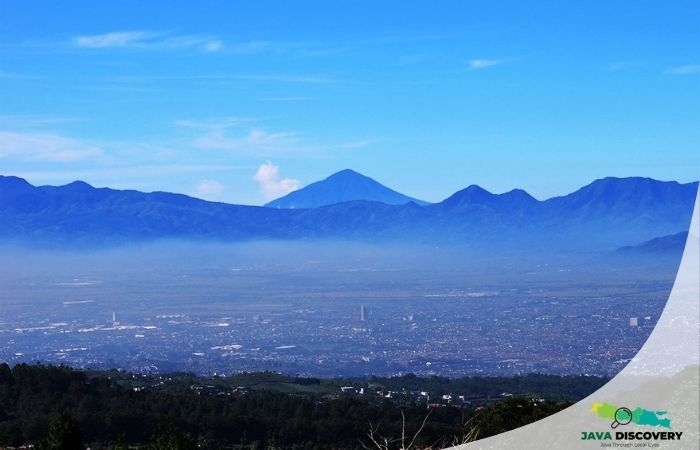
javadiscovery.com – At the edge of a rice field beneath the shadow of a distant volcano, a farmer pauses, wiping sweat from his brow as the midday heat settles over the land. His harvest, still green and swaying, is not entirely his own. Part of it will travel beyond the village, carried along footpaths and rivers toward centers of power he may never see. The act is routine, woven into the rhythm of seasons, yet it connects this quiet field to the structure of an entire kingdom.
In ancient Java, taxation was not merely an economic mechanism. It was a system that defined relationships between rulers and subjects, between land and labor, between local life and centralized authority. Taxes were paid not only in currency, but in crops, time, and service, forming a network of obligations that sustained kingdoms and shaped daily existence.
To understand these systems is to glimpse how power was organized across the island, not through force alone, but through structured exchange.

Beyond Coin and Currency
Unlike modern tax systems, ancient Javanese taxation did not rely primarily on standardized currency. Instead, it operated through tangible resources and human effort.
Rice, spices, forest products, and crafted goods were commonly used as forms of tribute.
Labor, too, was a central component.
These forms of payment reflected an economy rooted in agriculture and local production.
The Concept of Tribute
Taxation often took the form of tribute, a structured offering made to rulers or regional authorities. This tribute was not always perceived as a burden. It was also a recognition of authority and a participation in a broader political order.
Villages contributed according to their capacity.
The act reinforced connection between center and periphery.
It symbolized inclusion within the kingdom.
Land as the Basis of Obligation
Land played a central role in determining tax obligations. Agricultural areas, particularly rice fields, were key sources of revenue.
Farmers were expected to allocate a portion of their yield.
The fertility of the land influenced the scale of contribution.
In this way, taxation was closely tied to the natural environment.
Corvée Labor and Service
In addition to material contributions, individuals were often required to provide labor for the state. This system, known as corvée, involved working on infrastructure, temples, irrigation systems, or royal projects.
Labor obligations were temporary but recurring.
They connected individuals directly to state activity.
This form of taxation transformed time into a resource.
Village Administration and Collection
Tax collection was often managed at the village level. Local leaders acted as intermediaries, organizing contributions and ensuring that obligations were met.
This decentralized approach relied on trust and familiarity.
It allowed the system to function across diverse regions.
Local authority played a crucial role.
Recorded in Stone and Script
Evidence of these systems appears in inscriptions carved into stone and written on copper plates. These records detail land grants, tax exemptions, and obligations assigned to specific communities.
They provide insight into administrative structure.
They reveal the complexity of governance.
History is preserved through these documents.
Tax Exemptions and Sacred Lands
Certain lands, particularly those associated with temples or religious institutions, were granted tax exemptions. These areas were designated for spiritual or communal purposes.
Exemptions reflected political and religious priorities.
They created zones of special status.
This added another layer to the system.
The Role of Redistribution
Collected resources did not remain static. They were redistributed through the kingdom, supporting royal courts, religious institutions, and public works.
This redistribution reinforced authority.
It demonstrated the capacity of rulers to manage resources.
The system functioned as a cycle.
Majapahit and Administrative Complexity
During the era of the Majapahit kingdom, taxation systems became increasingly structured. Administrative divisions allowed for more organized collection and distribution.
Officials oversaw different regions.
Records became more detailed.
The system reflected a mature state apparatus.
Economic and Social Impact
Taxation influenced social organization. It shaped how communities interacted with authority and how resources were allocated within society.
Obligations affected daily routines.
They influenced agricultural cycles.
The system integrated economy and governance.
Adaptation to Geography
Java’s varied landscape required flexibility in taxation. Coastal regions, forested areas, and highland communities contributed different resources.
This diversity required adaptive systems.
Taxation reflected environmental variation.
Geography shaped economic structure.
Continuity and Change
While specific practices evolved over time, the principle of structured obligation remained consistent. Later kingdoms adapted earlier systems to new political contexts.
Continuity linked different eras.
Change reflected shifting conditions.
The system remained dynamic.
Perception of Obligation
For individuals, taxation was part of the expected rhythm of life. It was not always framed as extraction, but as participation in a larger order.
This perception influenced acceptance.
It shaped attitudes toward authority.
Obligation became normalized.
A System Rooted in Balance
As the farmer returns to his work, the connection between his field and the wider kingdom remains invisible yet constant. The rice he cultivates will sustain not only his household, but also the structures of governance that extend beyond his horizon.
In ancient Java, taxation was not a distant policy, but a lived reality embedded in land, labor, and community. It connected individuals to systems of power through tangible acts of contribution.
Within this system, the balance between giving and sustaining defined the relationship between people and the kingdoms they inhabited.