The Soul of Java Told Through One Village

javadiscovery.com – At dawn, the village wakes not with alarms but with breath. A thin mist lingers above the rice fields, soft as gauze, turning the world silver. Roosters call from behind bamboo fences. Somewhere, a wooden door creaks open. The first scent of wood smoke drifts into the cool morning air. In this quiet hour, before motorcycles hum along distant roads and before the sun hardens the earth, Java feels intimate and unguarded. Here, in one small village tucked between rice paddies and a low green ridge, the island’s soul is not displayed. It is lived.
A Village Between Earth and Sky
The village lies in Central Java, where volcanic soil runs black and fertile beneath bare feet. Mount Merapi rests on the northern horizon, sometimes visible, sometimes veiled in cloud. Its presence is constant, a reminder that the land is both giver and taker. The houses form a loose spine along a narrow asphalt road, their walls painted pale blue, mint green, faded cream. Roofs of clay tiles dip gently under the weight of age.
Beyond the homes stretch sawah, flooded rice fields reflecting the sky like fractured mirrors. Farmers walk along narrow bunds that separate one plot from another. Their silhouettes move slowly through the morning light, conical hats tilting forward against the sun. The rhythm of planting, tending, and harvesting shapes the calendar more than any printed date.
“We follow the water,” says Pak Sastro, a farmer in his late sixties, his hands rough as woven rope. “Water decides when we begin.”
The irrigation channels here trace back centuries, part of a communal system known locally as subak in other islands, but in Java guided by village-level agreements and ancestral custom. Water flows from upstream springs, shared according to careful rotation. The system is not written on paper. It is carried in memory.
The Architecture of Belonging
In the center of the village stands the pendopo, an open pavilion supported by wooden pillars darkened with age. It is both stage and sanctuary. Weddings are celebrated here, community meetings convened, shadow puppet performances staged late into the night. Its floor is smooth from generations of bare feet.
Nearby rises the mosque, modest yet dignified. The call to prayer ripples across fields and houses five times a day, its melody folding into birdsong and wind. Islam shapes daily life here, yet beneath formal observance lingers something older, subtler. Offerings of flowers sometimes appear at the base of large trees. Elders speak softly of spirits that guard springs and crossroads.
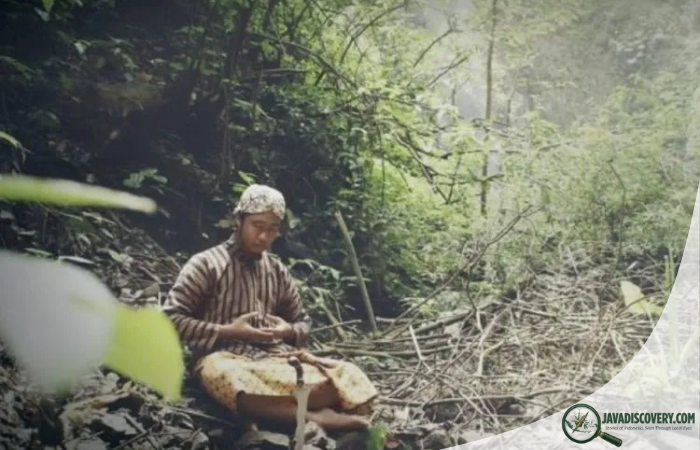
This layering of belief reflects Kejawen, a Javanese spiritual philosophy that values harmony between the seen and unseen. It is not loudly proclaimed. It moves quietly through gesture and etiquette. Respect for elders, careful speech, restraint in anger, gratitude before meals. Spirituality is woven into conduct.
Language as Social Compass
In conversation, hierarchy is audible. The Javanese language contains levels of politeness that signal respect and intimacy. Children address elders in krama, the refined register. Among friends, ngoko flows more freely. A misplaced word can wound as surely as a raised voice.
“Language teaches us our place,” explains Bu Rini, a primary school teacher who cycles to class each morning with a basket of books strapped to her bicycle. “It reminds us to be careful.”
At school, students learn Bahasa Indonesia, the national language, yet Javanese remains the language of emotion. It carries lullabies, jokes, and proverbs. One such proverb, alon alon asal kelakon, suggests that slow progress, if steady, leads to completion. The phrase captures a rhythm evident throughout the village. Rushing is viewed with suspicion. Patience signals wisdom.
Rituals That Bind the Living
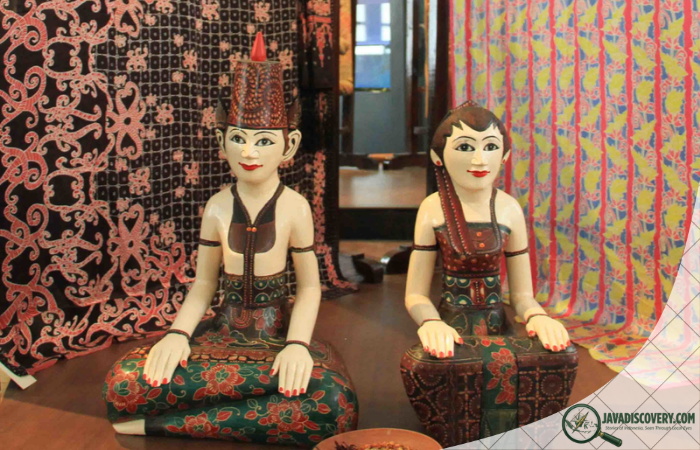
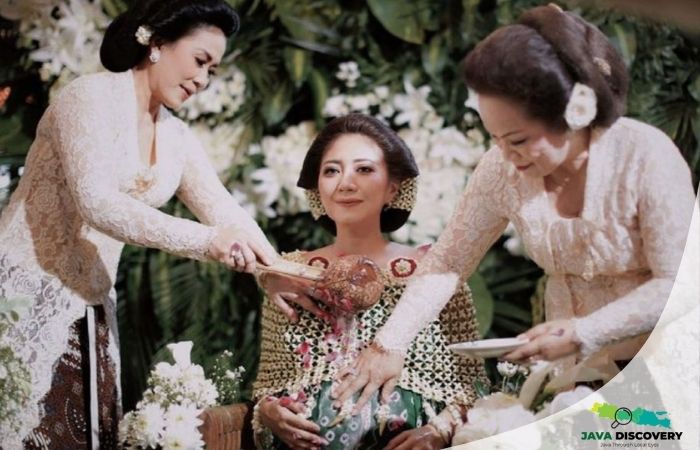
Life milestones unfold collectively. When a child turns seven months in the womb, the family hosts a mitoni ceremony. Neighbors arrive carrying dishes of rice and vegetables arranged in woven trays. Prayers are recited. Water scented with jasmine is poured gently over the expectant mother’s hands. Laughter mingles with solemn blessings.
After harvest, a slametan thanksgiving is held. Men sit cross-legged in a circle, reciting verses before sharing cone-shaped tumpeng rice. Women observe from adjacent rooms, having prepared the meal since dawn. The ritual affirms balance. Gratitude must follow abundance.
Even in grief, community prevails. When someone dies, neighbors gather nightly for prayers during the first week. Food is shared not as indulgence but as comfort. Mourning is collective, measured, dignified.
The Soundscape of Memory
On certain evenings, the metallic resonance of gamelan rises from the pendopo. Bronze gongs shimmer under soft mallets. Drums punctuate the air with patient rhythm. Young men rehearse for an upcoming wayang kulit performance, their concentration etched into furrowed brows.
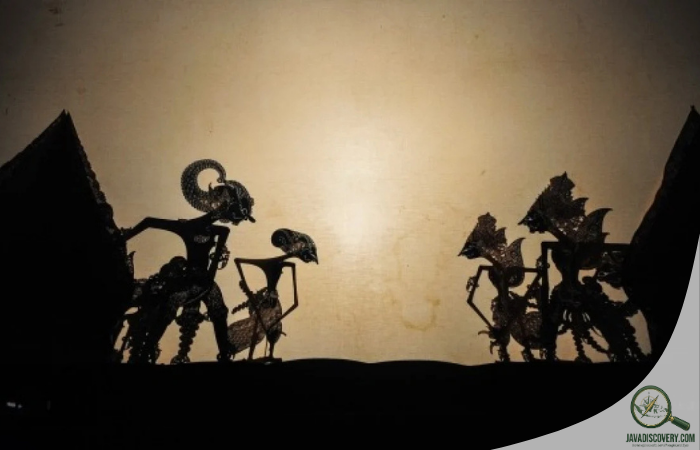
The dalang, or puppet master, sits cross-legged behind a white screen. Oil lamps cast shadows of intricately carved leather figures. Stories drawn from the Mahabharata and Ramayana unfold slowly, layered with moral complexity. Heroes wrestle not only with enemies but with inner doubt.
Children sit wide-eyed, half-understanding yet fully absorbed. For elders, the narratives are familiar companions. The performance can last until dawn. Time bends around art.
Women at the Heart of Continuity
Before sunrise, women gather at the small market near the village entrance. Their stalls display chilies bright as embers, bundles of spinach tied with raffia, tempe wrapped in banana leaves. Transactions are brisk yet gentle, punctuated by easy laughter.
Many households depend on this micro-economy. Income is modest but steady. Skills pass from mother to daughter: how to ferment soybeans, how to balance flavors in sambal, how to stretch a handful of rice to feed unexpected guests.
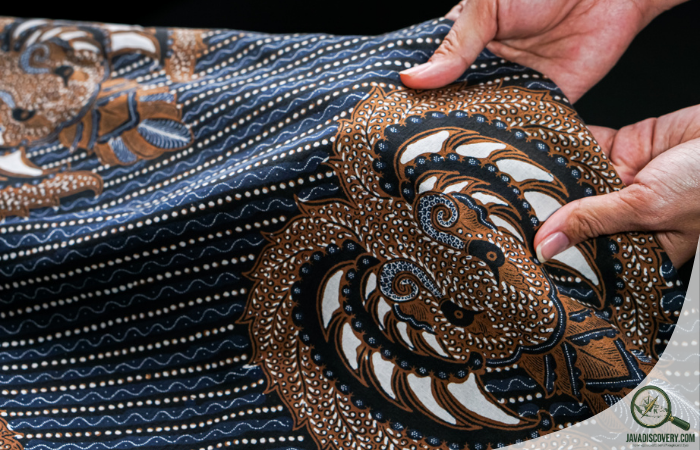
In the afternoons, some women weave batik patterns using canting tools dipped in hot wax. Motifs are deliberate. Parang symbolizes strength, kawung suggests purity. Each line requires steady hands and patient breath. Batik here is not mass-produced. It is meditation.
Youth Between Two Worlds
Motorcycles line the roadside at dusk as teenagers return from nearby towns. Many study at vocational schools, learning mechanics or computer coding. Smartphones glow in their palms. Korean pop music drifts from open windows.
Yet on weekends, these same youths help plant rice or rehearse traditional dance. Identity here is layered, not replaced. They navigate social media and ancestral obligation with equal fluency.
“We want to move forward,” says Andi, nineteen, adjusting his helmet. “But we do not want to forget.”
The Ecology of Interdependence
The village’s relationship with its landscape remains intimate. Bamboo groves provide material for fences and musical instruments. Coconut trees supply oil and roofing fiber. River stones anchor foundations. Nothing feels separate from the earth.
During the rainy season, water swells in the irrigation canals. Children splash along muddy edges. Farmers scan the sky, calculating risk. Too little rain brings anxiety. Too much invites landslides from the nearby ridge.
Environmental knowledge is practical and inherited. Elders read cloud patterns, insect behavior, wind direction. Scientific forecasts matter, yet ancestral intuition carries equal weight.
Moments of Stillness
In late afternoon, shadows lengthen across the fields. The air cools slightly. Farmers pause, leaning on hoes, gazing toward the volcano. Smoke curls from kitchen fires. The day softens.
Here, in this pause, the soul of Java feels most visible. It resides not in monuments or headlines but in ordinary continuity. In the careful sharing of water. In the measured cadence of language. In rituals that affirm gratitude. In art that unfolds without hurry.
As night settles, the village dims. A single bulb glows on the mosque veranda. Crickets claim the soundscape. Above, stars scatter across a sky unpolluted by city glare.
The island of Java is vast and restless, home to more than 150 million people. Megacities surge with traffic and ambition. Yet within villages like this one, an older tempo endures. It is neither frozen nor fragile. It adapts quietly, absorbing change without surrendering essence.
To understand Java, one could trace its dynasties, study its trade routes, map its volcanic arcs. But to feel its soul requires listening at dawn, walking barefoot along a bund, sharing sweet tea beneath a wooden roof. It requires witnessing how community shapes identity, how land informs ritual, how restraint can hold power.
This village does not claim to represent all of Java. No single place could. Yet within its rhythms lie threads common across the island: reverence for harmony, respect for hierarchy, intimacy with nature, patience in craft, dignity in simplicity.
When the rooster calls again before sunrise, another day will begin much like the last. Rice will be tended. Children will cycle to school. Gamelan will resonate on rehearsal nights. Life will proceed without spectacle.
And in that quiet persistence, the soul of Java will continue to breathe.