Gowok and the Vanishing Lessons of Javanese Marriage Rites

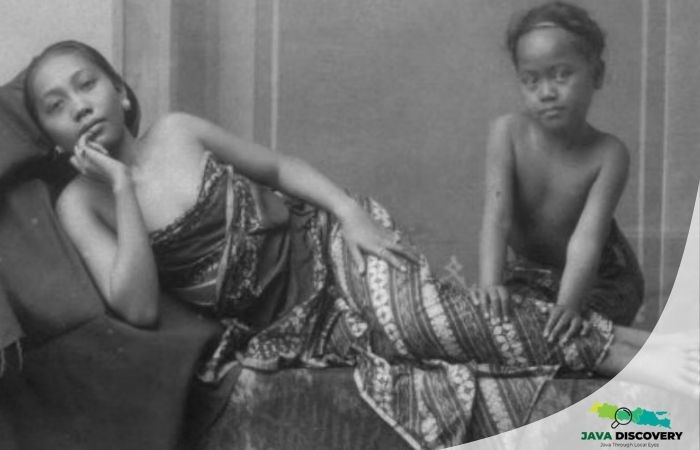
javadiscovery.com – In the quiet corners of Banyumas and Purworejo, stories still linger about a tradition once whispered from one household to another — the tradition of gowokan. It was an ancient rite where a young man, before marriage, was entrusted to a woman known as a gowok (ꦒꦺꦴꦮꦺꦴꦏ꧀) — a mentor in domestic and conjugal life. Once considered essential, this practice now survives only in memory and literature.
What “Gowok” Means
The gowok was a woman, usually in her twenties to forties, chosen to teach young men the intricacies of household duties and marital intimacy. Her task was not merely physical instruction but moral and emotional guidance — a bridge between adolescence and the responsibilities of adulthood. Though now viewed as taboo, it once reflected the community’s desire to ensure harmony in marriage through experience-based education.
Where the Tradition Lived
Banyumas Highlands and Bukateja
According to R. Prawoto’s 1931 ethnographic notes in Tijdschrift voor Indische Taal-, Land- en Volkenkunde, the gowokan practice was still alive in Bukateja near Banyumas during the early twentieth century. The region, with its secluded villages and conservative customs, served as a cradle for this rite of passage.
Purworejo and Blora Memories
In other regions such as Purworejo and Blora, similar customs existed under slightly different forms. In areas bordering Wonosobo, villagers even used another term: sentongan. Each name reflected a regional adaptation of the same idea — educating the future groom through lived experience.
Inside the Training
Roles and Boundaries
The gowok lived with her pupil for several days. Her role combined that of mentor, cook, caretaker, and symbolic wife. She had to remain disciplined and composed, for crossing moral boundaries meant losing honor and repayment of the family’s gifts — a peningset in Javanese terms. As M. Koderi wrote in Banyumas: Wisata dan Budaya, “It required mastery of self-control and devotion.”
Daily Life: Cooking, Caring, Conduct
During the stay, the gowok was responsible for daily chores — preparing meals, arranging the household, and even accompanying the young man to the fields. Beyond physical teaching, she modeled the rhythm of married life: patience, diligence, and respect. At the end, she reported to the boy’s parents about his readiness for marriage.
Money, Contracts, and Social Class
Fees, Gifts, and Peningset
Prawoto’s 1931 record notes that a gowok earned between f.0.25 and f.0.30 per day — modest, but accompanied by gifts such as rice, coconuts, and cloth. Families who could afford a gowok were often among the upper social classes, seeing it as an investment in marital stability rather than indulgence.
Reporting “Graduation” to Parents
Once the “training” ended, the gowok would inform the parents about the son’s progress. Only after receiving her assurance would the family announce the marriage date. It was a ritual of both education and endorsement — a discreet system of social certification.
Ethics, Agency, and Taboos
Consent, Power, Gendered Norms
While the tradition may appear controversial through modern eyes, within its own context it functioned as an accepted social mechanism. Yet, beneath the surface lay deeper questions of consent and gender power. The gowok navigated between teacher and object, her authority shadowed by cultural expectations.
Why It Became Controversial
As notions of morality evolved under colonial influence and later religious reform, gowokan came to be seen as incompatible with modern virtue. By the mid-20th century, the tradition had faded, leaving behind moral ambivalence and nostalgia in equal measure.
In Literature and Public Debate
Liem Khing Hoo’s “Gowok” (1936)
The earliest fictional portrayal came from Liem Khing Hoo’s 1936 novel Gowok, about Soemanda, a modern youth torn between Western education and ancestral custom. Initially rejecting the practice, his encounter with the wise and articulate gowok Soembangsih transforms his understanding of womanhood and desire — and leads to love.
Budi Sardjono’s “Nyai Gowok”
Decades later, Budi Sardjono revisited the theme through Nyai Gowok, weaving history and legend into the tale of Nyai Lindri and her student, Bagus Sasongko. Through fiction, these authors reopened discussions about the cultural layers of intimacy, mentorship, and morality in Javanese life.
A Chinese Thread?
The “Goo Wook Niang” Story
In Budi Sardjono’s narrative, the figure of Goo Wook Niang — a woman from China who taught imperial youths about female nature — is said to have inspired the word gowok. Whether this origin is factual or mythical remains uncertain.
Myth, Migration, or Etymology
Some scholars interpret this as cultural layering — an imagined ancestry linking Javanese and Chinese traditions of erotic pedagogy. The claim, though speculative, reflects how intertwined the archipelago’s cultural memory can be.
Language Matters
Gowok, Gowokan, Sentongan
Language reveals nuance. Gowok refers to the woman herself, gowokan to the act or process, and sentongan to its regional variation. The shifting of these words mirrors the social distance growing between past practice and present morality.
Words That Shape Perception
As public discourse changed, these terms gradually turned from neutral descriptors into symbols of scandal or curiosity — proof that words can fossilize the moral weather of their times.
Decline and Afterlives
Why It Faded
By the post-independence period, gowokan had nearly vanished. Rising religious conservatism, formal education, and new gender ethics rendered it obsolete. What remained were quiet anecdotes, buried in old manuscripts and local memory.
What Replaced It
Modern premarital counseling, school-based sexual education, and religious guidance have since filled the void once occupied by the gowok. Yet none carry the same intimate, communal texture that the tradition once offered.
Field Notes and Sources
This reconstruction draws from R. Prawoto’s 1931 ethnographic record, M. Koderi’s reflections compiled by Ahmad Tohari, and literary retellings by Liem Khing Hoo and Budi Sardjono. Each source adds a layer — academic, social, and imaginative — to the mosaic of Java’s vanishing domestic pedagogy.
In tracing the story of the gowok, we glimpse how societies once taught the language of intimacy — not through silence, but through ceremony. What was once whispered in Banyumas now survives as a reminder that knowledge of love, like culture itself, evolves with time.