Betawi Traditions That Survive in Modern Jakarta


javadiscovery.com – In the heart of Indonesia’s bustling capital, where skyscrapers scrape the sky and traffic never sleeps, traces of an older rhythm still echo — the rhythm of the Betawi people. Though Jakarta has transformed into a cosmopolitan megacity, Betawi culture continues to breathe beneath its concrete layers, reminding everyone of the city’s humble, multicultural origins.
The Heart of Betawi Identity
The Betawi people are the original inhabitants of Jakarta — descendants of a melting pot that began during the colonial era of Batavia. Formed through centuries of migration and intermarriage among Malay, Sundanese, Javanese, Arab, Chinese, and Portuguese communities, the Betawi developed a unique identity that mirrors Jakarta’s diversity itself.
Today, places like Setu Babakan in South Jakarta serve as living museums of Betawi life. Wooden houses with open verandas, bustling traditional markets, and the sound of gambang kromong music paint a picture of an era that refuses to fade away.
Language, Clothing, and Everyday Life
Betawi people are easily recognized by their cheerful tone and warm hospitality. Their language, Bahasa Betawi, blends Malay, Sundanese, Arabic, and Dutch influences, reflecting the multicultural roots of the capital. Words like abang (brother) and none (sister) are still widely used across Jakarta, even by those who don’t identify as Betawi.
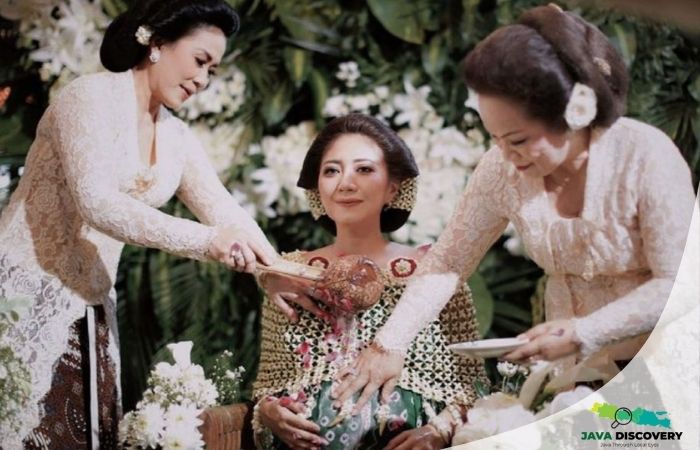
Traditional clothing remains a proud expression of identity — men in baju sadariah with a sarong draped over the shoulder, and women in colorful kebaya encim or pangsi. While modern fashion dominates daily life, these attires still grace weddings, parades, and cultural events, keeping the Betawi aesthetic alive.
Beyond appearance, the Betawi lifestyle celebrates simplicity, community, and humor. The values of gotong royong (mutual cooperation) and rame-rame (togetherness) remain cornerstones of daily interaction, even amid Jakarta’s fast-paced modernity.
Culinary Traditions that Tell Stories
Perhaps the most beloved legacy of Betawi culture lies in its cuisine — a delicious mosaic of flavors and influences. Dishes like kerak telor (crispy egg and glutinous rice omelet), soto Betawi (rich beef soup with coconut milk), and nasi uduk (fragrant coconut rice) tell stories of trade, migration, and adaptation.
Each dish holds a social purpose. Kerak telor vendors appear during festivals; nasi uduk is shared in morning markets; and dodol Betawi is prepared in bulk during Eid, a symbol of unity and celebration. Today, young entrepreneurs and culinary enthusiasts in Jakarta are reviving old recipes through modern cafés, ensuring these dishes stay relevant to new generations.
Festivities and Performances
No portrayal of Betawi life is complete without its exuberant arts. Towering ondel-ondel figures — colorful effigies that sway to the beat of drums — are the living icons of Betawi pride. Once used to ward off evil spirits, they now animate city festivals and street parades.
The comedic theater lenong still draws laughter with its sharp wit and everyday humor, while the melodic strains of gambang kromong and tanjidor bands continue to fill the air during celebrations. Events like Lebaran Betawi and the Setu Babakan Cultural Festival bring these traditions to life each year, blending nostalgia with new energy.
The Future of Betawi Culture
As Jakarta grows ever upward, preserving Betawi heritage becomes both a challenge and a mission. Government and cultural organizations have established programs to protect Betawi art, architecture, and language. Yet the most powerful preservation efforts come from within the community itself.
Young Betawi creators are now using social media, music videos, and digital art to reinterpret their heritage. In doing so, they prove that Betawi culture is not merely a relic of the past, but a living, evolving identity — one that moves with the city while grounding it in history.
Jakarta may rise in steel and glass, but its soul still beats to the rhythm of Betawi — vibrant, humorous, and unmistakably alive.