The Rise of Tarumanegara: West Java’s First Kingdom

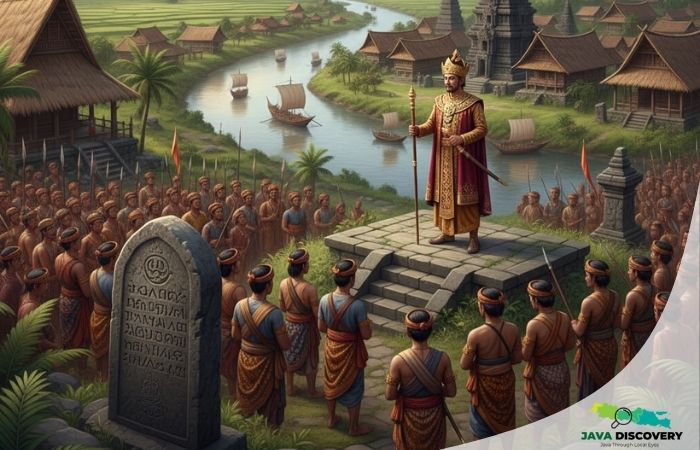
javadiscovery.com – Long before the rise of Majapahit or Srivijaya, a powerful civilization once flourished along the fertile banks of the Citarum River. Known as Tarumanegara, it was the first recorded kingdom in West Java and one of the earliest in the Indonesian archipelago. Though time has buried most of its traces, the kingdom’s legacy endures — carved in stone, echoed through rivers, and remembered as the dawn of Sundanese history.
The Forgotten Dawn of West Java’s Civilization
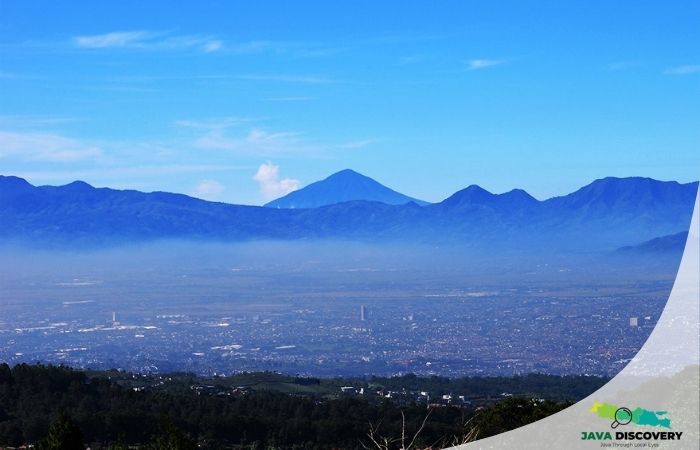
In the 4th century CE, the western part of Java was a land of rivers, dense forests, and fertile plains. Amidst this landscape, Tarumanegara rose as a beacon of organized power and spiritual devotion. Its name derived from the Sanskrit word tarum — meaning indigo — and nagara — meaning kingdom. Together, they formed “the Kingdom of Tarum,” likely named after the Citarum River, which sustained its people with life-giving waters and connected them to the sea.
Historical records suggest that Tarumanegara was not a small tribal state but a structured kingdom with clear social hierarchy, agricultural development, and international contacts. It was here, in the land now encompassing Jakarta, Bogor, and Bekasi, that Java’s story of civilization truly began.
King Purnawarman and the Glory of Tarumanegara
The most illustrious ruler of Tarumanegara was King Purnawarman, whose name appears repeatedly in inscriptions found across West Java. He was celebrated as a wise and just king who brought prosperity to his land. One of his greatest achievements was the construction of a canal system that diverted the course of rivers to prevent floods and improve irrigation — a feat that reflects both engineering skill and a sophisticated administrative system.
Purnawarman’s leadership was not only pragmatic but also spiritual. The inscriptions reveal his devotion to Vishnu, the Hindu god of preservation. In one carving, he is described as “a shining jewel among kings,” whose footprints were compared to those of Vishnu himself. This devotion highlights the deep influence of Indian culture and religion that had begun to spread through maritime trade routes across the region.
The Stone Voices: Inscriptions That Tell History
Most of what we know about Tarumanegara comes from a handful of ancient inscriptions scattered across West Java. These stones, inscribed in Pallava script and Sanskrit language, serve as the kingdom’s enduring storytellers. Among the most famous are the Ciaruteun, Tugu, Jambu, and Kebon Kopi inscriptions.
The Ciaruteun Inscription, found near Bogor, bears the imprints of King Purnawarman’s feet — a symbolic act connecting the monarch’s authority to divine legitimacy. The Tugu Inscription details the excavation of canals, a testament to the kingdom’s public works and environmental management. Together, these artifacts reveal a civilization well-versed in administration, religion, and written communication — a rare sophistication for the time.
Trade, Faith, and Cultural Exchange
Tarumanegara’s power was not built in isolation. The kingdom’s strategic location near the Sunda Strait made it a vital node in the trade network connecting India, China, and Southeast Asia. Through these interactions, not only goods but also ideas flowed into Java. Indian traders brought scripts, epics, and faiths that merged with local beliefs to form a unique cultural synthesis.
Archaeological and literary evidence suggests that Hinduism — particularly Vaishnavism — became the dominant faith during Purnawarman’s reign. Yet, indigenous animist traditions persisted, creating a spiritual tapestry that would later influence the beliefs of the Sundanese people and even the mysticism of Java centuries later.
The Mysterious Fall and Legacy
By the 7th century, Tarumanegara had begun to fade from historical records. Some scholars believe it was absorbed by the rising Sriwijaya Kingdom from Sumatra, while others suggest internal decline or environmental changes along the Citarum River. Whatever the cause, its fall marked the end of an era — but not its memory.
The legacy of Tarumanegara lived on through the Kingdom of Sunda, which emerged in its wake. Linguistic traces, social customs, and local legends continued to reflect the spirit of Tarumanegara long after its physical cities were gone.
Echoes Beneath Modern Cities
Today, the echoes of Tarumanegara lie buried beneath modern West Java — under the streets of Jakarta, the rice fields of Bekasi, and the hills of Bogor. The rivers that once nourished its people now flow past skyscrapers and highways, yet their ancient names still whisper of a forgotten kingdom.
As archaeologists continue to uncover stone inscriptions and artifacts, the story of Tarumanegara reminds us that Java’s civilization did not begin in Yogyakarta or Surabaya, but right here — in the lands of the indigo river, where a king once walked and left his footprints upon the stones of time.
In every ripple of the Citarum River, the spirit of Tarumanegara still flows — a silent reminder of West Java’s first dawn of civilization.