Basa Bagongan The Royal Court Dialect of Yogyakarta Kraton

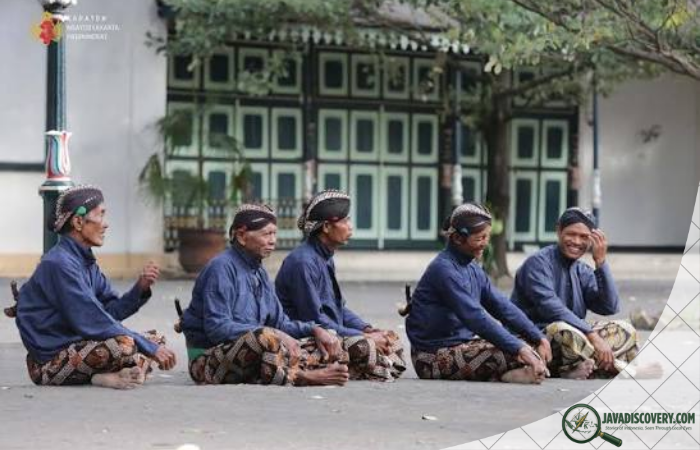
javadiscovery.com – Step across the thick, whitewashed stone archways of the Kraton of Yogyakarta into the inner courtyards, and the acoustic world immediately shifts. The roar of motorbikes along Malioboro Fades into a heavy, quiet stillness, broken only by the rhythmic scrape of broad broom bristles across clean sand, the distant chiming of gamelan gongs, and the soft, hushed voices of Abdi Dalem (royal courtiers). But listen closely to the specific vocabulary used among high-ranking officials and royal family members inside these high walls, and you will hear a linguistic phenomenon found nowhere else in the Indonesian archipelago: Basa Bagongan, the hyper-exclusive court register created specifically to dissolve social friction and unify speech within the presence of the Sultan.
The Politics of Speech in Javanese Society
To appreciate the radical nature of Basa Bagongan, one must first understand the strict, complex social hierarchy embedded in the standard Javanese language. Standard Javanese is famous for its intricate linguistic tiers, primarily divided into Ngoko (informal, low speech used among equals or to subordinates) and Krama (formal, elevated speech used when addressing elders or superiors). Navigating these speech levels requires a constant, split-second mental assessment of age, noble status, wealth, and social standing.
Outside the royal palace, a lower-status speaker must use high Krama, lowering themselves while elevating the listener. However, during the height of the Mataram Sultanate in the 17th century—and formalizing under the reign of Sultan Agung—this strict linguistic stratification created a dangerous court problem. High court officials hailing from various regional backgrounds, noble lines, and military ranks often became paralyzed by linguistic etiquette, terrified of making an inadvertent speech error that could be interpreted as disrespect toward a higher noble or the Sovereign himself.
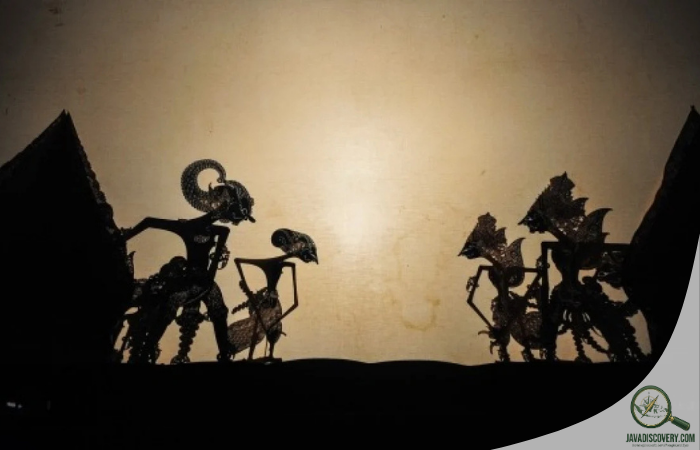
To eliminate these courtly anxieties and foster absolute unity, the monarch instituted a specialized court dialect: Basa Bagongan (derived from Bagong, the clown-servant figure in Javanese shadow puppetry known for his blunt, honest, and egalitarian speech).
The Equalizing Grammar of the Court
The genius of Basa Bagongan lies in its deliberate simplification and unification of Javanese speech levels. Rather than forcing courtiers into complex webs of linguistic deference among themselves, Basa Bagongan functions as an internal equalizer. Within the Kraton, all courtiers—regardless of whether they are a prince of royal blood or a commoner who rose through administrative service—speak to one another using the exact same dialect.
Basa Bagongan reshapes standard Javanese through distinct linguistic alterations:
1. Universal Pronouns: Standard Javanese features dozens of personal pronouns depending on relative rank. In Basa Bagongan, these are compressed. The first-person pronoun (“I”) becomes manira, while the second-person pronoun (“you”) becomes pakenira, regardless of who is speaking to whom among the courtiers.
2. Specialized Vocabulary: Bagongan features roughly 100 to 150 unique root words that replace standard Ngoko and Krama terms. For example, the word “to go” (lunga in Ngoko, tindak in Krama) becomes kisra in Bagongan. The word “yes” becomes senje, creating a distinct, unmistakable acoustic signature unique to palace grounds.
3. Elimination of Feudal Distance: By adopting a single shared court vocabulary, courtiers inside the palace walls could debate state strategy, organize royal ceremonies, and deliver urgent reports without wasting crucial time navigating feudal speech barriers.
Addressing the Sovereign: The Zenith of Reverence
While Basa Bagongan levels the playing field among courtiers, its rules adjust with utmost precision when direct speech is addressed to the Sultan himself. The Sovereign stands as the living center of the cosmos (Pancer) in traditional Mataram statecraft. When an Abdi Dalem or minister speaks directly to the Sultan, Bagongan vocabulary is blended with high honorific terms (Krama Inggil), accompanied by physical gestures of absolute devotion—such as the Laku Dodok (duck-walking on knees) and the Sembah (raising joined palms to the tip of the nose).
In this context, Basa Bagongan creates a paradox: it is simultaneously an egalitarian tool for internal palace administration and an elite, hyper-exclusive linguistic shield that separates the sacred interior world of the Kraton from the profane, uninitiated outside world.
Preserving an Acoustic Treasure in the 21st Century
Today, as modern Indonesian serves as the national lingua franca and daily Javanese increasingly favors simplified forms, Basa Bagongan remains actively preserved within the Kraton of Yogyakarta and Surakarta. It is not a dead historical language preserved in palm-leaf manuscripts; it is a living dialect spoken during weekly royal audiences, court rituals like Grebeg, and traditional palace administration meetings.
For modern sociolinguists and historians, Basa Bagongan offers a fascinating window into the sophisticated statecraft of ancient Java. It demonstrates that centuries before modern organizations wrestled with flattening workplace hierarchies, the Javanese court had already engineered a unique linguistic system that balanced deep reverence for authority with operational equality among its public servants.