The Newborn Scale: Weton Timbangan and the Agrarian Metaphysics of Fate

javadiscovery.com – In the agrarian history of Java, the arrival of a newborn was never recorded merely as a biological event or a metric of civil registration. A child entered the world as a distinct spiritual equation—a unique convergence of cosmic timing (weton) and physical earth energy. Among the most evocative yet lesser-documented practices of Java’s traditional birth rites is Weton Timbangan (literally “the Newborn Scale”), a symbolic weighing ceremony where an infant was counterbalanced against raw agricultural yields—uncooked rice, sugarcane, sticky rice, or harvested tubers—to read their constitutional disposition, calculate their life force, and ward off prospective misfortune.
The Cosmology of Metaphysical Weight
To modern eyes, placing a weeks-old infant in a balance scale opposite a basket of unhusked grain might look like an eccentric folk curiosity. However, within classic Kejawen (Javanese spiritual philosophy), weight was not merely a physical measurement of mass; it was a physical manifestation of bobot—the internal spiritual density, potential, and resilience of a soul.
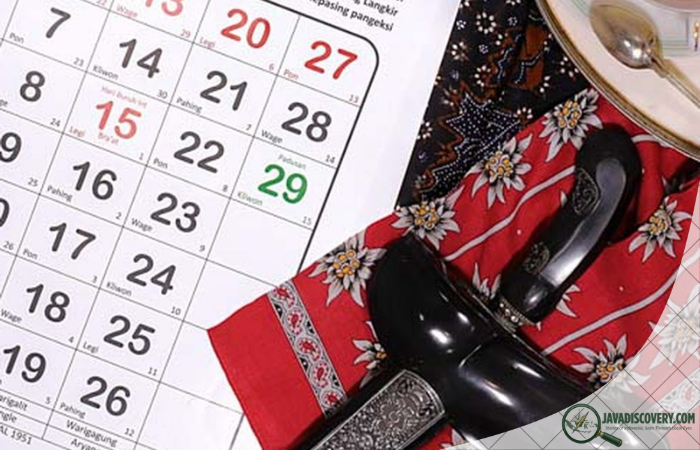
The calculation of a person’s destiny in Java has always relied on Neptu—numerical values assigned to both the days of the seven-day week and the five-day Javanese market cycle (Legi, Pahing, Pon, Wage, Kliwon). A child born on Sabtu Pahing, for instance, carries a high numerical weight (Neptu 18), indicating a fierce, heavy, and commanding spirit. Conversely, a child born on Selasa Wage carries a low numerical weight (Neptu 7), indicating a light, quiet, and sensitive constitution.
Weton Timbangan was the physical bridge between these abstract numerical calculations and the material realm. By balancing the child against the fruits of the land, village elders and midwives (mbah dukun bayi) sought to harmonize the infant’s personal Neptu with the Earth’s physical vibration, ensuring that the child’s spirit was neither too “heavy” for their physical frame nor too “light” to withstand the hardships of agricultural life.
The Chemistry of the Counterbalance
The materials used to balance the newborn on the scale were chosen with meticulous care, each carrying a specific symbolic and energetic role:
1. Unhusked Rice (Gabah/Beras): Representing baseline sustenance, stability, and character density. Balancing the infant against rice served as a physical prayer that the child would never experience economic scarcity, and that their life path would bring nourishment to their broader family.
2. Red Sugarcane (Tebu Wulung): Derived from antepe kalbu (a steadfast heart), dark sugarcane was added to the scale if a child was deemed spiritually vulnerable or prone to illness. The sweet, iron-rich cane was believed to impart stamina, mental resilience, and sweet speech.
3. Sticky Rice (Beras Ketan): Highly adhesive when cooked, raw sticky rice symbolized strong family unity, social cohesion, and the ability to retain personal wealth without it slipping through one’s fingers.
4. Young Coconut (Kelapa Muda): Symbolizing pure water, clarity of mind, and moral versatility. Just as a coconut tree serves a hundred distinct uses, balancing a child with coconut was an omen that the child would grow into an adaptable, indispensable member of the village community.
Neutralizing the ‘Hot’ Weton: The Counterweight Ritual
The most critical application of Weton Timbangan occurred when a baby was born under a “hot” or volatile cosmic configuration—such as during the month of Safar (historically associated with transitional volatility) or when a child’s birth date matched that of a parent. In Javanese belief, an imbalance in weight between the spiritual burden of a weton and the physical stamina of the child could lead to chronic childhood fevers, rebellion, or accidental injury.
During the weighing ceremony, held over a traditional woven bamboo balance scale (timbangan dacin or a suspended woven cradle), the midwife would place the infant on one side and slowly add grain to the other until the two sides hung in perfect, motionless equilibrium.
Once balance was achieved, the grain used as the counterweight was instantly converted into a sacred community trust. It could not be consumed by the immediate household. Instead, the “equivalent weight” of rice and produce was distributed among neighboring elders, widows, and orphans as an act of almsgiving (sedekah or slametan). By releasing the child’s physical equivalent in grain to the community, the family symbolically “bought back” the infant from malevolent fate, absorbing volatile energy into the collective gratitude of the village.
An Ecological Philosophy of Belonging
While modern pediatric medicine measures infant weight strictly to monitor nutritional growth and developmental milestones, Weton Timbangan reveals a deeper, holistic worldview that once governed rural Java. It taught that a human being is not an isolated individual, but an extension of the soil, the crops, and the astronomical clock.
Although the physical practice of using balance scales has largely faded into history—superseded by modern hospital scales and simplified Tedhak Siten (earth-stepping) ceremonies—the philosophical essence of Weton Timbangan lingers. It remains a profound reminder of an era when Javanese society sought harmony not by conquering the elements, but by carefully weighing human life against the generous, grounding rhythm of the natural earth.