Blade Metaphorology and Setan Kober: The Persistence of Cursed Iron Lore in Java

javadiscovery.com – Step inside the workshop of an old empu (master metalsmith) in the quiet backstreets of Surakarta, and you will quickly realize that a Javanese kris is never spoken of as mere manufactured hardware. It is not “forged”; it is “fathered.” It is not “owned”; it is “married” or “sheltered.” In the lexicon of Javanese blade metaphorology, iron, nickel, and meteoric ore are living, breathing tissues that possess their own tuah (spiritual potency) and temperamental lineage. Among the thousands of named heirlooms (pusaka) that echo through the island’s oral history, no blade embodies the terrifying apex of this metallurgical metaphysics quite like Kiai Setan Kober—the legendary “Devilish Coiled” kris whose dark legacy still casts a long shadow over Javanese attitudes toward ancient iron alloys.
The Anatomy of a Cursed Legend: Kiai Setan Kober
According to popular oral tradition and classical Javanese chronicles (babad), Kiai Setan Kober was forged during the 16th-century transition between the declining Majapahit Empire and the rising Islamic Sultanate of Demak. Created by the legendary blacksmith Empu Bayu Aji, the blade was characterized by its 13 luk (meandering waves) and a razor-sharp, narrow profile optimized for lethal precision. However, as the tradition goes, the master smith was interrupted during the spiritual fasting and cooling phases of forging, instilling the metal with an unstable, fiery temperament—an unquenchable hawa panas (hot energy) that demanded conflict.
The blade eventually came into the possession of Arya Penangsang, the fierce ruler of Jipang, known for his volatile temper and unyielding pride. During his infamous duel with Sutawijaya (who would later found the Mataram Sultanate), Arya Penangsang’s disemboweled intestines were said to have been caught on the hilt of Setan Kober. In a moment of blinded fury, drawing the blade to finish his opponent inadvertently severed his own exposed organs, sealing his tragic demise. From that blood-soaked moment onward, Setan Kober became the archetype of the “cursed” or “hot” blade: a weapon whose spiritual charge is so aggressive that it turns inward upon its own master if their character lacks absolute self-mastery.
Blade Metaphorology: The Kris as a Spiritual Prism
To understand why a story like Setan Kober retains such psychological hold, one must examine the complex semiotic system of Javanese blade metaphorology. In traditional culture, a kris is a physical diagram of human destiny, constructed through three primary components:
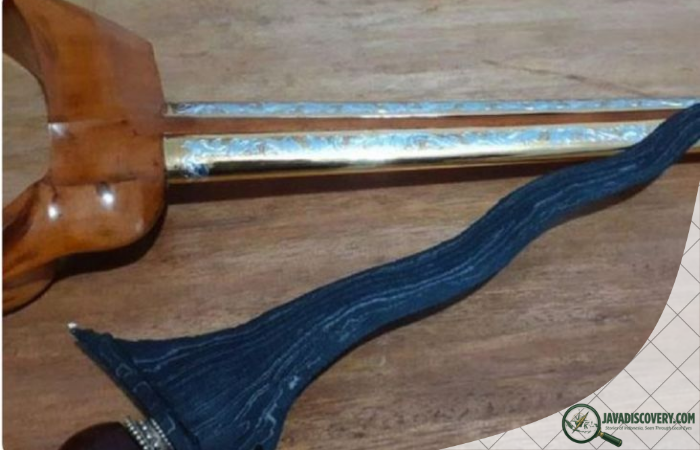
1. The Pamor (Etched Pattern): Created by folding iron and nickel-rich meteorites hundreds of times, the intricate swirling patterns visible on the blade’s surface are read like palm lines. Certain pamor patterns (such as Bercerek or Udan Mas) bring wealth and cooling peace, while others (such as Bebandhan or sharp angular chevrons) are considered volatile and intended exclusively for soldiers or rulers facing direct warfare.
2. The Dapur (Structural Form): The specific shape, number of waves, and decorative carved details on the base of the blade dictate its core spiritual “personality.” A straight blade (lurus) represents steadfast contemplation and moral rectitude, whereas a 13-wave blade like Setan Kober signifies maximum dynamic force, raw ambition, and unpredictable transformation.
3. The Match of Character (Tanjeg and Cocok): In Javanese metallurgy, a blade is never inherently evil; rather, it is unmatched. A “hot” iron alloy carrying an aggressive spiritual frequency will cause illness, family discord, or financial ruin if worn by an ordinary person with a weak, unstable mind (jiwa lemah). Only a ruler or ascetic with immense internal coolness (adem) can safely channel a blade of Setan Kober’s caliber.
Why the Fear of Ancient Iron Alloys Persists Today
Even in contemporary, modern Indonesia—where smartphones and high-rise developments dominate daily life—the apprehension surrounding ancient iron alloys remains remarkably persistent. This enduring respect for old metals is rooted in a combination of sensory experience, psychological archetype, and genuine material science:
The Chemistry of Ancient Metallurgy: Historical Javanese blades were not forged from uniform modern stainless steel. They were composite alloys constructed from titanium-bearing iron ores, nickelous meteorites (such as those from the 1797 Prambanan fall), and high-carbon forest iron. When etched with natural acids like arsenic and lime juice during ritual washing (jamasan), these uneven metals produce distinct organic textures, metallic scents, and chemical reactions that feel palpably “active” to the touch.
The Legacy of Ancestral Intention: Traditional Javanese empus spent weeks fasting, praying, and holding silent vigil over their hearths while hammering the red-hot iron. Modern collectors and rural villagers alike view ancient blades as physical batteries charged with the focused willpower, mantras, and emotional states of the blacksmiths who shaped them centuries ago.
Cultural Memory of Political Disruption: The tragedy of Setan Kober serves as an enduring socio-cultural parable. It warns against takabur (arrogance) and the dangerous lure of unbridled power. When a Javanese family inherits a mysterious old kris, the lingering fear of the blade being “hot” reflects a deep-seated cultural preference for harmony, emotional stability, and the avoidance of lingering familial curses.
Honoring the Iron without Invoking the Flame
Today, the tale of Setan Kober lives on not as mere ghost lore, but as a sophisticated reminder of the relationship between human ethics and material power. Master collectors and traditional cultural caretakers in Java continue to perform annual Satu Suro cleansing rituals for ancient heirlooms, applying fragrant sandalwood oils to prevent rust while symbolically “cooling” the iron’s internal energy.
Through the enduring lens of blade metaphorology, the story of Arya Penangsang and his cursed iron remains crystal clear: a tool of power—whether made of ancient meteoric iron or modern technology—is only as safe as the wisdom of the hand that draws it.