Sacred Teak Groves of Kendal Protected by Oral Taboo Pamali

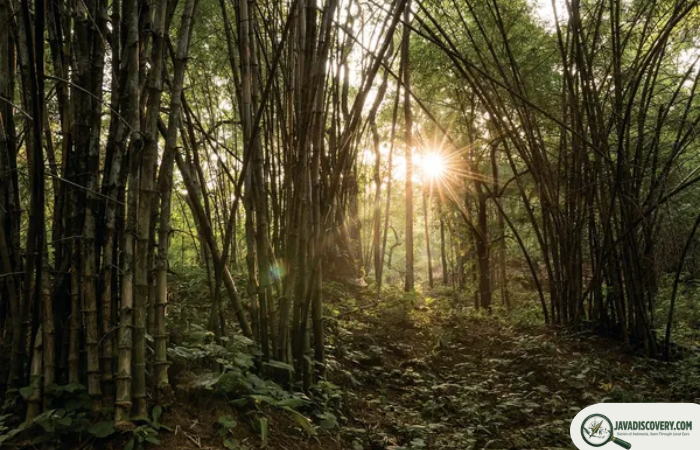
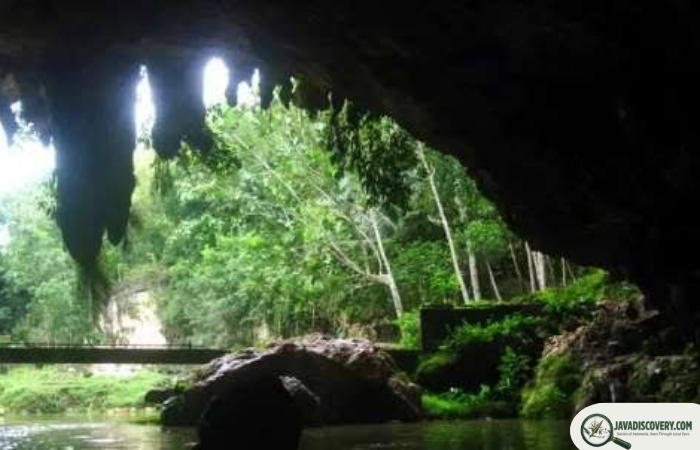
javadiscovery.com – A quiet stillness rests beneath the dense, towering canopy of North-Central Java’s coastal interior, where the lowland hills of Kendal Regency rise gently away from the Java Sea. Here, surrounded by modern asphalt roads, sprawling industrial corridors, and intensively logged commercial timber plantations, sit isolated pockets of ancient woodland known locally as alas keramat or sacred groves. Towering dozens of meters into the sky, massive teak trees (Tectona grandis) with trunks several meters wide stand untouched, their thick, weathered bark draped in climbing vines and wild orchids. Unlike state-managed forestry reserves enclosed by chain-link fences or guarded by armed forest wardens, these ancient groves carry no official signs, iron gates, or state boundary markers. Instead, they are protected exclusively by an invisible, unwritten, and unbreakable customary law: the sacred Javanese oral taboo known as pamali.
The Anatomy of Pamali: Unwritten Law as Ecological Defense
In classical Javanese culture, pamali represents a customary prohibition system rooted in ancestral veneration, spiritual cause-and-effect, and deep ecological awareness. It operates not through external physical enforcement, but through internalized moral and spiritual accountability within local communities:
- Ancestral Ownership: Local tradition holds that the sacred teak groves belong to the spiritual founders (*cikal bakal*) of the surrounding villages—often historical figures, Islamic scholars (*wali*), or ancient Mataram nobles who first cleared the land centuries ago. Taking timber from these groves is viewed as theft from ancestral spirits.
- Spiritual Retribution (*Kualat*): According to oral belief, violating a *pamali* brings swift spiritual retribution (*kualat* or *bendho*). Villagers share detailed accounts of outsiders or reckless individuals who cut down trees in the sacred groves, only to suffer sudden illness, unexplained accidents, or financial ruin.
- Absolute Prohibition: The rules of the sacred groves are uncompromising. No living tree may be chopped down, no dead wood may be collected for firewood, and not a single fallen branch, stone, or leaf may be removed from the forest floor for personal use.
Ecological Sanctuaries in a Monoculture Landscape
While centuries of intensive logging during the Dutch colonial era transformed much of Java’s natural lowland forest into managed monoculture teak plantations, Kendal’s sacred groves survived as pristine ecological arks:
- Biodiversity Hotspots: Because human interference is strictly forbidden, these sacred groves retain ancient multi-tiered forest structures. Ancient teaks grow alongside native hardwood species, wild figs (*Ficus*), tree ferns, and dense understory brush that have completely disappeared from commercial timber blocks.
- Refuge for Native Wildlife: The quiet canopy offers essential nesting sites for rare birds, including the Javan hawk-eagle (*Nisaetus bartelsi*), green peafowl, wild junglefowl, and native fruit bats. Ground fauna like the Javan muntjac deer and wild boars find secure shelter within the undisturbed undergrowth.
- Hydrological Anchors: The deep, undisturbed root systems of the ancient teaks trap rainwater, recharging subterranean aquifers and sustaining year-round natural springs (*tuk*) that supply clean drinking water and irrigation to surrounding farming villages during severe dry seasons.
Rituals of Gratitude: Sedekah Bumi and Custodial Stewardship
The survival of Kendal’s sacred teak groves relies on the dedicated stewardship of traditional village custodians (*juru kunci*) and annual communal rituals that reinforce ecological reverence across generations:
- Role of the Juru Kunci: The village custodian acts as the cultural bridge between the community and the sacred grove. They oversee access to the forest perimeter, maintain ritual sites within the clearing, and pass down the oral histories and environmental taboos to younger villagers.
- Sedekah Bumi (Earth Offering): Every year following the main rice harvest, villagers gather at the edge of the sacred grove to conduct *Sedekah Bumi*. Tumpeng (conical yellow rice mounds), local fruits, and traditional dishes are shared in a communal feast (*slametan*) to express gratitude for the land’s fertility and request continued protection for the forest.
- Passing Down Oral Tradition: Through bedtime storytelling, village gatherings, and informal teaching, elders continuously pass down the boundaries and rules of *pamali*, ensuring that children grow up with an innate respect for the sacred wilderness.
Modern Challenges and the Future of Customary Conservation
As industrial expansion, infrastructure developments, and land pressures increase across Central Java, Kendal’s sacred teak groves face new challenges. Modern commercial interests sometimes struggle to understand why valuable timber sits unused inside unprotected village plots.
However, environmental scientists and local advocacy groups increasingly recognize that traditional customary systems like *pamali* offer one of the most effective, low-cost models for community-led forest conservation. By integrating indigenous cultural values with formal environmental protections, these sacred teak groves stand as enduring proof that respect for spiritual heritage can safeguard the natural world for generations to come.