Sand Mining and the Future of Rural Java

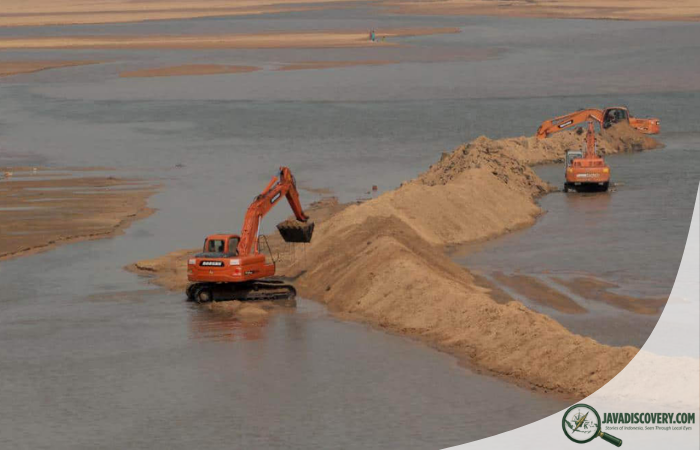
javadiscovery.com – Before sunrise, the riverbank is already alive with engines. Trucks line up along a dirt road carved between cassava fields, their headlights cutting through thin morning mist. Below, men stand waist deep in cold water, shovels striking the riverbed with a metallic rhythm. Each scoop lifts dark volcanic sand, heavy and glistening. By midday, the river will look slightly different, its current subtly redirected, its banks a little steeper. In rural Java, sand has become both livelihood and quiet dilemma.
Born from Volcanoes
Java is an island shaped by fire. More than a hundred volcanoes rise across its spine, many still active. When mountains such as Merapi, Semeru, or Kelud erupt, they release vast quantities of ash, rock, and sand. During rainy seasons, these materials are carried downstream through lahar flows, settling along riverbeds in thick deposits.
Volcanic sand is prized for construction. Its coarse texture and mineral composition make it suitable for concrete production, road building, and urban expansion. As Indonesian cities grow and infrastructure projects multiply, demand for sand increases steadily. Rural districts situated near volcanic rivers find themselves at the center of this extraction economy.

A River Transformed
Along the slopes of Mount Merapi in Central Java, rivers such as the Gendol and Opak carry remnants of past eruptions. In certain stretches, excavators operate alongside manual laborers. The sound of metal buckets scraping stone echoes against steep embankments.
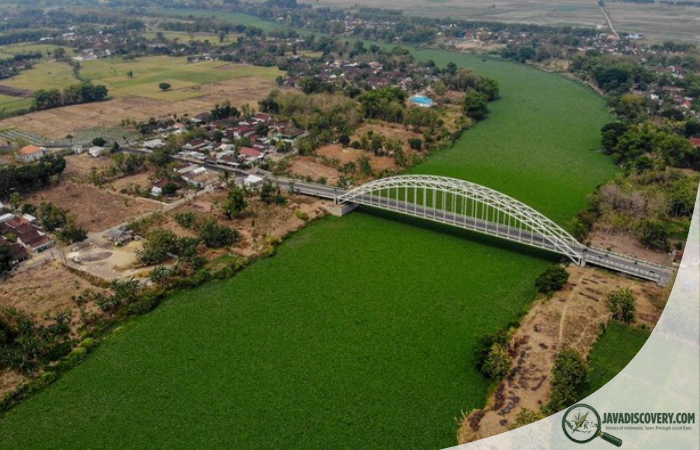
At first glance, the activity appears industrious but contained. Yet over time, intensive sand mining alters river morphology. Removing sediment deepens channels, destabilizes banks, and changes flow patterns. During heavy rain, water may surge more forcefully through narrowed corridors, increasing erosion downstream.
Farmers living near these rivers observe changes not only in the water’s color but in its behavior. “The current feels stronger now,” says Pak Sutrisno, who cultivates chili peppers on land overlooking a mined stretch. “When the rain is heavy, we worry about the embankment.”
Economy at the Water’s Edge
For many rural families, sand mining provides income in regions where agricultural returns fluctuate. A truckload of volcanic sand can fetch a price that surpasses several days of farm labor. Young men who might otherwise migrate to cities remain in their villages, operating pumps or loading trucks.
In parts of East Java near Mount Semeru, informal mining sites dot river valleys. Temporary huts built from tarpaulin and bamboo shelter workers from sun and rain. Meals are cooked over small fires on the riverbank. The work is physically demanding, muscles straining against the weight of wet sand.
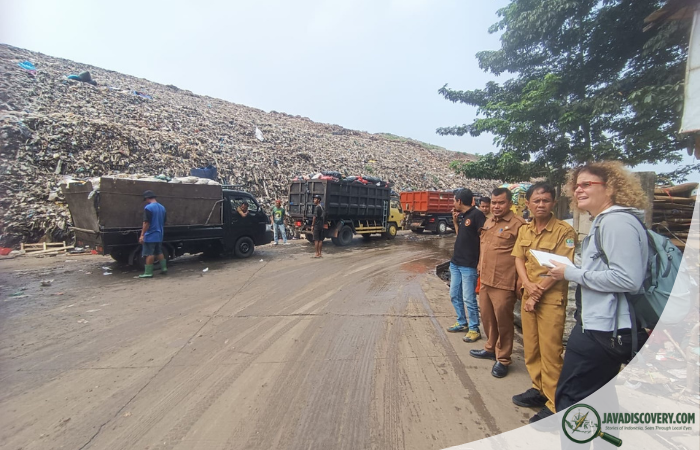
Local governments issue permits for certain operations, attempting to regulate extraction zones and volumes. Yet illegal mining persists in some areas, driven by high demand and limited oversight. The boundary between sanctioned and unsanctioned activity can blur, particularly in remote stretches.
Gender and Invisible Labor
While men often dominate river extraction, women’s roles are woven into the economic chain. Some manage small food stalls serving miners. Others handle finances at home, budgeting earnings that fluctuate with demand. In households where sand income replaces unstable farming yields, women’s financial planning becomes crucial.
Ibu Wati, whose husband works in a riverbed near Lumajang, describes a cycle of uncertainty. “If construction slows, there is less work,” she explains. “When rain is too strong, they cannot mine.” Her voice carries both gratitude for income and concern for safety.
Environmental Consequences
Excessive sand extraction can accelerate riverbank collapse, threatening nearby fields and homes. In some districts, bridges have required reinforcement after riverbeds deepened unexpectedly. Aquatic habitats suffer when sediment layers are stripped faster than natural processes can replenish them.
Sand also plays a role in groundwater regulation. Healthy river systems allow water to infiltrate surrounding soil gradually. When channels are altered dramatically, infiltration patterns shift, potentially affecting wells and irrigation systems.
Environmental researchers studying Central Java note that sustainable extraction must account for sediment replenishment rates, which vary depending on volcanic activity and rainfall intensity. Removing more sand than rivers can replace disrupts equilibrium.
Between Regulation and Reality
Provincial authorities have introduced zoning systems that designate specific stretches for mining while protecting others. Inspections aim to ensure compliance with depth limits and environmental standards. Yet enforcement across dispersed rural landscapes remains challenging.
Village leaders often navigate competing pressures. On one hand, they recognize environmental risks. On the other, they see tangible economic benefits for residents. Community meetings can become forums for negotiation, where concerns about eroding banks meet arguments about school fees and household expenses.
Post Eruption Opportunity
After major eruptions, sand accumulation can be immense. In the years following Merapi’s 2010 eruption, river valleys were thick with fresh deposits. Mining intensified, framed by some as a form of disaster recovery. Removing excess sediment was said to reduce lahar risk during heavy rain.
In such contexts, extraction carries a dual narrative. It is both hazard mitigation and economic opportunity. The challenge lies in transitioning from short term clearing to long term sustainability once immediate risks subside.
Voices from the Fields
In a village near Probolinggo, rice fields stretch green against distant volcanic slopes. Pak Hadi, a farmer in his sixties, remembers when the nearby river ran shallow and wide. “We used to fish there,” he says. “Now it is deeper, and the banks crumble.”
He does not oppose mining outright. Several of his relatives work in the sector. Yet he worries about cumulative effects. During last year’s rainy season, part of his field edge slid into the river after intense rainfall. Whether the collapse was solely due to mining is difficult to prove. For him, the connection feels intuitive.
Balancing Growth and Ground
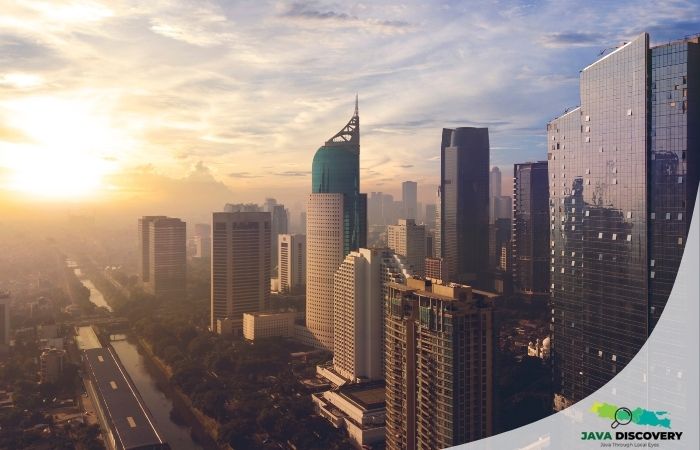
Indonesia’s infrastructure ambitions require vast quantities of construction material. Sand is fundamental to concrete, the backbone of roads, bridges, and housing. Urban skylines rising in Surabaya and other cities are linked invisibly to rural riverbanks where sand is extracted.
This connection raises broader questions about spatial equity. Rural landscapes supply materials fueling urban development. The environmental burden often remains localized, while economic gains distribute unevenly.
Some experts advocate for stricter quotas, improved monitoring technologies, and investment in alternative construction materials. Others emphasize community based management, where villagers collectively decide extraction limits and share oversight responsibilities.
The River at Dusk
As evening falls, trucks depart one by one, tires leaving patterned tracks in damp soil. The river grows quieter. Water flows through newly carved channels, reflecting a fading orange sky. On the banks, children play near piles of sand awaiting transport, their laughter momentarily obscuring adult debates about sustainability.
The future of rural Java does not hinge on sand alone. Agriculture, tourism, small industries, and remittances all contribute to village economies. Yet sand mining crystallizes a larger tension between immediate income and long term environmental resilience.
In volcanic regions, rivers will continue to carry sediment from the mountains. The question is not whether sand exists, but how it is valued and managed. Each shovel lifted from a riverbed is a transaction between present need and future stability.
Under a sky turning indigo, the river resumes its ancient course. It has carried volcanic fragments for millennia, long before trucks and excavators arrived. Whether it can continue to do so without losing its balance depends on choices made far beyond its banks, and within the villages that stand closest to its shifting edge.