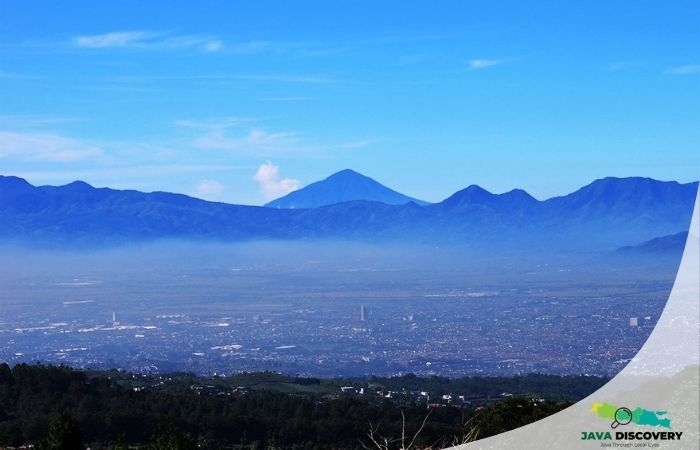
Javanese Mysticism and the Birth of Modern Geology

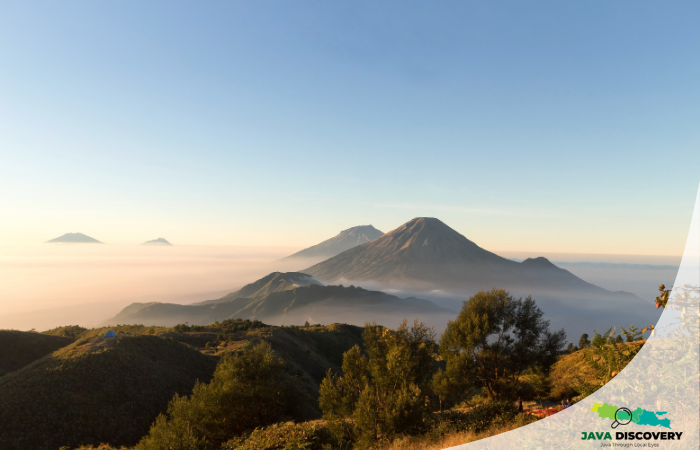
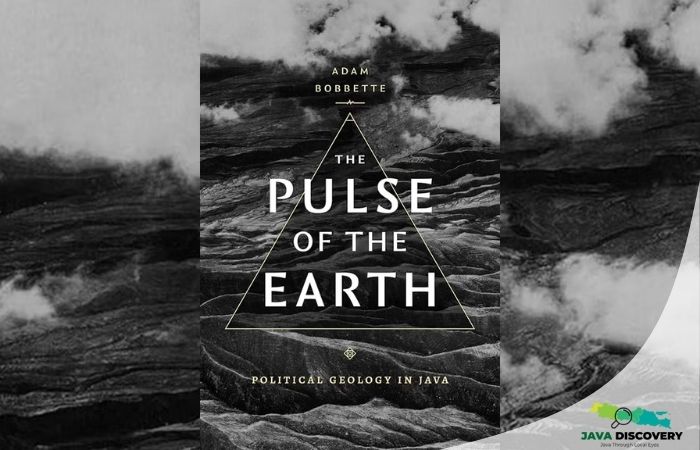
javadiscovery.com – In the heart of Java, where volcanic peaks pierce the sky and ancient myths still whisper through the valleys, lies a story that challenges the foundations of modern science. This story, told in Adam Bobbette’s remarkable book Denyut Nadi Bumi (The Pulse of the Earth: Political Geology in Java), argues that the origins of global geological thought may not rest in Europe’s laboratories, but in the sacred landscape of Java itself — a place where spirituality and science have long been intertwined.
The Hidden Pulse Beneath Java’s Mountains
Bobbette, a political geologist and lecturer at the University of Glasgow, spent years living among the people of Mount Merapi, one of the world’s most active volcanoes. His fieldwork combined interviews with local villagers, readings of colonial archives, and close observation of Javanese cosmology. The result is a radical thesis: that Javanese mysticism — with its view of nature as a living, spiritual network — influenced the evolution of modern geology more deeply than the world has acknowledged.
For centuries, Java’s volcanic chain has been both a source of awe and terror. To the Javanese, volcanoes are not mere mountains but sentient entities connected to the divine. Their eruptions are not random natural disasters but expressions of cosmic balance. When Bobbette examined how colonial scientists studied these eruptions in the late 19th century, he found an astonishing overlap between local spiritual narratives and the birth of geological ideas that would later transform global science.

Colonial Encounters and the Exchange of Knowledge
In the late 1800s, the Dutch colonial government dispatched geologists to study Java’s unstable terrain. The goal was pragmatic: protect plantations, secure railways, and understand how to manage volcanic risks that threatened colonial investments. Yet, as these scientists settled into mountain villages, they began to interact with Javanese mystics, court advisers, and farmers who saw the world in profoundly different terms.
In their journals, these European scientists described conversations with local figures who explained that volcanoes, oceans, and winds were linked by invisible spiritual currents. These exchanges were not mere curiosities — they began to reshape the way Western scientists thought about the Earth’s systems. Bobbette notes that these encounters created a “hybrid epistemology,” blending rational observation with indigenous cosmology.
“The colonial scientists didn’t just study the land,” writes Bobbette, “they were studying a civilization that had already built its own geological understanding — one that was metaphysical, ecological, and deeply moral.”
The Vertical and the Horizontal World
Before the 20th century, Western geology largely viewed the Earth as a cooling sphere — its surface cracking and collapsing as it aged. Volcanoes were seen as vertical structures, pushing upward or caving inward under the weight of time. It was a model of decay and rigidity. But in Java, Bobbette discovered, people saw the planet differently.
Javanese cosmology imagined the world as an intricate web of relationships. Mountains, seas, spirits, and humans were all part of one living rhythm. The southern sea — home to the legendary Queen Nyai Roro Kidul — and the mountains of Central Java formed a sacred axis where spiritual and physical forces flowed back and forth. Eruptions and earthquakes were not isolated phenomena, but messages from a living Earth whose pulse connected ocean to summit.
“Where European scientists thought vertically, the Javanese thought horizontally,” Bobbette explains. “They understood the Earth as a network of correspondences — a living body in motion.”
From Mysticism to Modern Science
This horizontal worldview — linking sea, land, and sky — echoes what modern science would later call plate tectonics. The idea that the Earth’s crust is composed of shifting plates that collide, slide, and create mountains and earthquakes emerged only in the 1960s. Yet, as Bobbette argues, its philosophical roots stretch back to colonial Java, where European and Javanese minds grappled with the same mysteries of motion and transformation.
“When plate tectonics was adopted as official theory,” he said during a recent discussion in Jakarta, “it was hailed as a scientific revolution. Yet, in doing so, Western scientists erased the intellectual contributions of the very people who inspired their way of thinking — the Javanese.”
Indeed, many colonial scientists who worked in Java wrote about being struck by local interpretations of volcanoes. Their notes — now buried in archives in Leiden and Jakarta — reveal deep respect for Javanese explanations that combined mythology, geography, and moral philosophy. For these communities, the Earth was not a machine but a moral being, responding to human imbalance and divine will.
Mount Merapi: The Sacred Laboratory
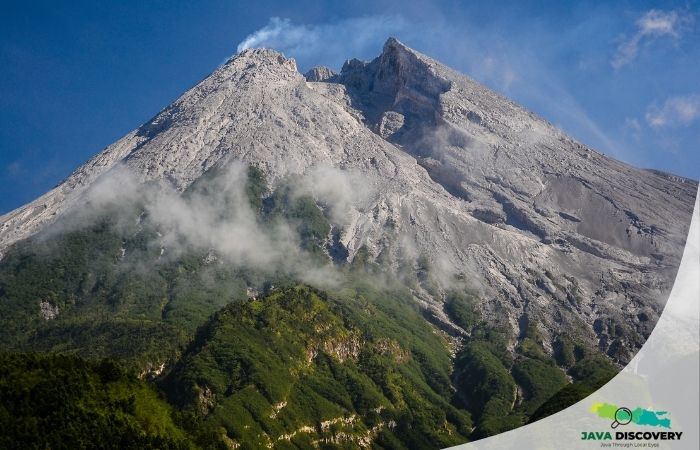
To understand Bobbette’s argument, one must return to Mount Merapi — the mountain that has shaped both myth and science. For generations, Javanese kings and shamans have viewed Merapi as a spiritual axis, connecting the human realm with the unseen world. Ritual offerings are still made each year to appease the mountain’s guardian spirits, seeking harmony between humans and nature.
In the late 19th century, Dutch geologists stationed near Merapi began studying its frequent eruptions. One of them, Dr. Rogier Verbeek, produced detailed maps and observations that would later influence global volcanic studies. But Verbeek also recorded his encounters with local mystics, whose interpretations of Merapi’s behavior helped him grasp patterns that pure measurement could not reveal. Bobbette argues that Verbeek’s openness to these perspectives made him one of the first “political geologists” — a scientist who understood that nature and culture are inseparable.
Merapi, in this sense, was both a volcano and a classroom. It taught scientists to read the Earth not as inert matter but as a dynamic being — a lesson that resonates with today’s ecological crises. As Bobbette puts it, “The mountain is alive, and it thinks.”
Political Geology: When Knowledge Has Power

The subtitle of Bobbette’s book, Political Geology in Java, points to another layer of his argument: that geology was never neutral. The study of volcanoes in colonial Indonesia was tied to power, extraction, and empire. Yet it also became a space of dialogue, where indigenous thought subtly reshaped imperial science from within.
In his research, Bobbette traces how Javanese concepts of balance — known as rukun or cosmic harmony — influenced how scientists began to describe the Earth’s equilibrium. The notion that tectonic plates maintain a delicate global balance echoes these older cosmological ideas. What Western science described mathematically, Javanese mysticism had already expressed poetically for centuries.
This revelation complicates the traditional story of scientific progress. It suggests that knowledge flows in multiple directions — from the mountain villages of Java as much as from the lecture halls of Europe. The Earth’s “pulse,” as Bobbette calls it, beats across cultures, reminding us that no civilization has a monopoly on truth.
The Spiritual Logic of the Earth
To the Javanese, every tremor and eruption is part of a grand moral dialogue between humans and nature. A volcanic outburst may signify not geological instability but spiritual disharmony. This belief, far from being superstition, embodies a sophisticated ecological logic. It recognizes that the Earth’s systems are reactive — that human actions can disturb natural equilibrium.
Modern environmental science has only recently begun to echo this understanding, acknowledging feedback loops, ecosystem sensitivity, and the anthropogenic impact on climate. In this sense, Javanese mysticism anticipated the planetary consciousness now central to discussions of the Anthropocene.
When Bobbette presents these findings to academic audiences, he often faces skepticism. Can mysticism truly inform science? His answer is yes — because mysticism, in this context, is not irrational but relational. It is a way of seeing the Earth as alive, responsive, and morally charged. “The Javanese were doing systems thinking long before systems theory existed,” he writes. “They were mapping energy, not data.”
Reclaiming the Roots of Planetary Thought
The Pulse of the Earth is more than a historical study; it is a philosophical provocation. By tracing the intertwined histories of geology and spirituality, Bobbette challenges the arrogance of Western science — the belief that discovery begins only when Europe pays attention. His book repositions Java not as a periphery but as a birthplace of planetary thinking.
In doing so, he restores dignity to the forgotten interlocutors of science: the Javanese guides, mystics, and scholars who once explained the Earth to colonial visitors. Their wisdom, rooted in myth but grounded in observation, taught early scientists to listen — not just to rocks and rivers, but to the spirit within them.
In one archival letter, a Dutch scientist marvels at how a Javanese elder described the Earth’s trembling as “the breath of the sleeping mountain.” That poetic image, Bobbette suggests, captures something that equations alone cannot: that geology is not merely about stone, but about life.
The Pulse of the Earth Continues
Today, as climate change, deforestation, and ecological collapse reshape our planet, Bobbette’s message feels urgent. The fusion of Javanese mysticism and modern science offers a model for humility — a reminder that knowledge should harmonize with, not dominate, the natural world.
Perhaps the most revolutionary idea in The Pulse of the Earth is not scientific at all. It is ethical. It tells us that to understand the Earth’s pulse, we must first listen — to the mountains, to the sea, and to the ancient voices that once whispered beneath the ash of Merapi. For in their mysticism lies a wisdom that modern geology is only beginning to rediscover.