The Story of Bakso Lempit Lasem from China to Java

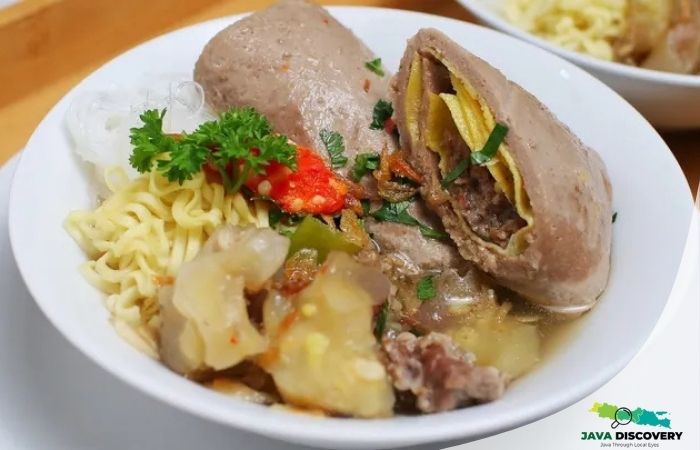
javadiscovery.com – Have you ever tasted bakso lempit from Lasem? This humble bowl of soup carries a long journey of flavor and culture. Originating from the kitchens of Chinese-Javanese Peranakan families, bakso lempit is a blend of rolled omelet filled with minced chicken, served in a clear vegetable broth. It’s often paired with steaming rice, a comforting meal that connects generations.
From Ancient China’s Dumplings to Lasem’s Dining Tables
The roots of bakso lempit can be traced back to traditional Chinese snacks like dumplings. Similar to egg dumplings or 蛋饺 (danjiao), this dish wraps fillings of shrimp, beef, chicken, lamb, or pork inside a thin layer of egg. Its shape resembles a gold ingot — a symbol of prosperity known as “招财进宝,” meaning “bringing wealth and treasure.”
Historical records trace this dish to the Eastern Han Dynasty (25–220 CE), when Zhang Zhongjing mentioned lamb dumplings for their therapeutic effects. Later, as the Hakka people migrated south and faced a shortage of wheat, they replaced flour with eggs, creating the dish we know today.

The Art and Meaning Behind Every Fold
Traditionally, the egg wrapper is made by spreading a thin layer of beaten egg over a hot wok, rotating it evenly before placing the filling inside and folding it with precision. Modern cooks sometimes use electric pans, yet the mastery of heat control and folding remains an art form passed through generations.
Beyond its culinary delight, bakso lempit was once believed to calm the mind, nourish the heart, improve blood circulation, and balance the body’s yin energy. Despite its health benefits, moderation is advised due to its high cholesterol content.
It can be steamed, fried, or simmered in hot broth. In Jiangnan, China, egg dumplings are often served with meatballs and tofu rolls during Lunar New Year family reunions — symbolizing harmony and prosperity. Some modern variations even resemble small pouches, complementing dishes like radish soup.
Lasem: The Little China of Java
As Chinese migrants brought their food culture to the Nusantara, the dish found its place in Javanese and Peranakan households. Although rarely found in restaurants today, bakso lempit remains a beloved homemade delicacy, often served during family gatherings or ancestral prayers.
In Lasem — a historic coastal town once called “Petit Chinois” or “Little China” during the Dutch colonial era — this dish became part of daily life. It reflects not only culinary creativity but also centuries of cultural exchange.
A Symbol of Heritage and Harmony
Every bowl of bakso lempit tells a story — of migration, adaptation, and affection. The recipe evolved with local touches: chicken or shrimp fillings combined with fresh Javanese-style broth made from carrots, cabbage, leek, and celery, infused with light spices.
This simple yet meaningful dish stands as proof of the cultural fusion between Chinese, Javanese, and even European influences in Lasem’s kitchen heritage. For many Lasem natives, especially those living abroad, bakso lempit is more than food — it’s a taste of home, a nostalgic reminder of family, faith, and togetherness.
Through a bowl of bakso lempit, Lasem’s story continues to live — warm, humble, and deeply human.