The Soul of the Hearth: The Story Behind Traditional Kitchen Tools

javadiscovery.com – In the dim, smoke-stained kitchens of rural Central Java, the story behind traditional kitchen tools begins with the rhythmic, percussive song of stone meeting stone. This is the “ulekan,” the sound of a heavy volcanic stone pestle grinding chili, shallots, and shrimp paste against a wide, shallow mortar known as a “cobek.” To the uninitiated, these are merely primitive implements of food preparation, but to the Javanese, they are the sacred instruments of “roso”—the intuitive feeling and soul required to create a true meal. The story behind traditional kitchen tools is one of an unbroken lineage, where every object is crafted from the island’s earth to harmonize the physical needs of the body with the spiritual requirements of the household. In these spaces, the “pawon” or kitchen is not a laboratory of efficiency, but a sanctuary of transformation where wood, fire, and stone work in concert to sustain the Javanese family through generations of wisdom and labor.
The Stone Heart: Cobek and Ulekan
The most iconic duo in the Javanese kitchen is undoubtedly the cobek and ulekan. Carved from the grey volcanic basalt of Java’s mountains, these tools are literally born from the fire of the island. The story behind traditional kitchen tools made of stone is rooted in the belief that the material itself carries “energi bumi” or earth energy. A cook does not simply crush ingredients; they release the life force of the spices through the weight of the stone. Unlike a modern blender that shears fibers with high-speed blades, the stone mortar bruises and mashes, allowing the volatile oils of the galangal and turmeric to emulsify into a rich, complex paste.
Ownership of a cobek is a rite of passage. In many Javanese families, a seasoned mortar is passed down from mother to daughter, having grown smooth and seasoned over decades of use. The seasoning of the stone is a metaphor for the maturation of the soul—the more it is used, the better the results. A new cobek must be “tamed” by grinding coarse salt and rice until the loose volcanic grit is removed, a process that mirrors the Javanese ideal of refining one’s character through discipline and patience. When a grandmother grinds her sambal, she is not just making a condiment; she is practicing a form of meditation, her wrist moving in the same circular “ngulek” motion that her ancestors used a thousand years ago.

Local voices in the markets of Muntilan, near the base of Mount Merapi, speak of the stone’s personality. A master carver explains that a good cobek must be “porous but firm.” It must hold the spices without absorbing too much of the precious oils. To see a row of these stone tools being carved by hand is to witness the intersection of geology and gastronomy. The story behind traditional kitchen tools of stone is a testament to the Javanese desire to remain grounded, ensuring that even the most basic act of eating remains tied to the volcanic soil that feeds the nation.
The Luweng: The Earth’s Warmth
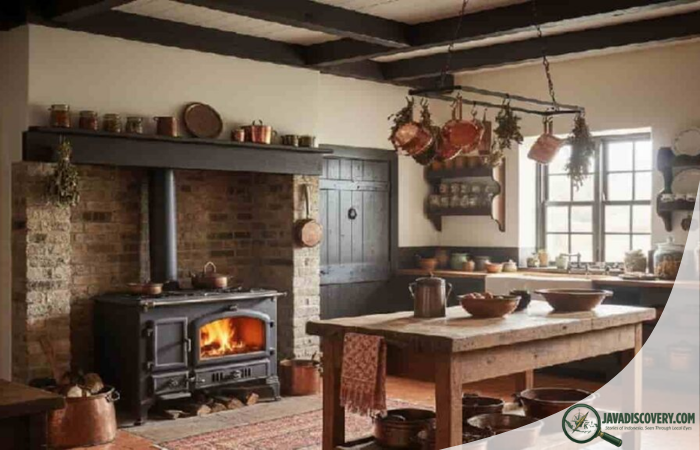
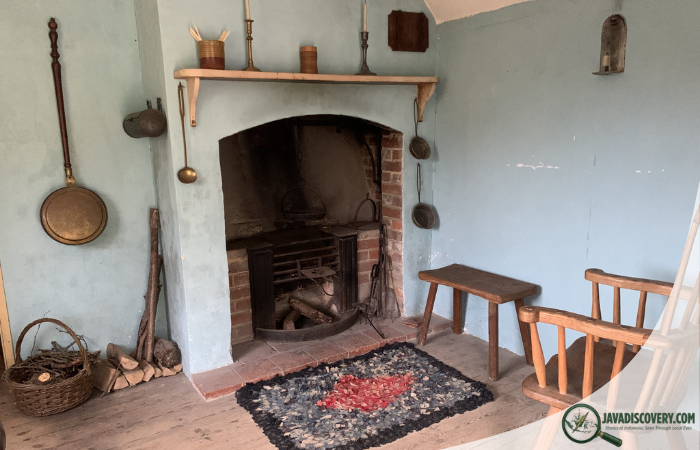
The centerpiece of the traditional Javanese kitchen is the “luweng,” a wood-burning stove built from clay and bricks. The story behind traditional kitchen tools like the luweng is deeply spiritual, as the stove is considered the “pusat” or the center of the home’s vitality. The luweng typically features two or three holes for pots, fueled by “kayu bakar” or firewood collected from the nearby forest. The heat from a luweng is different from the sharp, blue flame of a gas stove; it is a radiant, enveloping warmth that flavors the food with a subtle hint of woodsmoke, a quality known as “sangit.”
The luweng is also a site of ritual protection. It is common to see a small offering of “kembang setaman” or incense placed near the ash pit to appease the spirits of the hearth. The fire must be tended with “sabar” or patience. One does not simply turn a dial; one must blow through a “semprong”—a bamboo hollow tube—to coax the embers into life. This interaction between human breath and elemental fire is a vital part of the story behind traditional kitchen tools. It reminds the cook that sustenance is a gift that requires active participation and respect for the elements. In the rainy season, the luweng becomes the social hub of the house, where family members gather to dry their clothes and share stories, the stove acting as a guardian against the damp “masuk angin” or chills of the tropical night.
The Art of the Kukusan and Tampah
Among the woven tools, the “kukusan” and “tampah” represent the Javanese mastery of bamboo. The kukusan is a cone-shaped basket used for steaming rice. Its unique geometry is not accidental; the cone allows steam to circulate evenly through the grains, resulting in rice that is “pulen” or perfectly soft and sticky. The story behind traditional kitchen tools made of bamboo is one of sustainability and breathability. Unlike plastic or metal, bamboo is a living material that allows the food to “breathe,” preventing it from becoming soggy or sour in the intense tropical heat.
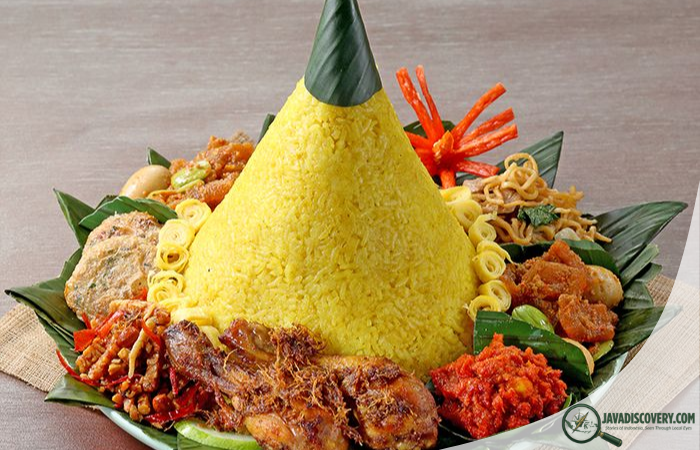
The tampah, a wide, flat circular tray, is perhaps the most versatile tool in the Javanese repertoire. It is used for “nampi”—the rhythmic tossing of rice to separate the husks from the grain. This movement is a dance of physics and grace, requiring a flick of the wrist that takes years to master. Beyond its functional use, the tampah serves as the canvas for the “tumpeng,” the conical yellow rice tower served at every major life celebration. The story behind traditional kitchen tools like the tampah is tied to the concept of the circle of life. When a community gathers to eat from a single tampah, it reinforces the value of “gotong royong” or mutual cooperation. The tray becomes a communal plate that erases the boundaries between individuals, uniting them in a shared harvest.
The Paron and the Grater’s Edge
No Javanese kitchen is complete without a “parutan,” a traditional grater used primarily for coconut. Before the advent of canned coconut milk, the daily ritual of grating “klapa” was a foundational task. The story behind traditional kitchen tools used for processing coconut is a story of manual labor turned into an art form. The “parutan” is often a simple piece of wood with small metal teeth, but the skill required to grate a coconut without injuring the fingers is a mark of a seasoned cook. The resulting “santan” or coconut milk is the lifeblood of Javanese curries and sweets, providing the richness that defines the island’s palate.
The use of these tools requires a physical engagement that modern gadgets have largely replaced. To grate, to grind, and to fan the fire involves the whole body. It is a form of “olah roso”—the cultivation of feeling. A Javanese cook can tell if the sambal is ready not by a timer, but by the sound of the stone and the change in the aroma rising from the mortar. The story behind traditional kitchen tools is ultimately about this sensory intelligence, a way of knowing the world through the hands and the heart rather than through instructions and measurements.
Earthenware: The Cooling Touch of Clay
The “kendi” and the “genthong” are the earthenware vessels that store the kitchen’s water. Made from the red clay of the plains, these unglazed pots are naturally porous. Through the process of evaporation, the water inside stays remarkably cool, even on the hottest afternoons. The story behind traditional kitchen tools made of clay is one of “adem”—the Javanese pursuit of coolness and emotional stability. Drinking from a kendi is a unique experience; the water tastes of the earth itself, refreshing and grounding.
The genthong, a large water jar often kept in a corner of the kitchen, is a symbol of abundance and hospitality. In traditional villages, a genthong was often placed in front of the house with a ladle, so that any thirsty traveler could stop and drink. This ethos of sharing is built into the very design of the tools. The story behind traditional kitchen tools is inseparable from the Javanese moral code of “berbagi” or sharing. The kitchen is not a private fortress but a source of communal nourishment, and the tools are the facilitators of this generosity.
The Persistence of Tradition in the Modern Pawon
As modern appliances like rice cookers and blenders find their way into Javanese homes, the traditional tools have not disappeared; they have simply found a new balance. Many Javanese households maintain a “dual kitchen” system. There is the “dapur bersih” or clean kitchen with modern gadgets for quick meals, and the “dapur kotor” or “pawon” where the stone cobek and the wood-fired luweng remain for the serious work of traditional cooking. The story behind traditional kitchen tools continues because certain flavors—the char of the wood fire, the texture of stone-ground spices—cannot be replicated by machines.
This persistence is a form of cultural resistance. By choosing to use an ulekan over a food processor, a Javanese cook is making a choice to stay connected to their heritage. They are choosing to spend the time, to use the effort, and to honor the “roso.” The story behind traditional kitchen tools is a reminder that in a world of instant gratification, there is still profound value in the slow, the handmade, and the grounded. These tools are the anchors that keep the Javanese identity from being swept away by the currents of globalization.
Ultimately, the story behind traditional kitchen tools is the story of Java itself—an island that remains deeply rooted in its volcanic earth while reaching for the future. As long as the sound of the ulekan echoes through the morning air and the scent of woodsmoke rises from the luweng, the soul of the Javanese hearth will remain alive. These tools are more than wood, stone, and clay; they are the silent witnesses to centuries of family life, carrying the flavors of the past into the meals of tomorrow.