Why Tempe Was Once a Poor Man’s Food and Now a Global Star

javadiscovery.com – In the warm humidity of a Javanese morning, banana leaves unfurl like small sails, each wrapping a pale white cake speckled with mycelium threads. The fragrance is faintly nutty, clean, almost floral. This is tempe—born from thrift, perfected by patience, and carried by the wisdom of mothers and market vendors who learned to stretch a handful of soybeans into nourishment for a family. Once dismissed as a “poor man’s food,” tempe has quietly fermented its way into global menus, scientific journals, and Michelin-starred kitchens.
The Humble Origins of Tempe
Tempe’s story begins in Central Java, where ingenuity met necessity. Scarcity shaped the table, and Javanese households learned to waste nothing: cracked beans, leftover pressings from oil making, or a small bowl of soaked soy was never discarded. With time—and the tropical climate’s cooperative warmth—a friendly mold colonized the beans, knitting them into a firm, sliceable cake. Tempe became protein that the poor could afford, a lifeline in times when meat was a luxury and rice was the anchor of every meal.
That early association stuck. In markets and warungs, tempe was plentiful and inexpensive, eaten with steamed rice and sambal, fried crisp for children’s lunch boxes, or simmered in coconut milk for feast days. To many, it looked like survival food—honest, filling, and unpretentious.

A Fermentation of Necessity and Wisdom
Behind tempe’s simplicity lies precise microbial choreography. The white weave binding the soybeans is Rhizopus oligosporus, a mold that transforms basic beans into a nutrient-dense, digestible food. Fermentation lowers antinutrients, elevates umami, and unlocks a satisfying aroma that is neither tofu nor cheese but something distinctly Javanese. Traditional wrapping with banana leaves provides breathability, gentle antimicrobial action, and a subtle green-grassy perfume—an eco-technology long before “sustainable” became a global badge.
Tempe is not only technique but temperament: night after night of rinsing, peeling, and drying; the feel of the beans between the fingers; the intuitive certainty that the culture is alive and well. Many home makers speak of timing like a prayer: “Ora usah kesusu—no need to rush,” because good fermentation does not bow to the clock, only to care.
Colonial Perceptions and the Class Divide
In the Dutch colonial era, imported tastes and class markers reshaped the table. Wheat bread, canned meats, and refined sugar symbolized status. Tempe—earthy, local, wrapped in leaves—was coded as rustic and lower class. Language hardened the divide: calling something “kampungan” (village-like) could diminish both the dish and the people who kept it alive. Yet in the kitchens of those same villages, culture and nutrition coalesced in a way the colonial pantry could not replicate: affordable protein, daily, for everyone.
Post-Independence Reframing: Pride on a Plate
After independence, nutritionists and educators began to reclaim tempe as a smart, resilient food. Public campaigns praised its protein, fiber, vitamins, and affordability. Mothers taught daughters; street vendors fed factory workers; school meals stretched budgets without sacrificing nutrition. Tempe’s image shifted—from emblem of poverty to emblem of pragmatism. It became proof that wisdom often hides in plain sight, and that resilience tastes best when it is shared.
The Global Journey of a Javanese Staple
Tempe’s next chapter unfolded far from Java. In the late 20th century, vegetarian and vegan movements sought foods that were both ethical and satisfying. Chefs and scientists in the United States, Japan, and Europe studied the fermentation, praising its digestibility and meaty texture. Health-conscious diners welcomed its rich protein and prebiotic fiber; sustainability advocates noted the far smaller footprint of legumes compared with livestock. What began as a village craft became a case study in planetary eating.
As culinary borders blurred, tempe shed its old stigma. It appeared grilled over charcoal, marinated like steak, crumbled into ragù, smoked for sandwiches, even paired with aged cheeses or miso in tasting menus. The logic was simple: fermentation speaks a universal language, and tempe’s dialect is clear and warm.
From Street Stalls to Michelin Kitchens
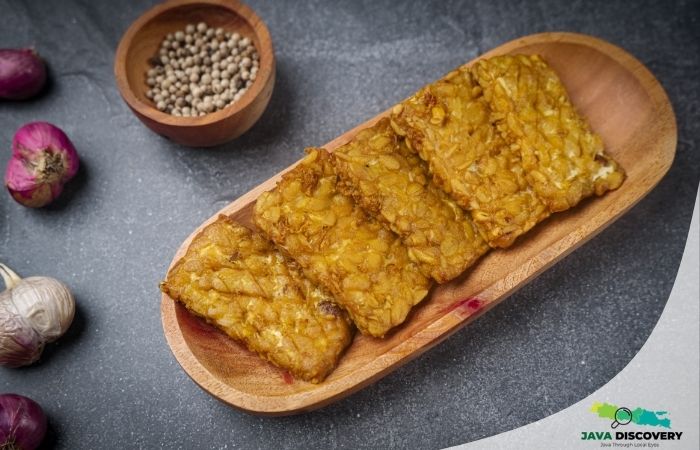
In Java, tempe remains faithful to its roots—sliced thin and fried into tempe goreng, simmered in coconut milk as tempe bacem, or skewered and glazed as satay. But in modern kitchens from Jakarta to Copenhagen, it is also shaved raw for tartare-like salads, roasted to a nutty crunch, or cold-smoked to build depth in plant-forward menus. Fine dining has amplified what home cooks always knew: good tempe carries flavor like a seasoned cast-iron pan carries memory.
The transformation is not merely culinary; it is philosophical. A food once used to survive has become a way to thrive—celebrated not despite its modesty, but because of it.
Texture, Sound, and the Scent of Home
Ask anyone who grew up in Java: the sound of tempe is part of the kitchen’s music. The knife thocks through a firm cake, the oil snaps as slices descend, and the sambal releases its citrus-fire into the air. A plate arrives: blistered edges, tender middle, and a halo of warmth that tastes of garlic, coriander, and the faint sweetness of soy. On the tongue, it is gentle but insistent, a steady drumbeat rather than a brass fanfare. And yet the aftertaste lingers like a well-told story.
Economy, Ecology, and the Ethics of Eating
Tempe’s rise also mirrors a changing food economy. As consumers consider carbon footprints, water use, and local resilience, fermented legumes offer a persuasive answer. Soybeans and other pulses can enrich soils; fermentation requires modest energy; the product keeps well and feeds many. For small producers, tempe supports household incomes; for cities, it anchors affordable protein access. In the ethics of eating, it places dignity and pragmatism on the same plate.
Cultural Reclamation: Pride Without Apology
Today, Indonesians abroad beam when they find tempe at neighborhood markets; young cooks post their first successful culture on social media; grandmothers smile at new techniques that honor old truths. The arc—from stigma to star—embodies a larger cultural reclamation: what was once dismissed as “simple” is recognized as sophisticated in its own way. Java, an island long adept at absorbing influences, has given the world a food that is both local and universal, everyday and extraordinary.
In the end, tempe’s journey is Java’s journey: humble, resilient, and wise—proof that the future may be written in the quiet work of fermentation, one leaf-wrapped loaf at a time.
How to Taste Tempe Like a Local
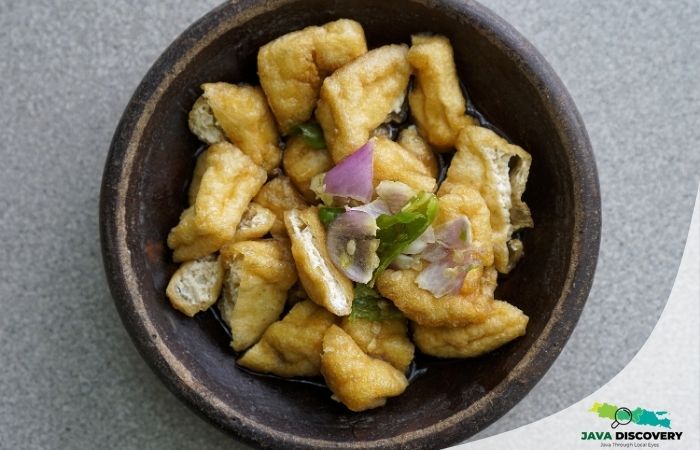
Start with the classics: tempe goreng—sliced thin, salted, and fried until crisp, eaten hot with rice and raw basil. Try bacem, where tempe is simmered in coconut water, palm sugar, and spices until bronze and sticky. Seek out market-fresh tempe wrapped in banana leaves; press it gently—firm but springy is the sign of life. And if you cook at home, marinate, roast, or grill it: tempe is a willing canvas that rewards patience, heat control, and a generous hand with aromatics.