Food Taboos Across Indonesian Islands Sacred Rules of Eating

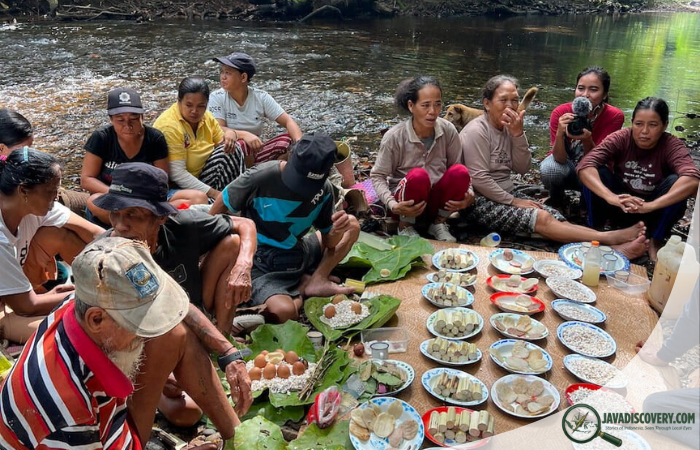
javadiscovery.com — In the flickering, low-wattage glow of a kitchen in a remote village in Sumba, a guest is politely warned away from a dish of succulent eel, not because of its taste, but because of its soul. Food taboos across Indonesian islands are the invisible boundaries that define “halal” (permissible) and “haram” (forbidden) through a lens far wider than religious doctrine alone. Across the vast, 17,000-island expanse of the archipelago, what one person considers a delicacy, another views as a spiritual catastrophe. Food taboos across Indonesian islands are rooted in pemali (sacred prohibitions) and totemism, where certain animals are seen as ancestors, guardians, or carriers of ancient curses. In the fertile volcanic plains of Java, these taboos often manifest as subtle “pantangan” (restrictions) during pregnancy or harvest, while in the rugged interiors of Sulawesi or Flores, they are rigid, clan-defining laws. To understand food taboos across Indonesian islands is to map the spiritual geography of a nation where the act of eating is a constant negotiation with the unseen world. It is a journey into the “batin” (inner self) of the community, where the stomach is the gatekeeper of ancestral loyalty and communal “selamat” (safety).
The Totemic Bond: When Animals Are Family
In many regions, food taboos across Indonesian islands are built upon the belief that certain species share a bloodline with humans. Among the Batak people of North Sumatra, particularly those of the Pane clan, the white duck is strictly forbidden. Legend tells of a duck that saved an ancestor from drowning, transforming the bird from “mangsa” (prey) into a “saudara” (sibling). Within the framework of food taboos across Indonesian islands, eating such an animal is akin to cannibalism, a betrayal that invites “tulah” (a supernatural curse) upon the entire lineage.
Similarly, in the Lamalera whaling community of Lembata, while the whale is the lifeblood of the village, certain marine creatures like the dolphin are often protected by deep-seated food taboos across Indonesian islands. These animals are seen as “penjaga” (guardians) of the sea who guide lost fishermen home. These prohibitions are not about conservation in the modern sense; they are about respek (respect). Food taboos across Indonesian islands ensure that the human relationship with nature remains a dialogue of mutual survival rather than one of pure extraction.

The Javanese Pantangan: Pregnancy and the Power of Suggestion
On the island of Java, food taboos across Indonesian islands often take the form of pantangan—subtle, symbolic restrictions designed to protect the “keseimbangan” (balance) of the body and soul. This is most evident during the “mitoni” (seven-month pregnancy ritual). A pregnant woman might be told to avoid “nanas muda” (young pineapple) or certain types of seafood, not just for health reasons, but because their physical characteristics are thought to influence the “watak” (character) or physical form of the unborn child.
These food taboos across Indonesian islands are an exercise in “ilmu kothak-katik” (associative logic). Eating a “kembar” (twin) banana might lead to twin births, which in some ancient Javanese contexts was seen as a spiritual challenge. Within food taboos across Indonesian islands, the Javanese approach is less about the fear of a sudden curse and more about “ngati-ati” (caution). It is a way of teaching the individual to be “eling” (mindful) of how their intake affects their internal “hawa” (atmosphere), reinforcing the idea that “manungsa” (humans) are what they consume, both physically and spiritually.
“We do not eat the eel because the eel was the first to find water for our ancestors during the great drought. To eat him is to eat our own history. You cannot put a price on a debt like that.” — Ama Lolo, 64, a community elder in East Sumba.
Sacred Prohibitions: The Role of Adat Law
In the “Tanah Toraja” of Sulawesi, food taboos across Indonesian islands are woven into the complex tapestry of Aluk To Dolo (the Way of the Ancestors). During the elaborate “Rambu Solo” (funeral rites), specific foods are restricted to certain social classes or roles. A person in deep mourning may be forbidden from eating rice, the staple of life, and must instead consume only corn or tubers. This aspect of food taboos across Indonesian islands serves as a public marker of “prihatin” (asceticism and grief).
Violating these food taboos across Indonesian islands is seen as a breach of “rukun” (social harmony) that can bring “sengkolo” (misfortune) to the village, such as crop failure or mysterious illnesses. The Adat leaders act as the enforcers of these food taboos across Indonesian islands, ensuring that the communal “diet” remains in sync with the cosmic calendar. In these societies, the “perut” (stomach) is subordinate to the “hukum” (law), proving that communal identity is often forged through shared abstinence.
| Region / People | Taboo Item | Underlying Reason |
|---|---|---|
| Batak (Pane Clan) | White Duck | Totemic Savior of Ancestors |
| Javanese (Pregnancy) | Twin Bananas / Pineapple | Symbolic Influence on the Fetus |
| Sumba (Various Clans) | Eel / Water Snake | Guardian of Life-Giving Springs |
| Dayak (Certain Tribes) | Deer / 특정 Birds | Reincarnated Spirits of Forefathers |
The Religious Overlays: Halal, Haram, and Local Flavor
As Islam, Christianity, and Hinduism spread through the archipelago, food taboos across Indonesian islands underwent a process of “sinkretisme” (syncretism). In Bali, the Hindu prohibition against beef is a well-known pillar of daily life, yet it is often layered with local village-specific taboos regarding certain fish or vegetables. In Muslim-majority Java, the concept of “halalan thoyyiban” (permissible and good) is frequently interpreted through the lens of local “kebersihan” (purity) standards that go beyond the basic avoidance of pork.
Food taboos across Indonesian islands in these contexts create a unique “cultural signature.” In a multi-faith market in Manado or Medan, the “mapping” of who eats what—and who refuses what—is a sophisticated social dance. These food taboos across Indonesian islands act as a “tanda” (sign) of religious and ethnic boundaries, yet the shared respect for each other’s pemali often becomes the foundation for “toleransi” (tolerance). To respect a neighbor’s taboo is the first step toward maintaining the “kedamaian” (peace) of the islands.
Modernity and the Erosion of Pemali
The greatest “ancaman” (threat) to the survival of food taboos across Indonesian islands is the globalized food industry and the rise of “modernitas” (modernity). In the supermarkets of Jakarta or Surabaya, the “cerita” (story) behind the food is lost. Younger generations, disconnected from their ancestral “kampung,” often view food taboos across Indonesian islands as “tahayul” (superstition) that hinders their lifestyle or culinary exploration.
However, many cultural observers argue that the loss of food taboos across Indonesian islands leads to a “pendangkalan” (shallowing) of culture. Without these restrictions, the spiritual “link” to the land and the ancestors is weakened. Food taboos across Indonesian islands were the original “environmental regulations,” preventing over-hunting of certain species and maintaining the “ecosystem” through fear and respect. As these taboos fade, the “sakral” (sacred) nature of the meal is replaced by a purely “komersial” (commercial) relationship with what we eat.
Conclusion: The Wisdom of the Restricted Plate
Food taboos across Indonesian islands are a testament to the belief that eating is a “moral” act. They prove that the archipelago is not just a place of diverse flavors, but of diverse “consciences.” Whether it is the totemic duck of the Batak or the symbolic pineapple of the Javanese, food taboos across Indonesian islands remind us that we are part of a much larger “jaringan” (web) of life and spirit.
As the “asap” (smoke) rises from a thousand different kitchens across Java, Sumatra, and Papua, the silent “peraturan” (rules) of the ancestors still hold sway. Food taboos across Indonesian islands are the “hidden ingredients” in every dish, adding a layer of meaning that no spice can replicate. In the heart of the island nation, the “authentic soul” is found not just in what is served, but in what is honorably refused. To follow a food taboo is to participate in the eternal “perjalanan” (journey) of preserving the wisdom of the islands, one meal at a time.