The Breath of the Earth: Clay Pots and Heat Management Techniques

javadiscovery.com – In the sun-drenched pottery villages of Kasongan, the mastery of clay pots and heat management techniques begins with the rhythmic slapping of wet earth against a spinning wooden wheel. This is not merely the creation of a vessel, but the birth of a living lung for the Javanese kitchen. For the people of Java, a “kendhil” or a “genthong” is more than a simple container; it is a porous skin that breathes, cooling the water within and softening the rice over a slow, flickering flame. The sophisticated understanding of clay pots and heat management techniques is a legacy of the island’s volcanic landscape, where the red soil is transformed by fire to serve the delicate needs of the human palate. In a traditional Javanese “pawon,” the cook does not fight the heat but dances with it, using the thermal inertia of earthenware to achieve a “tanek”—a state of perfect, deep-cooked maturity that no modern metal pot can replicate.
The Porous Wisdom of Earthenware
To understand the local reliance on clay pots and heat management techniques, one must first appreciate the material science of Javanese terracotta. Unlike stainless steel or aluminum, which conduct heat rapidly and aggressively, clay is a slow communicator. It possesses a high thermal mass and low conductivity, meaning it takes a long time to get hot but retains that heat with incredible persistence. This “slow release” energy is fundamental to Javanese culinary philosophy, which prizes patience over speed. When a “gudeg” (jackfruit stew) is simmered in a clay “kendhil” for twelve hours, the clay acts as a buffer, preventing the sugars from scorching while allowing the spices to penetrate deep into the fibers of the fruit.
The porosity of the clay is its most vital feature. Microscopic pores in the walls of the pot allow a minute amount of moisture to evaporate through the sides. This process creates a natural cooling effect for stored water and a self-basting environment for cooking food. As the steam rises inside a sealed clay pot, it condenses on the lid and trickles back down, creating a closed loop of moisture. This is the secret to why traditional Javanese rice, cooked in a clay vessel, remains “pulen” (moist and fluffy) for hours. The pot regulates its own internal climate, acting as a primitive but effective humidistat that keeps the contents from drying out or becoming waterlogged.

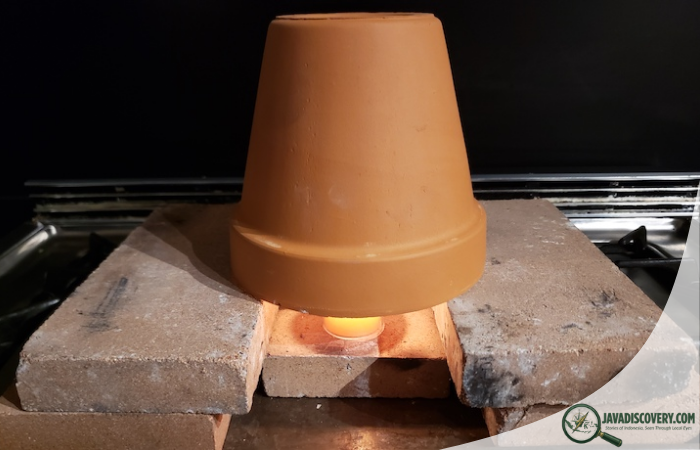
Local artisans in the terracotta hubs of Central Java explain that “the pot must be seasoned before it can lead.” A new clay pot is often soaked in rice water or rubbed with coconut oil and heated slowly over a small fire. This “tempering” process seals the largest pores and strengthens the structure, preparing it for a lifetime of service. This treatment is part of the broader spectrum of clay pots and heat management techniques, ensuring that the vessel can withstand the thermal shock of a wood-fired stove without cracking. It is a relationship of care: if the cook looks after the clay, the clay will look after the flavor.
The Architecture of the Luweng Stove
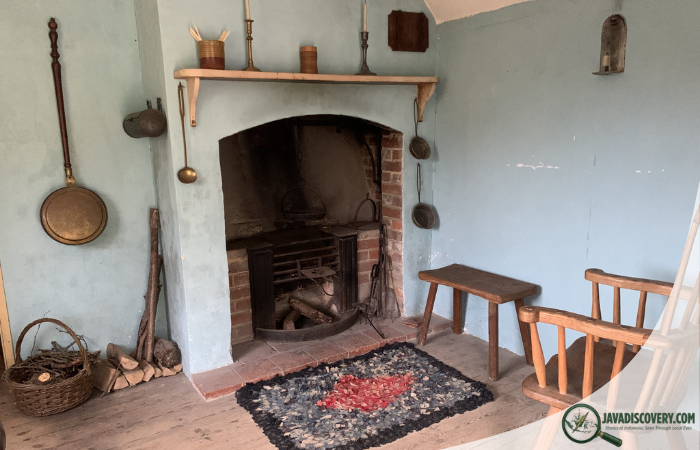
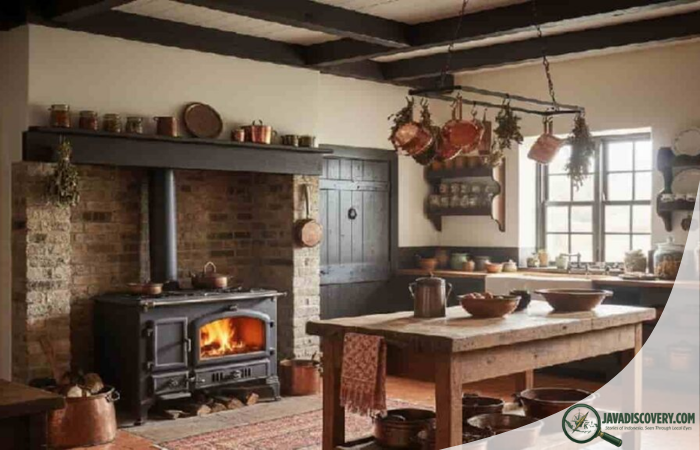
The effectiveness of clay pots and heat management techniques is inseparable from the design of the “luweng,” the traditional Javanese mud-brick stove. The luweng is engineered to cradle the rounded bottoms of earthenware pots, creating a seal that forces the heat to wrap around the entire surface of the clay rather than just hitting the bottom. This “enveloping heat” is essential for even cooking. The cook manages the temperature not by turning a knob, but by the strategic placement of “kayu bakar” (firewood). Long, thick logs provide a steady, base-level heat for simmering, while small twigs are fed into the mouth of the stove for a quick burst of intensity.
Mastery of the “luweng” requires a keen ear and eye. A seasoned Javanese cook can tell the temperature of the pot by the sound of the bubbling liquid inside—a low, rhythmic thumping indicates a perfect simmer, while a frantic, high-pitched hiss warns that the heat is too high. The use of “luweng” and clay pots together represents a high-efficiency system. Even after the fire is extinguished, the bricks of the stove and the thick walls of the clay pot continue to radiate heat for hours. This “sisa panas” (residual heat) is often used to keep the family’s evening meal warm or to slowly dry out medicinal herbs placed on the stove’s ledge.
In the highlands, where the air is cool and damp, the luweng also serves as a dehumidifier for the kitchen. The dry heat from the wood fire prevents the porous clay pots from developing mold, while the smoke from the fire—”asap”—seasons the exterior of the pots, turning them from a bright terracotta orange to a deep, lustrous black. this carbon coating is not dirt; it is a protective layer that further enhances the pot’s ability to absorb and hold heat. The story of clay pots and heat management techniques is thus a story of a symbiotic relationship between the earth, the fire, and the smoke.
Thermal Inertia and the Art of Tanek
In Javanese culture, the ultimate goal of cooking is “tanek.” A dish that is tanek has reached its peak of flavor and safety, where all ingredients have fully surrendered their essence to the pot. Achieving tanek is the pinnacle of clay pots and heat management techniques. Because clay cools down so slowly, the cooking process continues long after the pot has been removed from the fire. A Javanese mother will often take the rice pot off the stove while the grains are still slightly firm, knowing that the thermal inertia of the clay will finish the job perfectly over the next twenty minutes.
This technique is particularly visible in the preparation of “jamu,” the traditional herbal medicine of Java. The roots, leaves, and barks are simmered in a “pengaron” (a wide clay basin) at a very low heat. If the heat is too aggressive, the delicate volatile oils of the ginger and turmeric are lost. The clay pot ensures a gentle extraction, mimicking the slow infusion of tea. The heat management here is a spiritual exercise; it requires the practitioner to be “sabar” (patient) and “telaten” (meticulous), qualities that are highly valued in Javanese society. To rush the heat is to disrespect the medicine.
The physical sensation of handling these pots is also a part of the technique. A cook often uses a “sarangan”—a woven bamboo mat—to lift the hot clay. The contrast between the rough, hot clay and the cool, flexible bamboo is a sensory reminder of the balance between the elements. There is no “off” switch in a traditional kitchen; there is only the gradual fading of energy, a transition that mirrors the Javanese view of the day ending and the night beginning. The heat does not disappear; it simply returns to the earth from which it was borrowed.
The Kendi: Evaporative Cooling in the Tropics
While most clay pots and heat management techniques focus on the application of heat, the “kendi” (water pitcher) focuses on its removal. The kendi is a masterpiece of ancient Javanese thermodynamics. Because the clay is unglazed, a tiny amount of water constantly seeps to the outer surface and evaporates. This evaporation requires energy, which it draws from the water inside the pitcher, lowering its temperature by several degrees below the ambient air. In the sweltering humidity of the Javanese plains, the kendi provides “air adem”—water that is naturally cool and refreshing without the need for refrigeration.
The shape of the kendi, with its long neck and rounded belly, is designed to maximize this cooling surface area while minimizing the entry of dust. Drinking from a kendi is a ritual of “ngombe”—lifting the vessel above the head and letting the water stream into the mouth without the lips touching the spout. This ensures that the water remains “suci” (pure) for everyone in the household. The cool touch of the damp clay against the palm is one of the most comforting sensations in a Javanese home, a reminder that the earth provides relief from its own sun.
The “genthong,” a much larger version of the kendi, acts as a thermal stabilizer for the kitchen’s water supply. Often half-buried in the ground or placed in the darkest, coolest corner of the “pawon,” the genthong uses the constant temperature of the earth to keep liters of water steady. This management of “coolth” is just as important as the management of “warmth.” It represents a holistic approach to temperature, where the Javanese person seeks to find the “middle way” between the extremes of the tropical climate.
The Enduring Relevance of the Earth Pot
Today, as gas and induction stoves become the norm in urban Java, the traditional clay pots and heat management techniques are undergoing a quiet evolution. While a rice cooker is faster, it cannot produce the “kerak” (the delicious crispy rice at the bottom) or the specific aroma of a clay kendhil. Consequently, many modern Javanese families still keep a set of earthenware for “special” cooking—the slow stews and herbal tonics that define their heritage. The “clay pot” has transitioned from a daily necessity to a vessel of cultural identity.
The resilience of these tools lies in their superior results. Culinary enthusiasts in Yogyakarta and Solo are increasingly returning to clay pots and heat management techniques to rediscover the “authentic” flavors of the past. They find that the alkaline nature of the clay neutralizes acidity in food, resulting in a smoother, rounder flavor profile. This scientific reality validates the “feeling” that Javanese grandmothers have expressed for centuries: that food cooked in clay simply tastes better because the pot “lives” with the food.
Ultimately, the mastery of clay pots and heat management techniques is a lesson in harmony. It teaches that we do not need to dominate the elements to achieve our goals; we only need to understand them. The clay pot is a humble object, made from the very ground we walk on, yet it possesses the sophisticated ability to bridge the gap between fire and nourishment. As long as the Javanese people value the “roso” of their food and the “tentrem” of their homes, the glow of the luweng will continue to warm the red clay, keeping the spirit of the island’s hearth alive and well.