Sacred Flames and the Use of Fire in Small-Scale Rituals in Java

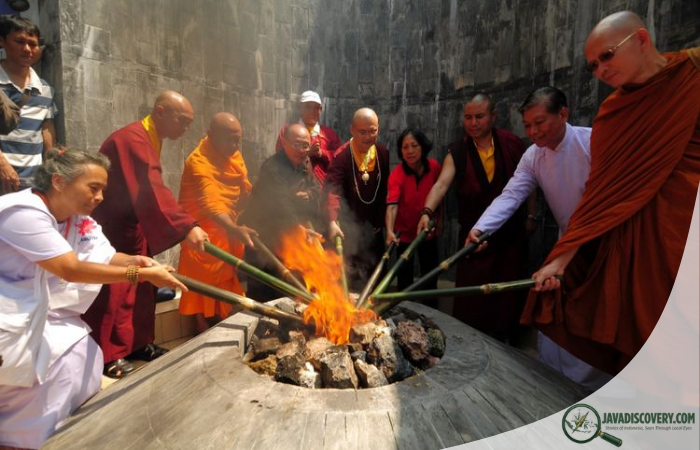
javadiscovery.com – In the velvet darkness of a village kitchen in Central Java, the use of fire in small-scale rituals begins with a single, deliberate spark. This is not the roaring bonfire of a public spectacle, but the intimate, flickering glow of a “diyan” oil lamp or the glowing tip of a handmade incense stick. As the blue smoke curls toward the bamboo rafters, it carries with it the whispered intentions of a family seeking harmony with the unseen. For the Javanese, fire is the “agni,” a primordial element that serves as a bridge between the physical and the metaphysical. In these quiet, domestic ceremonies, the heat of the flame is believed to refine the human spirit, transforming raw earthly desires into pure spiritual offerings. Whether it is the lighting of a lamp during a “malem jumat” or the burning of “kemenyan” incense during a birth celebration, the presence of fire ensures that the portal between worlds remains open, allowing the ancestors to witness the devotion of the living.
The Primordial agni: Fire as a Spiritual Conduit
The philosophical foundation of the use of fire in small-scale rituals is rooted in the ancient concept of the four elements: earth, water, air, and fire. In the Javanese spiritual tradition, fire is the most volatile and transformative of these forces. It possesses the unique ability to change the state of matter, turning solid wood into ash and liquid oils into light. This physical transformation is mirrored in the spiritual realm, where fire is seen as a purifying agent that can “cook” or mature the soul. When a small flame is lit in a ritual context, it is not merely for illumination; it is an act of summoning the divine energy of the sun into the palm of one’s hand.
Fire is also intrinsically linked to the “napsu” or the human passions. The Javanese recognize that fire can both create and destroy. Uncontrolled, it is the fire of anger and greed; channeled through ritual, it becomes the light of wisdom and protection. In small scale domestic ceremonies, the scale of the fire is crucial. The smallness of the flame represents the mastery over one’s own ego. A massive fire is “kasar” or coarse, but a tiny, steady flame is “alus” or refined. By tending to a small ritual fire, the practitioner is symbolically tending to the “geni” or the internal fire of their own consciousness, ensuring it remains steady and focused on the path of righteousness.

Local voices in the rural hamlets of East Java often describe the ritual flame as a “lampu urip” or a living lamp. A village healer, whose family has guarded the local spiritual traditions for generations, explains that fire is the only element that always reaches upward. Water flows down, and earth stays still, but fire always strives for the heavens. This upward movement is why fire is essential for sending prayers. When the “kemenyan” (traditional benzoin resin) hits the hot coals, the resulting smoke is the vehicle that carries the human voice to the ears of the “Leluhur” or the ancestors who dwell in the higher planes of existence.
Kemenyan and the Alchemy of Smoke
One cannot discuss the use of fire in small-scale rituals without mentioning the role of incense. The burning of “kemenyan” is perhaps the most ubiquitous ritual act in Java. The resin is harvested from the bark of the Styrax tree and has been a staple of Javanese life for over a thousand years. The process of burning it is a sensory ritual in itself. A small terracotta brazier, known as a “tungku,” is filled with glowing charcoal. Once the coals are white with heat, small pieces of the resin are dropped onto them. The sudden hiss and the immediate eruption of thick, fragrant white smoke mark the official start of the spiritual communication.
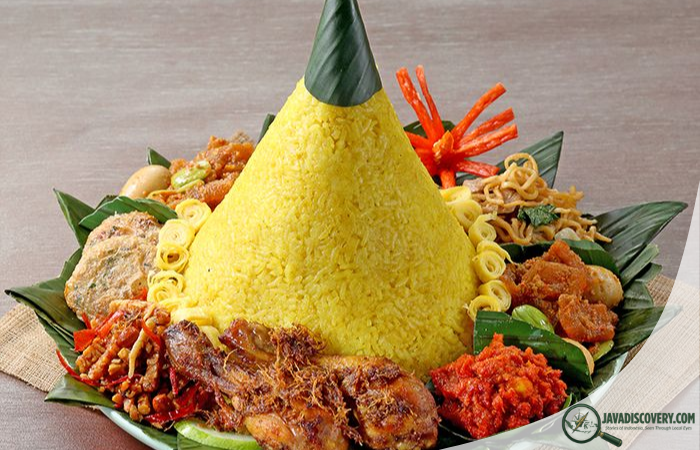
The scent is heavy, earthy, and sweet, a fragrance that is instantly recognizable as the “smell of the sacred” in Java. This smoke is believed to “cleanse” the air of “setan” or negative energies that may be lingering in the corners of a room. It creates a sanctified space where only truth and purity can exist. During a “Slametan,” the “tungku” is often passed around the room or placed near the food offerings, ensuring that the essence of the meal is “smoked” and offered to the spirits before the humans begin to eat. This act of sharing the aroma with the unseen guests is a vital part of Javanese hospitality.
The texture of the smoke is also significant. A successful ritual is often judged by how the smoke behaves. If the smoke rises straight and clear, it is a sign that the spirits are receptive and the environment is “adem” or cool. If the smoke swirls or seems trapped, it may indicate a spiritual blockage or a lack of sincerity in the practitioner’s heart. This reading of the smoke is a subtle art, passed down from elders to the youth, teaching them to be observant of the subtle shifts in the physical world that reflect the spiritual atmosphere.
The Diyan: Lighting the Path for the Ancestors
In the quietude of the “Kamar Pusaka,” or the heirloom room of a Javanese house, the use of fire in small-scale rituals takes the form of the “diyan.” These are small oil lamps, traditionally fueled by coconut oil or peanut oil, with a cotton wick. These lamps are often kept burning throughout the night during significant dates in the Javanese calendar, such as “Suro” (the New Year) or the “Anggara Kasih” (a sacred Tuesday Kliwon). The light of the “diyan” is considered a beacon for the spirits of the ancestors who may return to visit their descendants.
There is a deep emotional connection to these small lights. For many Javanese, the “diyan” represents the continuity of the family line. As long as the lamp is lit, the connection to the past remains unbroken. The act of trimming the wick and refilling the oil is a meditative task, often performed in total silence. This maintenance of the flame is a form of “laku” or spiritual discipline. It requires patience, consistency, and a quiet mind. The low, warm light of the oil lamp creates an environment of “sepi,” a profound silence that allows for deeper introspection and connection to the “Gusti,” the Divine Source.
In modern Javanese homes, where electricity is constant, the “diyan” has not lost its place. It is still lit during times of family crisis, illness, or when a child is away from home. The flame acts as a surrogate for the person’s soul, a way for the family to “keep the light on” for them in the spiritual realm. The soft flickering of the flame against the wooden walls provides a sense of security and warmth that a lightbulb cannot replicate. It is the warmth of a living presence, a reminder that the family is never truly alone.
Fire and the Keris: The Ritual of Forging and Cleaning
The most specialized use of fire in small-scale rituals is found in the “pawon” or the forge of the “Empu,” the master bladesmith who creates the Javanese “keris.” A “keris” is not just a weapon; it is a spiritual object believed to possess its own “khodam” or spirit. The creation of a “keris” is a months long ritual where fire is the primary tool of transformation. The “Empu” must master the heat of the forge, using specific types of charcoal—often from the teak or tamarind tree—to achieve the precise temperature needed to fold the nickel and iron into the complex “pamor” patterns.
During the forging process, fire is treated with the utmost respect. Offerings are placed near the bellows, and prayers are recited to the spirit of the fire to ensure the blade does not crack or warp. The fire is seen as the “father” of the “keris,” providing the heat that allows the metal to be shaped, while the water used for quenching is the “mother.” This elemental marriage is central to the blade’s spiritual potency. An “Empu” often fasts and meditates before entering the forge, aligning his internal fire with the physical fire of the furnace.
Once a “keris” is completed, fire continues to play a role in its maintenance. During the “Sura” month, “keris” owners perform the “Jamasan,” a ritual cleaning. After the blade is washed with lime juice and arsenic, it is “dried” over the smoke of “kemenyan.” The smoke seasons the metal and “feeds” the spirit of the blade. This intimate interaction between the owner, the blade, and the fire is a sacred bond. The fire does not just clean the metal; it recharges the spiritual essence of the heirloom, ensuring its protective qualities remain strong for another year.
The Domestic Hearth: Fire as the Heart of the Home
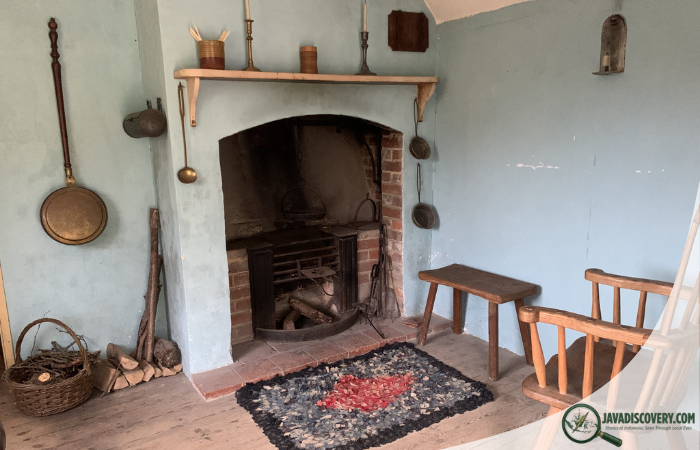
In traditional Javanese life, the kitchen fire or the “luweng” is the heart of the household’s ritual life. The “luweng” is a clay or brick stove fueled by wood. Even in the daily act of cooking, there is a ritualistic element to the fire. The first fire lit in a new home is a significant event, often accompanied by a small “Slametan” to ensure the house remains “hangat” or warm in a social and spiritual sense. A house with a cold kitchen is seen as a house without a soul.
The “luweng” is also where “sesaji” or small offerings are prepared. When a Javanese woman cooks rice, she may take a small portion of the steam or a few grains and place them near the fire as an offering to “Dewi Sri,” the Goddess of Rice, and to the spirits of the hearth. This daily recognition of the fire’s role in sustaining life is a form of mindfulness. It turns the mundane chore of cooking into a continuous small scale ritual of gratitude. The soot and ash from the ritual fire are sometimes even used in traditional medicine, believed to carry the protective energy of the household flame.
The sound of the wood popping in the fire and the sight of the glowing embers create a sense of “tentrem,” or peace and tranquility. In the evenings, families often gather around the “luweng” to talk and share stories. This communal heat fosters a sense of unity and “gotong royong.” The fire is a witness to the family’s secrets, their laughter, and their struggles. It is a silent participant in the daily life of the Javanese people, a constant source of both physical and spiritual light.
The Persistent Flame in a Changing World
As Java transitions into a modern, high tech society, the use of fire in small-scale rituals faces the pressure of convenience and urban living. Gas stoves have replaced the “luweng” in many homes, and incense cones have sometimes taken the place of traditional “kemenyan” resin. However, the underlying philosophy remains remarkably intact. Even in a modern apartment in Jakarta, a Javanese professional may still light a single candle or a stick of incense on a Thursday night to honor their ancestors. The scale has become even smaller, but the intention remains just as deep.
This resilience is due to the Javanese understanding that fire is an internal reality as much as a physical one. The external ritual is a “pengeling,” a reminder of the need to maintain one’s own inner light. In a world that can often feel cold and impersonal, the ritual flame provides a point of connection to the past and a sense of warmth for the future. It is a testament to the Javanese belief that as long as there is a spark of devotion, the connection to the divine can never be fully extinguished.
The use of fire in small-scale rituals is a quiet rebellion against the darkness of forgetting. It is an assertion that the ancestors are still here, that the earth is still sacred, and that the human spirit is still capable of transformation. As the last embers of the “kemenyan” fade and the smoke dissipates into the night air, the ritual concludes not with a loud declaration, but with a quiet sense of “nrimo”—a peaceful acceptance of one’s place in the cosmic order. The fire has done its work, and the soul is, for a moment, clear and bright.