Soil Color and Farming Beliefs Across Javanese Landscapes

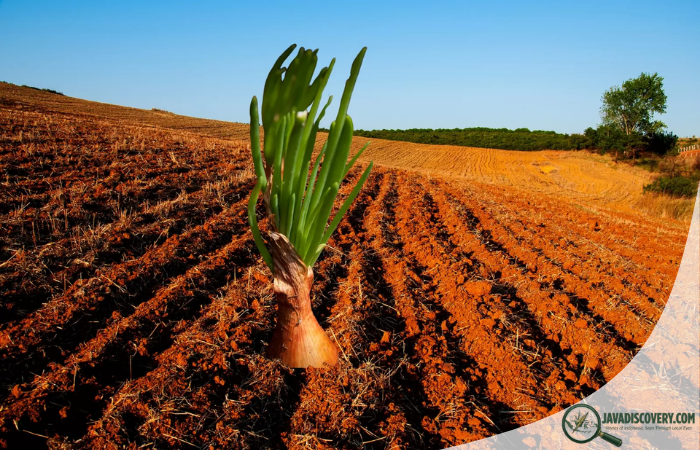
javadiscovery.com – In the early morning light of a Javanese village, before tools strike the ground and before water begins to flow into the fields, farmers often pause to look at the soil. Its color is the first thing they notice. Dark and moist, pale and dusty, reddish and compact. Each shade carries a quiet message, one that has been read and interpreted across generations.
To outsiders, soil color may seem like a simple physical trait, the result of minerals, moisture, and organic matter. But within rural Java, it is also a language. It reflects not only the condition of the land, but the beliefs, expectations, and decisions that shape agricultural life.
Understanding soil color in this context reveals a relationship between people and land that is both practical and deeply cultural.

The Visual Language of Soil
Soil is rarely uniform. Even within a single field, variations in color can appear, marking subtle differences in composition and fertility.
Farmers learn to recognize these variations through experience. A darker soil may suggest richness, while lighter tones may indicate dryness or lower nutrient content.
These observations are not abstract. They influence how land is used, what crops are planted, and how resources are managed.
Color becomes a guide, helping to interpret the invisible qualities beneath the surface.
Black Soil and Fertility
In many parts of Java, dark or black soil is associated with high fertility. Its color often comes from a rich presence of organic matter and volcanic minerals.
Fields with this type of soil are considered favorable for crops such as rice and vegetables. The ground appears soft, capable of holding water and supporting growth.
Farmers may describe such soil as “alive,” reflecting a perception that it contains energy and potential.
This association between darkness and fertility shapes expectations and influences planting decisions.
Red Soil and Strength
Red soil, common in certain regions, carries a different set of meanings. Its color is typically linked to iron content and weathering processes.
In local understanding, red soil is often seen as strong but less fertile. It may require more effort to cultivate and additional inputs to support crops.
At the same time, its firmness can be valued for specific uses, such as supporting certain types of plants or structures.
This dual perception reflects a nuanced approach to land, where characteristics are evaluated rather than judged simply as good or bad.
Pale Soil and Uncertainty
Lighter soils, ranging from pale brown to almost white, are often associated with lower fertility or limited water retention.
Farmers may approach such land with caution. It may require careful management, including the addition of organic material or adjustments in crop selection.
The color suggests a need for intervention, signaling that the soil may not naturally support intensive cultivation.
These interpretations guide decisions about how much effort and resources to invest.
Volcanic Landscapes and Soil Diversity
Java’s volcanic geography contributes to a wide range of soil types and colors. Eruptions deposit layers of ash and minerals that gradually transform into fertile ground.
This process creates soils that are often dark and nutrient-rich, particularly in areas surrounding volcanic mountains.
Communities living in these regions develop a strong awareness of how soil evolves over time. Fresh volcanic deposits may appear gray or light at first, gradually darkening as organic matter accumulates.
This transformation is observed and interpreted, linking geological processes with agricultural understanding.
Belief and Interpretation
While soil color provides practical information, it also carries symbolic meaning.
In some contexts, darker soils are associated with abundance and stability, while lighter soils may evoke ideas of fragility or limitation.
These associations are not rigid rules, but part of a broader system of interpretation that blends observation with cultural perspective.
Belief does not replace knowledge. It complements it, adding layers of meaning to everyday decisions.
Learning Through Generations
Knowledge about soil is passed down through generations, often through direct experience rather than formal instruction.
Children accompany elders into the fields, observing how land is evaluated and worked.
They learn to recognize differences in color, texture, and moisture, gradually developing their own understanding.
This process ensures that knowledge remains connected to place, shaped by local conditions and practices.
Soil and Crop Selection
The relationship between soil color and farming extends to crop selection. Different plants thrive under different conditions, and farmers use visual cues to determine suitability.
Dark, moist soils may be chosen for water-intensive crops, while lighter soils may be used for plants that require less water.
This alignment between land characteristics and agricultural choices reflects an adaptive approach, balancing potential with limitation.
Changing Practices and Modern Influence
In recent years, modern agricultural methods have introduced new ways of assessing soil, including chemical analysis and standardized measurements.
These tools provide detailed information about nutrient content and composition.
However, traditional knowledge based on observation continues to play a role. Soil color remains an immediate and accessible indicator, especially in areas where advanced tools are not readily available.
The coexistence of these approaches illustrates how different forms of knowledge can interact.
Environmental Change and Soil Perception
Changes in land use and climate can affect soil conditions, altering both color and fertility.
Deforestation, erosion, and intensive farming may lead to the loss of organic matter, causing soils to become lighter and less productive.
Farmers notice these changes, interpreting them through the same visual framework that has long guided their understanding.
In this way, soil color continues to serve as an indicator, reflecting broader environmental shifts.
A Relationship Written in Earth
Standing in a field, the act of looking at soil becomes more than observation. It is a form of reading, interpreting signs that connect surface appearance with deeper processes.
In rural Java, this relationship between soil color and farming belief reveals a way of knowing that is grounded in experience.
It shows how practical knowledge and cultural meaning are intertwined, shaping how land is understood and used.
Color as Knowledge
Soil color, simple at first glance, carries layers of information. It reflects composition, moisture, and history. It also carries expectations, beliefs, and decisions.
For Javanese farmers, these layers are not separate. They form a unified understanding of the land, one that guides daily work and long-term planning.
In this quiet exchange between people and soil, color becomes more than a visual trait. It becomes knowledge, shaped by generations and grounded in the earth itself.