The Cultural Role of Mirrors in Homes: Reflections of the Soul and Social Status

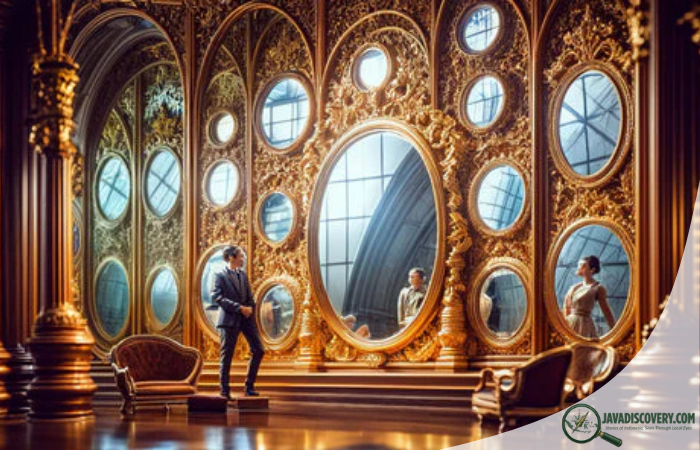
javadiscovery.com – In the dim, polished interior of a traditional Javanese “Dalem,” the cultural role of mirrors in homes begins with a silvered reflection framed by dark, intricately carved teak. To the Javanese, a mirror is never a mere functional object for vanity; it is a “kaca benggala,” a mystical portal that bridges the “lair” (the physical appearance) and the “batin” (the inner spiritual state). The cultural role of mirrors in homes is deeply embedded in the Javanese pursuit of “ngaca diri”—the meditative act of self-reflection to evaluate one’s moral standing and social conduct. Whether it is a grand, Dutch-influenced floor mirror in a “Keraton” palace or a small, circular glass tucked into a village “pawon,” the mirror serves as a silent witness to the “unggah-ungguh” (etiquette) of the household. It is a tool for “mawas diri,” reminding the inhabitants that the face they show to the world must be a true reflection of a calm and refined heart. In a culture where “alus” (refinement) is the ultimate virtue, the mirror is the primary guardian of one’s public dignity and private integrity, ensuring that the “roso” (feeling) of the home remains in a state of “harmoni” (harmony) and “tentrem” (tranquility).
The Kaca Benggala: A Portal to the Inner Self
To understand the local reliance on the cultural role of mirrors in homes, one must first explore the concept of the “Kaca Benggala.” Historically, mirrors were rare and precious commodities, often brought by traders from the West or China. Because of their ability to “double” reality, they were quickly imbued with “keramat” (sacred) qualities. The cultural role of mirrors in homes was initially a spiritual one; the mirror was believed to be able to “capture” the “aura” of a person. In Javanese mysticism, “ngilon” or looking into a mirror is not about vanity, but about “panyuwunan”—a silent prayer to see the truth of one’s own character. A clear, clean mirror reflects a “resik” (clean) soul, while a clouded or distorted mirror is a warning of spiritual “reged” (impurity).
The placement of these mirrors within the home is governed by the principles of “tata ruang” (spatial arrangement). Traditionally, a large mirror is placed in the “pringgitan,” the transitional space between the public “pendopo” and the private “dalem.” This placement highlights the cultural role of mirrors in homes as a social filter. Before a guest or a family member enters the inner sanctum, they glimpse their reflection, subconsciously adjusting their “busana” (clothing) and their “sikap” (attitude). The mirror acts as a threshold of “kesopanan” (politeness), ensuring that everyone who enters the heart of the home does so with a sense of “urmat” (respect) and “pantas” (propriety).

Local voices in the ancient kampungs of Surakarta often describe the mirror as the “eye of the ancestors.” An elderly “abdi dalem” (palace servant) explains that a mirror should never be placed directly facing a door, as it might “reflect back” the good “rezeki” (blessing) trying to enter. Instead, the cultural role of mirrors in homes is to catch the light and “distribute” it into the darker corners of the house. This physical illumination is a metaphor for “pepadhang”—spiritual enlightenment. By strategically placing mirrors, the Javanese homeowner ensures that the “nur” (divine light) reaches every part of the domestic sphere, keeping the “lelembut” (dark spirits) at bay.
Mirrors as Symbols of Prestige and Modernity
During the colonial era, the cultural role of mirrors in homes took on a new layer of “gengsi” (prestige). The “Indische” style of architecture introduced massive, gold-leafed mirrors known as “spiegel” to the Javanese elite. These objects became markers of “kemajuan” (progress) and wealth. For the “priyayi” (aristocracy), owning a large, imported mirror was a way to showcase their “pangkat” (rank) and their familiarity with global trends. The cultural role of mirrors in homes in this period was to “magnify” the grandeur of the “joglo,” creating an illusion of infinite space and light that matched the expansive influence of the family.
These mirrors were often paired with “meja konsol” (console tables) and became the centerpieces of the “ruang tamu” (guest room). However, the Javanese “pengrajin” (craftsmen) quickly localized these foreign objects. They began carving the frames with “motif lung-lungan” (creeping vines) and “kala” heads, blending the European glass with Javanese “perlambang” (symbolism). The cultural role of mirrors in homes thus became a site of “akulturasi” (acculturation), where the reflective technology of the West was literally framed by the values and aesthetics of the East. To look into such a mirror was to see oneself as a modern Javanese—rooted in tradition but moving with the times.
In rural areas, the cultural role of mirrors in homes followed a more humble but equally significant path. A small mirror was often the first “modern” luxury a family would purchase. It was usually hung in the “pawon” (kitchen) or near the “sumur” (well). Here, it served a practical purpose for “dandan” (grooming), but it also functioned as a “jimat” (talisman). It was common to see a small mirror placed above the front door on the outside, a practice intended to “reflect” evil intentions or “teluh” (black magic) back toward the sender. The cultural role of mirrors in homes was to act as a “pager gaib” (spiritual fence), using the glass’s inherent “kejelasan” (clarity) to shatter the shadows of the “gaib” (supernatural) world.
The Ritual of the Mirror in Life Transitions
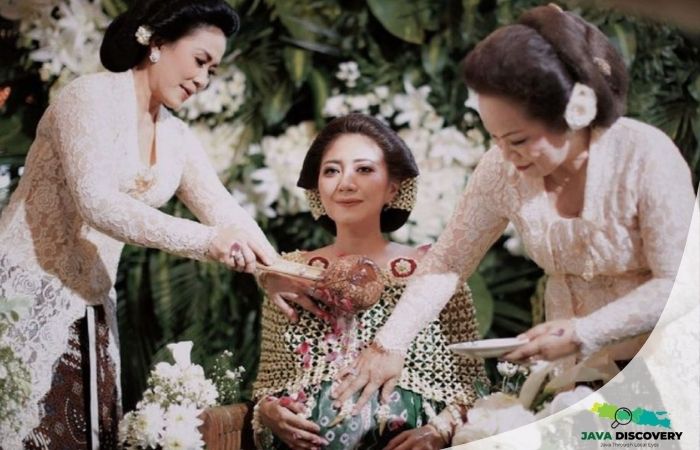
The cultural role of mirrors in homes is most visible during “upacara adat” (traditional ceremonies). In the “siraman” (ritual bath) before a wedding, a mirror is often held up before the bride. This is not for her to check her makeup, but for her to “mirsani” (behold) her transition from a maiden to a wife. The mirror captures her “cahaya” (radiance) at this critical juncture. The cultural role of mirrors in homes here is to act as a “saksi bisu” (silent witness) to the change in her “status sosial” and her spiritual “wujud” (form). It is a moment of high “sakralitas” (sacredness), where the reflection is believed to be blessed by the “dewi-dewi” (goddesses).
Similarly, in some Javanese communities, when a child reaches the “wetolan” (35-day birthday), they are briefly shown their reflection in a mirror. This “perkenalan” (introduction) to the self is meant to ground the child’s “jiwa” (soul) in their body. The cultural role of mirrors in homes is to facilitate the first act of “self-awareness.” It is a ritual of “pengukuhan” (confirmation), telling the soul that it has a home in this world. The mirror is the tool that helps the individual navigate the “samudera kehidupan” (ocean of life) by providing a constant point of “orientasi” (orientation) toward the self.
Even in death, the cultural role of mirrors in homes is significant. In many traditional households, all mirrors are covered with white cloth when a family member passes away. This is done to prevent the “ruh” (spirit) of the deceased from being “trapped” in the reflection or to prevent the grieving family from being distracted by their own “lair” (outward appearance) during a time of deep “prihatin” (ascetic mourning). The covering of the mirror is an act of “menutup panca indera”—closing the five senses—to focus entirely on the spiritual journey of the departed. It shows that the mirror’s power is respected enough that it must be “silenced” during the transition to the “alam kelanggengan” (the eternal realm).
Mirror Superstitions and Spiritual Hygiene
The cultural role of mirrors in homes is surrounded by a complex web of “pamali” (taboos) and superstitions. A broken mirror is considered a “pertanda buruk” (bad omen), signifying a “retak” (crack) in the family’s “rukun” (harmony). Because the mirror is a vessel for the “batin,” breaking it is seen as a physical wound to the household’s spiritual integrity. To mitigate the “bala” (misfortune), the shards must be carefully gathered and “dilarung” (floated) in a river or buried in the earth with a prayer of “pangapunten” (forgiveness). This reflects the Javanese belief that we must treat our “alat” (tools) with the same “unggah-ungguh” we show to people.
Another common belief regarding the cultural role of mirrors in homes is that one should not look into a mirror in the middle of the night, especially during “Jumat Kliwon.” It is feared that one might see “the other side” or that their “bayangan” (shadow/reflection) might take on a life of its own. This superstition reinforces the idea that the mirror is a “threshold” material. It is “antara” (in-between)—not quite solid, not quite spirit. The cultural role of mirrors in homes is to manage this “ambiguitas” (ambiguity) by ensuring they are kept “resik” (clean) and “padhang” (bright). A dusty mirror is said to invite “hawa peteng” (dark vibes), leading to “sumpek” (stifling) emotions within the family.
The act of cleaning the mirror is therefore a form of “spiritual hygiene.” In Javanese households, the “kaca” is often wiped with a cloth dampened with “air mawar” (rose water) or “jeruk nipis” (lime) to maintain its “aura.” The cultural role of mirrors in homes is to be a “source of clarity.” When the glass is clear, the mind is clear. This physical maintenance is an externalization of the internal effort to keep one’s “niat” (intention) pure. The mirror is a teacher of “disiplin,” showing that beauty and truth require constant “perawatan” (care) and “kesabaran” (patience).
The Modern Mirror: From “Batin” to “Selfie”
In the modern Javanese home, the cultural role of mirrors in homes is undergoing a rapid transformation. With the advent of the “selfie” culture and social media, the mirror has become a tool for the “lair” more than the “batin.” Large, “aesthetic” mirrors with LED lighting are popular in urban “perumahan,” used to document one’s “OOTD” (Outfit of the Day). However, even in this modern context, the Javanese “roso” persists. Many young Javanese still feel a sense of “pekewuh” (unease) when placing a mirror facing the bed, instinctively following the “primbon” advice that it might disturb one’s “turu” (sleep) by reflecting wandering spirits.
The cultural role of mirrors in homes is now also tied to “interiordesign” as a way to make small “apartemen” feel larger. This “perluasan” (expansion) of space is a modern take on the old “spiegel” prestige. But even as the function becomes more secular, the “subtle presence” of the mirror remains. It is still the place where a Javanese person prepares their “wajah” (face) for the world, practicing the “mesem” (smile) that hides a thousand worries. The cultural role of mirrors in homes remains that of a “stabilizer”—a place to check if the “outer” and “inner” selves are still in “manunggal” (unity) before stepping out into the “keramaian” (crowds) of the city.
The resilience of the cultural role of mirrors in homes lies in its ability to adapt to any “zaman” (era). Whether it is a hand-carved heirloom or a minimalist Ikea glass, the Javanese person still stands before it to “ngaca diri.” They are looking for the “cahaya” within the reflection. The mirror remains the “kaca benggala” of the heart, a reminder that the world we see “outside” is merely a reflection of the world we carry “inside.” As long as the Javanese value “alus” and “resik,” the mirror will continue to hold its sacred place in the architecture of the home.
Conclusion: The Mirror as the Heart’s Compass
The cultural role of mirrors in homes in Java is a testament to a civilization that views the domestic space as a microcosm of the universe. The mirror is the “kompas” (compass) of the heart, guiding the inhabitants toward a life of “keseimbangan” (balance). It teaches that we must always be “eling” and “waspada”—mindful of our actions and alert to our own shortcomings. Through the silvered glass, the Javanese home “sees” itself, ensuring that its “aura” remains “adem” (cool) and “berkah” (blessed).
As the sun sets and the “lampu” are lit, the mirrors in the house catch the flickering glow, doubling the light and the warmth of the family. The cultural role of mirrors in homes has been fulfilled for another day, guarding the thresholds and reflecting the “manunggal” of the household. In the heart of Java, to look in a mirror is to look at history, at the ancestors, and at the infinite potential of the “jiwa.” The “kaca” is a bridge, and as we cross it every morning and evening, we are reminded that the most beautiful reflection is not the one of the face, but the one of a soul at peace with the “Gusti” and the “alam.”