Tools Used in Traditional Fishing Methods: The Ancient Technology of the Javanese Coast

javadiscovery.com – In the pre-dawn darkness of a coastal village in Gunung Kidul, the tools used in traditional fishing methods begin their daily ritual with the rhythmic “thrum” of a hand-carved wooden paddle hitting the side of a “jukung” canoe. To the Javanese “nelayan” (fisherman), these implements are not merely equipment; they are “pusaka” (heirlooms) of the sea, designed to harmonize with the “ombak” (waves) and the lunar cycles of the Indian Ocean. Tools used in traditional fishing methods are a masterclass in low-impact, high-precision engineering, utilizing the natural buoyancy of bamboo, the tensile strength of hand-spun fibers, and the predatory logic of the “trap.” In a culture where the sea is the domain of “Nyi Roro Kidul,” the Queen of the Southern Seas, the act of fishing is a sacred negotiation between man and nature. From the sprawling, stationary “bagan” platforms to the humble “seser” scoop net, these tools reflect the Javanese value of “nrimo” (acceptance) and “gemmi” (frugality), ensuring that the harvest of the deep is taken with respect, providing “rezeki” (blessing) that sustains the community without depleting the ancestral waters.
The Jaring and the Art of the Hand-Cast
To understand the local reliance on the tools used in traditional fishing methods, one must first master the “jala” or “jaring tebar.” This circular throw-net is a masterpiece of kinetic design. Weighted at the edges with small lead or stone “pemberat,” the jala is thrown with a specialized twisting motion of the waist and wrist, causing it to bloom in the air like a giant spiderweb before settling silently onto the water’s surface. The tools used in traditional fishing methods in this form require years of “ketelatenan” (meticulous practice); a master fisherman can hit a shimmering school of “ikan kembung” from thirty feet away with unerring accuracy.
The material of the net itself has seen a slow evolution. Traditionally, these were woven from “serat pohon” (tree fibers) or “kapas” (cotton) treated with the juice of the “sawo” fruit to make them rot-resistant and dark, rendering them invisible to the fish. Today, while nylon has become common, the “anyaman” (weave) remains the same. Tools used in traditional fishing methods like the jala are prized for their “selektivitas” (selectivity). Because the mesh size is controlled by the weaver, smaller juvenile fish can escape through the holes, a built-in conservation mechanism that ensures the “kelangsungan” (continuity) of the marine ecosystem. This is the “kebijaksanaan” (wisdom) of the old ways—taking only what is mature and leaving the rest for tomorrow.

Local voices in the fishing hubs of Jepara describe the net as an extension of the fisherman’s “batin” or inner soul. An old nelayan, his skin bronzed and wrinkled by salt and sun, explains that a net must be “dingin” (cool) to catch fish. If a fisherman is angry or “ngoyo” (ambitious to a fault), the net will tangle or the fish will sense the tension and flee. Tools used in traditional fishing methods are sensitive to the “hawa” (aura) of the user. The repair of the net—the “mbeteti”—is a meditative afternoon activity, where the fisherman sits on the beach, a wooden needle in hand, weaving his intentions and prayers into every knot of the mesh.
The Bubu: The Architecture of the Trap
While the net is an active tool, the “bubu” represents the passive, patient side of tools used in traditional fishing methods. The bubu is a sophisticated cage-trap made from split bamboo and rattan, featuring a funnel-shaped entrance that allows fish or crustaceans to enter easily but makes exit impossible. These traps are weighted with stones and lowered to the “terumbu karang” (coral reefs) or placed in river estuaries. Tools used in traditional fishing methods like the bubu utilize the fish’s own “insting” (instinct) against it, turning the environment into a gentle prison that keeps the catch alive and fresh until the fisherman returns.
The construction of a bubu is a specialized craft. The bamboo must be “bambu tali” for flexibility, and it must be smoked over a “pawon” (kitchen fire) to harden the fibers and remove the sweet scent that might attract boring insects. The geometry of the funnel is the “secret sauce” of the artisan; if the angle is too steep, the fish won’t enter; if it’s too shallow, they will find their way out. Tools used in traditional fishing methods in the form of the bubu are highly localized; a bubu designed for the rocky shores of South Java looks entirely different from one used in the muddy mangroves of the North Coast. Each is a “tanggapan” (response) to the specific behavior of the local “biota laut.”
The bubu also embodies the Javanese concept of “ngenteni” (waiting). It is a tool for the “sabar” (patient). A fisherman might set twenty bubu in the evening and return at dawn, trusting in the “rezeki” provided by the sea. This method of fishing is perhaps the most sustainable of all tools used in traditional fishing methods, as there is zero “by-catch” mortality. If an unwanted species or a protected turtle enters the trap, it is simply lifted to the surface and released unharmed. The bubu is a “pintu” (door) that the fisherman opens to the sea, asking for a small share of its abundance.
The Bagan: The Floating City of Light
One of the most visually striking tools used in traditional fishing methods is the “bagan.” This is a large, stationary or mobile platform built from a forest of bamboo poles, anchored in the shallow waters of the bay. In the center of the bagan is a large, square “jaring angkat” (lift net) that is lowered into the water. At night, the bagan becomes a “mercusuar” (lighthouse) of social and economic activity. Traditional kerosene lamps, and now bright electric bulbs, are used to lure “teri” (anchovies) and squid into the area above the net.
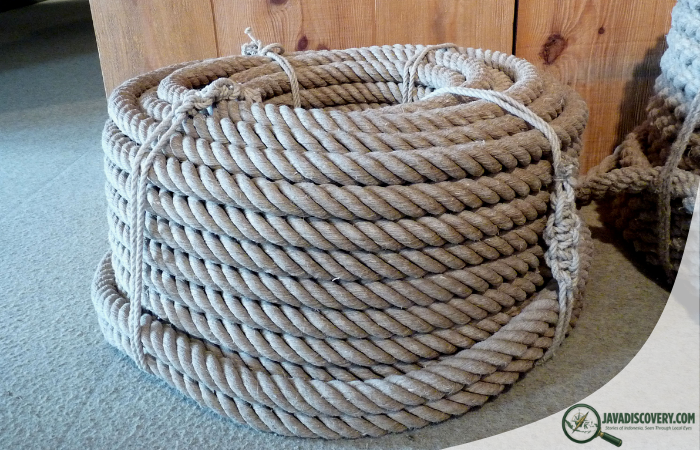
The bagan is a masterpiece of “konstruksi bambu” (bamboo construction). It relies on the craft of rope and binding materials to hold the hundreds of joints together against the constant “aliran” (current) and tide. Tools used in traditional fishing methods on this scale are communal; a bagan usually requires a crew of three to five men to operate the heavy “winch” that lifts the net once it is full of shimmering silver fish. The bagan represents the “guyub” (togetherness) of the coastal Javanese, where the labor of the night is shared, and the “hasil” (result) is distributed among the families of the crew.
The significance of the bagan in the tools used in traditional fishing methods is its “siklus” (cycle). During the “terang bulan” (full moon), the lights are ineffective, and the bagan falls silent. This gives the fish a “napas” (breath) or a period of rest to spawn and recover. This natural “moratorium” is built into the technology itself. The bagan does not fight the moon; it follows it. This alignment with the “primbon” (traditional calendars) ensures that the tools used in traditional fishing methods remain in harmony with the cosmic “tata surya” (solar system), preventing the over-exploitation that plagues industrial trawling.
The Seser and the Sirib: River and Estuary Implements
Moving inland toward the “kali” (rivers) and “tambak” (fish ponds), tools used in traditional fishing methods become smaller and more specialized. The “seser” is a triangular or circular scoop net attached to a long bamboo handle. It is the primary tool for catching “udang” (shrimp) and small river fish. The seser is an “alat” (tool) of the “wong cilik” (common people), often used by children and elders to supplement the family’s daily protein. It requires a “lincah” (nimble) movement, sweeping through the reeds and under the riverbanks where the fish hide.
The “sirib” is another fascinating entry in the catalog of tools used in traditional fishing methods. It is a large, square lift-net suspended from a flexible bamboo cross-frame, often operated from a small wooden pier. The fisherman sits quietly, occasionally lifting the net to see what the current has brought. The sirib is often used during the “banjir” (flood) season when the rivers are murky and the fish move toward the edges. The tools used in traditional fishing methods in the riverine context are about “moco kahanan” (reading the situation), understanding how the “air” (water) moves and where the “iwak” (fish) seek shelter.
In the “sawah” (rice fields), a specialized version of the bubu called the “wuwu” is used. It is a long, narrow bamboo tube placed in the irrigation channels to catch “belut” (eels). The wuwu is one of the most “efisien” (efficient) tools used in traditional fishing methods, as it takes advantage of the “hukum alam” (natural law) of the water flow. The eel enters the tube to hide or move between fields and finds itself trapped. This integration of fishing into the agricultural landscape shows the “multitasking” nature of Javanese rural life, where every “parit” (ditch) is a potential source of food if one has the right tool.
The Jukung: The Vessel as a Tool
In the Javanese worldview, the “perahu” or “jukung” is not just a transport vehicle; it is the most important of all tools used in traditional fishing methods. The jukung is a double-outrigger canoe carved from a single “batang pohon” (tree trunk), usually the “kayu mentaos” or “kayu jati.” The outriggers, made of thick “bambu petung,” provide the “keseimbangan” (balance) needed to navigate the treacherous “pantai selatan” (south coast) swells. The jukung is designed to be “ringan” (light) enough to be carried by two men but “kuat” (strong) enough to survive a direct hit from a breaker.
The “layar” (sail) and the “dayung” (paddle) are the traditional engines of the jukung. Tools used in traditional fishing methods on the open sea rely on the “angin” (wind) and the “tenaga” (strength) of the fisherman. Even with the introduction of “mesin tempel” (outboard motors), the traditional hull design of the jukung remains unchanged because no modern fiberglass boat can match its “keluwesan” (flexibility) in the surf. The boat is the fisherman’s “partner,” a living tool that is “dijamani” (ritually blessed) with offerings of “kembang” (flowers) and “kemenyan” (incense) to ensure its “slamet” (safety) and its “keberuntungan” (luck) in finding fish.
The colors and carvings on the jukung are part of the tools used in traditional fishing methods’ symbolic language. Often painted in vibrant reds, whites, and yellows, and featuring the “mata” (eye) of a sea creature on the bow, the boat is intended to “see” the fish and ward off “lelembut” (spirits). This blending of the “teknis” (technical) and the “gaib” (supernatural) is what makes Javanese fishing culture so resilient. The tool is not just a machine; it is a “sarana” (medium) for a deep, existential connection with the ocean’s power.
Conclusion: The Future of the Traditional Harvest
Tools used in traditional fishing methods in Java are a testament to the “kecerdasan lokal” (local intelligence) that has sustained the island’s coastal populations for millennia. They are the antithesis of the “destructive” modern methods like blast fishing or fine-mesh trawling. Instead, these tools promote a “panen” (harvest) that is “adil” (fair) to the sea. They require “keterampilan” (skill), “kesabaran” (patience), and a deep “pengenalan” (knowledge) of the natural world. As long as the Javanese nelayan continues to throw his jala and set his bubu, the ancient relationship between the “manungsa” (human) and the “segoro” (sea) will remain “lestari” (preserved).
In an era of global “krisis kelautan” (marine crisis), the tools used in traditional fishing methods offer a blueprint for a more “harmonis” (harmonious) future. They remind us that technology doesn’t always have to be “canggih” (sophisticated) in the digital sense; it can be sophisticated in its “empati” (empathy) for the environment. The Javanese fisherman, standing on the prow of his jukung with a net in his hand, is not just catching dinner; he is maintaining a “keseimbangan” (balance) that keeps the world turning. The tools are the “jembatan” (bridge) between the hunger of the belly and the bounty of the “ibu pertiwi,” ensuring that the flow of life remains “awet” and “berkah” for the generations to come.