Javas Forgotten Savannahs Under Open Skies

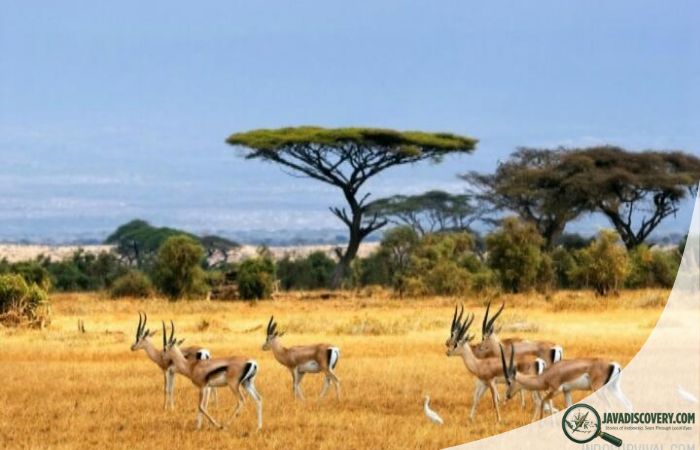
javadiscovery.com – At first light, the grasslands glow the color of old gold. A thin mist hovers just above the earth, dissolving as the sun rises behind a volcanic ridge. Hoofprints mark the dust. Acacia trees stand alone against a widening sky, their silhouettes sharp and improbable on an island better known for rice terraces and rainforests. The air feels dry, almost brittle. This is Java, yet it does not resemble the lush image most travelers carry in their minds.
A Landscape Few Expect
Java is often imagined as densely green, layered with tropical canopy and fertile volcanic soil. The island’s reputation rests on its rice fields, misty highlands, and crowded cities. Yet scattered across East Java are open savannahs that challenge this narrative. Here, grasses dominate. Trees grow sparsely. The horizon stretches uninterrupted, and wind becomes the loudest presence.
These landscapes are not illusions. They are ecological zones shaped by seasonal drought, volcanic activity, and centuries of human interaction with fire and grazing animals. While smaller in scale compared to the African plains they visually evoke, Java’s savannahs possess their own rhythm and history.

Baluran and the Dry North
In Baluran National Park, near the northeastern tip of the island, the savannah unfurls beneath Mount Baluran’s dormant cone. Locals sometimes refer to it as a little Africa of Java, though the comparison only goes so far. The grasses here are native species adapted to monsoon cycles. During the dry season, they bleach into pale yellow waves that ripple under relentless sun. In the rainy months, they return to green, dense and waist high.
Wild banteng move cautiously across the plain at dawn, their dark bodies cutting through morning haze. Javan rusa deer lift their heads at the slightest sound. Peafowl flash iridescent feathers among shrubs. The ecosystem is delicate, dependent on the balance between rainfall and evaporation, between growth and controlled burn.
The Role of Fire
Fire has long shaped savannah ecology. In some parts of East Java, controlled burning was historically practiced to prevent woody plants from overtaking grasslands. Without periodic fire, shrubs and trees can dominate, gradually transforming open plains into secondary forest. Fire resets the system, clearing dry biomass and encouraging new grass shoots.
In modern times, fire management is complex. Uncontrolled blazes during extreme drought can devastate wildlife and soil structure. Park rangers monitor wind patterns and humidity, aware that one spark can travel quickly across parched terrain. The scent of smoke during dry months carries a tension that is both natural and risky.
Bromo’s Sea of Sand and Grass
Southwest of Baluran, near Mount Bromo, another form of open landscape emerges. The famous Sea of Sand is volcanic, a vast expanse of ash and fine sediment. Beyond it, however, lie pockets of savannah where tall grasses frame distant peaks. In the early morning, horses graze along the edges of the caldera, their breath visible in cool air.
The Tenggerese communities who inhabit the highlands have long navigated this terrain. For them, open grassland is not empty space but a working landscape. It supports grazing, ritual movement, and seasonal agriculture in surrounding valleys. The savannah becomes a transitional zone between sacred volcano and cultivated field.
Climate and Monsoon Patterns
Java’s savannahs exist largely in regions with pronounced dry seasons. From roughly May to October, rainfall diminishes significantly in parts of East Java. Rivers shrink. Soil hardens. Grasses adapt by entering dormancy, conserving energy until the monsoon returns.
When rains finally arrive, often announced by towering clouds and sudden thunder, the transformation is swift. Dust turns to mud within minutes. Seeds that have lain dormant sprout rapidly. Within weeks, what was brittle and straw colored becomes vibrant and green.
This cyclical pattern defines the visual identity of Java’s forgotten savannahs. Visitors who arrive in different months encounter entirely different landscapes, each shaped by the same ground beneath shifting skies.
Human Imprints on Open Land
These grasslands are not untouched wilderness. For centuries, people have grazed livestock, collected firewood, and traversed these plains. In some regions, overgrazing reduced grass cover, exposing soil to erosion. In others, careful rotation maintained ecological balance.
Older residents in villages bordering savannah zones recall periods when herds were larger and mobility across land was freer. Today, conservation regulations restrict certain practices to protect biodiversity. Negotiations between livelihood needs and ecological preservation continue quietly in community meetings and ranger posts.
Voices from the Edge
Pak Harsono, a ranger in Baluran, begins patrol before sunrise. He rides a motorbike along a dusty track that cuts through tall grass. “People think Java is only green forest,” he says, pausing to scan the plain with binoculars. “But this is also Java. If we lose it, we lose part of our identity.”
He points toward a distant cluster of acacias. Beneath them, a small herd of banteng stands motionless, ears twitching. Protecting them requires vigilance against poaching and habitat encroachment. It also requires public understanding that savannah is not degraded forest but a distinct ecosystem.
Silence and Scale
Standing in the center of a Javan savannah at midday can feel disorienting. The scale expands. Without dense trees to limit perspective, the eye travels farther. Heat rises in shimmering currents. Insects hum low and constant. Occasionally, wind sweeps across the grass, bending it in a synchronized wave that resembles water.
The absence of canopy alters sound. There is no layered echo of dripping leaves or distant gibbons. Instead, the dominant tones are wind, hoofbeats, and the dry rustle of stalks brushing against each other.
Threats and Fragility
Like many ecosystems in Java, savannahs face pressure from land conversion and invasive species. Certain non native plants spread aggressively, altering soil chemistry and outcompeting native grasses. Infrastructure development fragments habitat corridors used by deer and banteng.
Climate variability introduces additional uncertainty. Extended droughts linked to broader climatic shifts can stress vegetation beyond typical seasonal cycles. Conversely, unusually heavy rainfall may encourage rapid shrub growth, accelerating ecological transition away from open grassland.
Conservation strategies involve monitoring plant composition, managing fire regimes carefully, and engaging nearby communities in sustainable land use practices. The work is ongoing and adaptive.
A Different Image of Java
As the sun lowers over Baluran, the savannah shifts again. Golden light intensifies, turning each blade of grass into a filament of amber. A line of deer moves toward a water source, cautious but steady. In the distance, Mount Baluran’s profile darkens against a sky streaked with orange and violet.
These scenes complicate the island’s visual identity. Java is not only terraced rice and dense jungle. It is also open horizon, dry wind, and the resilience of grasses that survive months without rain. The forgotten savannahs expand the narrative of what this island contains.
When night falls, stars appear with unusual clarity above the plains. Without dense canopy or city glare, constellations spread across the sky. The temperature drops. The grass cools under moonlight. Somewhere in the darkness, a hoof scrapes against soil.
In these quiet expanses, Java reveals another layer of itself. One that does not shout for attention but waits beneath open skies, shaped by monsoon and fire, by hoof and wind. The savannah endures, both fragile and persistent, a reminder that even on the most populated island in Indonesia, there remain spaces where the horizon still breathes.