Traditional Herbal Landscapes Around Javanese Homes

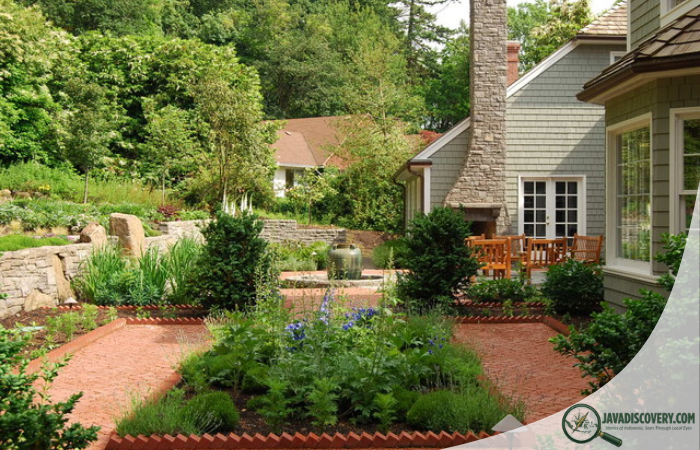
javadiscovery.com – Just beyond the threshold of many Javanese homes, there is a quiet, living pharmacy. It does not announce itself with signs or labels. Instead, it grows organically along narrow paths, beside wells, near kitchen doors, and under the shade of fruit trees. Leaves brush against one another in the breeze, releasing faint scents of spice and earth. Roots push gently through the soil, storing properties that have been understood for generations.
These spaces are known not as gardens in the ornamental sense, but as functional landscapes. Each plant has a purpose. Some are used to soothe fever, others to ease digestion, and many to support daily health in ways that blend seamlessly into routine life. Together, they form a system of knowledge rooted in observation, memory, and care.
In rural Java, the area surrounding a home is more than a physical boundary. It is an extension of the household, where the natural world is cultivated to meet both practical and cultural needs.

The Living Yard
In many villages, the space around a house is carefully organized without appearing rigid. Plants grow in clusters, often arranged according to use rather than aesthetic design.
Near the kitchen, herbs commonly used in cooking and medicine are placed within easy reach. Further out, larger plants and trees provide shade and additional resources.
This arrangement reflects a practical approach, where accessibility and function guide the layout.
The yard becomes a space of interaction, where daily activities intersect with plant care.
Family Medicinal Plants
A central concept in these landscapes is the idea of family medicinal plants, often referred to locally as tanaman obat keluarga.
These are species selected for their therapeutic properties, maintained specifically for household use.
Leaves may be boiled to create infusions, roots ground into paste, and stems used in various preparations.
This knowledge is passed down through generations, often shared within families rather than formal institutions.
Common Herbal Species
Several plants are commonly found in Javanese home landscapes. Ginger, turmeric, lemongrass, and galangal grow easily in the tropical climate.
Each of these has multiple uses, from culinary to medicinal. Ginger may be used to warm the body, turmeric for its anti-inflammatory properties, and lemongrass for its soothing aroma.
These plants are integrated into daily routines, blurring the line between food and medicine.
Knowledge in Practice
The use of herbal plants is not static. It evolves through experience and adaptation.
Individuals learn which plants are effective for certain conditions, how to prepare them, and when to use them.
This knowledge is often shared informally, through observation and conversation.
It becomes part of daily life, rather than a separate domain of expertise.
The Role of Women
In many households, women play a central role in maintaining herbal landscapes and knowledge.
They tend to the plants, prepare remedies, and pass on information to younger generations.
This role is both practical and cultural, linking care for the family with stewardship of the environment.
Through these activities, knowledge is preserved and adapted over time.
Integration with Daily Life
Herbal plants are used in ways that align with daily routines. A leaf may be picked while preparing a meal, or a root gathered when someone feels unwell.
This integration reduces the need for separation between treatment and living.
Health care becomes part of everyday practice, embedded in the rhythms of the household.
Environmental Adaptation
The selection of plants reflects adaptation to local conditions. Species that thrive in the climate and soil are favored.
This ensures that the landscape remains sustainable, requiring minimal external input.
It also reflects an understanding of the relationship between plant characteristics and environmental factors.
Cultural Significance
Beyond their practical use, herbal plants carry cultural meaning. They are associated with care, knowledge, and continuity.
The presence of these plants around a home reflects a connection to tradition, even as modern influences become more prominent.
They serve as reminders of a way of life where health and environment are closely linked.
Changing Contexts
Urbanization and modernization are changing how these landscapes are maintained. Limited space and access to commercial medicine reduce reliance on home-grown herbs.
However, in many areas, the practice continues, adapting to new conditions.
Small gardens, potted plants, and community spaces provide alternative ways to sustain this knowledge.
A Quiet System of Care
The herbal landscape around a Javanese home operates quietly. It does not draw attention, yet it supports daily life in essential ways.
It provides resources for health, contributes to food preparation, and reinforces cultural identity.
This system is resilient, shaped by generations and maintained through practice.
The Garden as Knowledge
Walking through such a yard, each plant represents more than a species. It represents knowledge, experience, and connection.
The arrangement, the selection, and the use all reflect a relationship between people and their environment.
This relationship is not static. It evolves, responding to changes while maintaining continuity.
Roots of Continuity
As the day moves forward and activities shift, the garden remains present. Leaves continue to grow, roots deepen, and new plants are added.
In this ongoing process, the herbal landscape becomes a living archive. It holds knowledge that is both practical and cultural, grounded in the soil and carried forward through time.
In Java, these small spaces around homes reveal a broader understanding of life, one where care, environment, and tradition are intertwined in ways that are both simple and profound.