The Role of Tone in Javanese Communication Culture

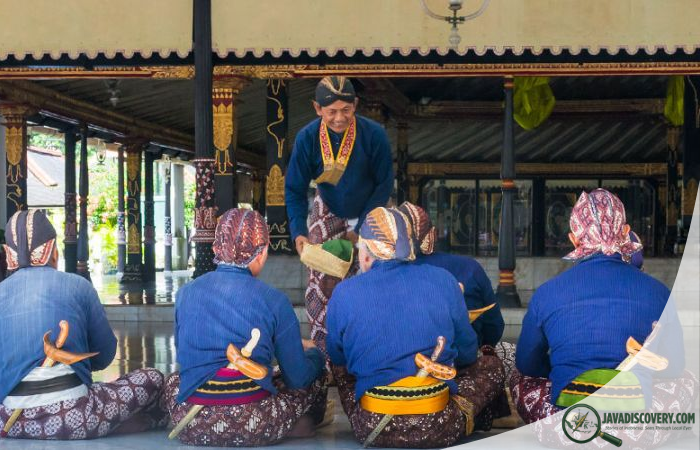
javadiscovery.com – In a quiet courtyard shaded by mango trees, a conversation unfolds between neighbors. The words themselves are simple, exchanged in everyday phrases. Yet beneath them lies a subtle layer of meaning carried not by vocabulary, but by tone. A voice rises slightly in warmth, softens in deference, or pauses at just the right moment. In Javanese communication, how something is said often matters as much as what is said.
To an outside listener, these nuances may be difficult to detect. The conversation may seem calm, even uniform. But for those familiar with its rhythms, tone reveals intention, emotion, and social awareness. It is a system of expression shaped by culture, where voice becomes a tool for maintaining harmony and respect.
In Java, tone is not an accessory to language. It is part of its structure.

Beyond Words
Language is often understood as a system of words and grammar. In Javanese communication, tone extends this system into the realm of sound and delivery.
The same sentence can carry different meanings depending on how it is spoken. A gentle tone may signal politeness, while a firmer one may indicate urgency or authority.
This flexibility allows speakers to adjust meaning without changing vocabulary.
Understanding tone becomes essential for interpreting intention.
Levels of Speech and Vocal Expression
Javanese language includes different levels of speech, each associated with degrees of formality and respect. Tone works alongside these levels, reinforcing their function.
A respectful phrase spoken with an inappropriate tone can lose its intended meaning. Conversely, a modest tone can soften direct language.
This interaction between words and voice creates a layered form of communication.
Speakers learn to align tone with context, ensuring coherence between expression and intention.
Respect Through Sound
Tone plays a central role in expressing respect. When addressing elders or individuals of higher status, voices often become softer and more measured.
This shift signals awareness of social position without the need for explicit acknowledgment.
It is a form of nonverbal communication embedded within speech.
Through tone, respect is conveyed continuously throughout interaction.
Emotion in Restraint
Javanese communication tends to favor emotional restraint. Rather than expressing feelings openly, speakers often convey them subtly through tone.
A slight change in pitch, a pause, or a gentle emphasis can indicate emotion without direct statement.
This approach allows individuals to communicate feelings while maintaining composure.
It reflects a balance between expression and control.
Indirect Meaning
Indirect communication is a defining feature of Javanese interaction. Tone supports this by carrying meaning that is not explicitly stated.
A suggestion may be delivered in a tone that implies caution, or a response may be softened to indicate disagreement.
Listeners interpret these cues, understanding the message beyond the words.
This shared understanding reduces the need for direct confrontation.
The Role of Silence
Silence interacts closely with tone. Pauses in speech create space for reflection and interpretation.
A moment of silence can signal hesitation, respect, or disagreement, depending on context.
When speech resumes, tone helps clarify the meaning of that pause.
Together, silence and tone form a continuous flow of communication.
Learning the Sound of Interaction
The ability to use tone effectively is learned over time. Children observe how adults speak, noting changes in voice across different situations.
They begin to imitate these patterns, gradually developing their own sensitivity to tone.
This learning process is informal, embedded in daily life.
Through repetition and observation, tone becomes an intuitive aspect of communication.
Context and Adaptation
Tone is highly dependent on context. The same individual may speak differently in a family setting, a formal gathering, or a public space.
Adapting tone to fit the situation demonstrates social awareness.
Failure to adjust can lead to misunderstanding or perceived disrespect.
This adaptability is a key component of effective communication.
Modern Shifts in Tone
As communication extends into digital spaces, the role of tone faces new challenges. Written messages lack the vocal cues that convey nuance.
To compensate, individuals may use punctuation, repetition, or other strategies to suggest tone.
Despite these changes, the importance of tone in spoken interaction remains strong.
It continues to shape how meaning is constructed in face-to-face communication.
Misinterpretation Across Cultures
For those unfamiliar with Javanese communication, tone can be easily misinterpreted. A soft voice may be seen as uncertainty, while indirect tone may be perceived as ambiguity.
In reality, these are deliberate choices, reflecting cultural values.
Understanding the role of tone helps bridge these differences.
Tone as Social Navigation
In everyday life, tone functions as a tool for navigating relationships. It allows individuals to adjust their expression in response to others, maintaining balance and avoiding conflict.
This navigation is continuous, occurring in each interaction.
It requires attention, sensitivity, and practice.
The Subtle Architecture of Speech
If words form the structure of language, tone provides its architecture. It shapes how that structure is experienced, adding depth and dimension.
Without tone, communication would lose much of its nuance.
In Javanese society, this architecture is carefully maintained.
Listening Beyond Words
To understand Javanese communication fully, one must listen beyond the words themselves. Meaning resides in the spaces between sounds, in the rise and fall of the voice.
It is in these subtle variations that intention becomes clear.
Through tone, speakers and listeners engage in a shared process of interpretation.
In this quiet exchange, communication becomes more than information. It becomes a reflection of relationship, awareness, and cultural understanding.