Emotional Control as Cultural Strength in Javanese Life


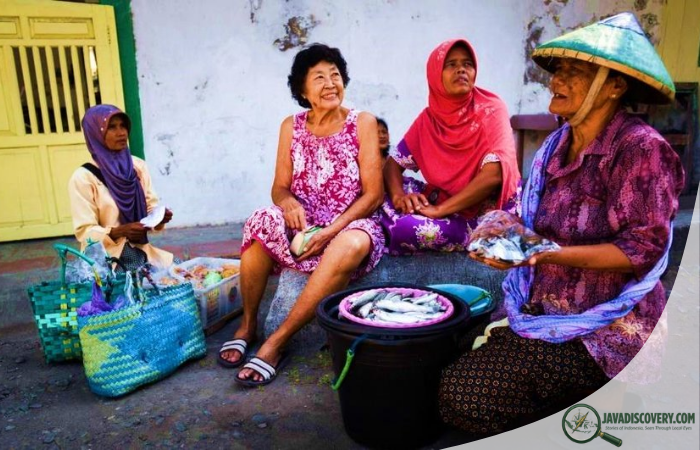
javadiscovery.com – In a crowded marketplace in Central Java, voices rise and fall in a steady rhythm. Buyers and sellers negotiate over prices, gestures move quickly, and transactions unfold in close proximity. Yet even in moments of disagreement, something remains restrained. A smile lingers, a tone softens, and tension rarely escalates into open confrontation. Beneath the visible activity lies a quiet discipline, one that shapes how emotion is expressed and contained.
In Javanese society, emotional control is not seen as suppression, but as strength. It reflects an ability to manage internal states in a way that preserves harmony with others. This form of restraint is deeply embedded in cultural values, influencing communication, relationships, and personal identity.
To understand this strength is to look beyond outward calm and into the principles that sustain it.

The Value of Inner Balance
At the core of Javanese emotional control is the concept of balance. Emotions are not denied, but regulated so that they do not disrupt social equilibrium.
Anger, frustration, and disappointment are acknowledged internally, yet their outward expression is carefully managed.
This approach emphasizes stability over reaction, allowing individuals to maintain composure even in challenging situations.
Balance becomes both a personal and social goal.
Restraint as Awareness
Emotional control is closely tied to awareness of others. Individuals consider how their expressions might affect those around them.
Raising one’s voice, showing visible anger, or reacting impulsively can create discomfort or tension within a group.
By exercising restraint, individuals demonstrate sensitivity to the social environment.
This awareness guides behavior in subtle but consistent ways.
Harmony Over Confrontation
In many social interactions, maintaining harmony is prioritized over asserting individual emotion. Disagreements are often handled indirectly, with care taken to avoid open conflict.
Rather than expressing anger directly, individuals may choose softer language, pauses, or alternative ways of communication.
This approach reduces the risk of escalation and helps preserve relationships.
Harmony is sustained through controlled expression.
The Role of Patience
Patience is an essential component of emotional control. It allows individuals to endure discomfort without immediate reaction.
Waiting, observing, and choosing the right moment to respond are valued skills.
This patience reflects confidence in one’s ability to manage situations over time, rather than reacting impulsively.
It reinforces the idea that strength lies in endurance.
Learning Through Socialization
The practice of emotional control is learned gradually. Children observe how adults behave in different situations, noting when emotions are expressed and when they are restrained.
They receive guidance, both explicit and implicit, on appropriate behavior.
Over time, these patterns become internalized, shaping how individuals respond to emotional stimuli.
This process ensures that cultural values are carried forward.
Language and Emotional Nuance
Language plays a role in how emotions are managed. Javanese communication often includes levels of speech that reflect respect and social position.
These linguistic choices encourage careful expression, reducing the likelihood of harsh or direct statements.
Words are selected not only for meaning, but for their impact on the listener.
This contributes to a broader culture of restraint.
Public and Private Expression
Emotional control does not mean that feelings are never expressed. Instead, there is a distinction between public and private spaces.
In public, restraint is emphasized to maintain social harmony. In private, individuals may express emotions more freely among trusted family members.
This separation allows for both control and release, balancing social expectations with personal needs.
Strength in Stillness
In Javanese cultural understanding, strength is often associated with stillness rather than force. The ability to remain calm under pressure is seen as a sign of maturity and self-mastery.
This perspective contrasts with interpretations that equate strength with assertiveness or dominance.
Here, strength is measured by control, not by volume.
Misinterpretation and Perception
For those unfamiliar with this cultural framework, emotional restraint may be misunderstood. It can be perceived as passivity or lack of engagement.
In reality, it reflects active control and deliberate choice.
Understanding this distinction is important for interpreting behavior accurately.
Adapting to Change
As Javanese society engages with broader global influences, expressions of emotion may shift. Urban environments and modern communication platforms often encourage more direct expression.
However, the underlying value of control remains present, adapting to new contexts.
Individuals navigate these changes by balancing traditional expectations with contemporary norms.
Emotional Control and Leadership
In leadership contexts, emotional control is particularly valued. Leaders are expected to remain composed, making decisions without being driven by immediate emotion.
This composure fosters trust and stability, reinforcing their role within the community.
It demonstrates the ability to guide others while maintaining balance.
The Quiet Influence
Emotional control operates quietly, influencing interactions without drawing attention. It shapes tone, timing, and response.
This subtlety allows it to function effectively, guiding behavior in ways that are often unnoticed but deeply felt.
It becomes part of the social fabric, woven into everyday life.
A Cultural Strength
In Java, emotional control is not a limitation. It is a form of strength that supports harmony, respect, and stability.
It allows individuals to navigate complex social environments with sensitivity and awareness.
Through restraint, they create space for understanding and cooperation.
This strength is not imposed, but cultivated, emerging through practice and shared values.
Between Feeling and Expression
To observe Javanese social life is to see the space between feeling and expression. Emotions exist, often deeply, but their outward form is shaped by consideration.
This shaping does not diminish their presence. Instead, it refines how they are communicated.
In this balance, emotional control becomes more than behavior. It becomes a way of being, one that reflects the enduring relationship between individual experience and collective harmony.