How Respect Is Performed Through Daily Gestures in Java

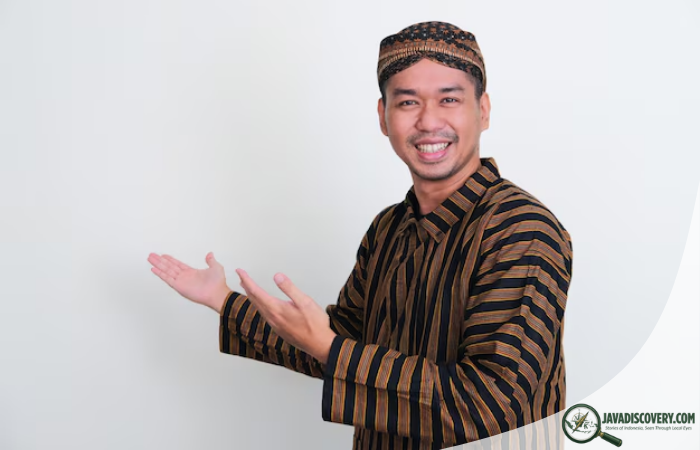
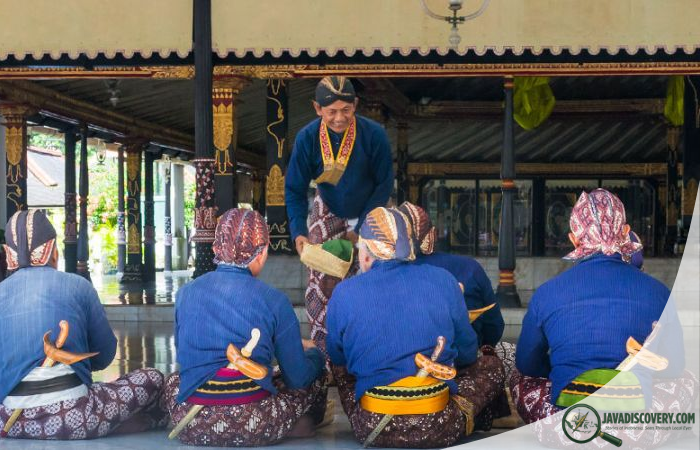
javadiscovery.com – In a narrow alley between houses in a Javanese village, a young man steps aside to let an older woman pass. He lowers his head slightly, his hand briefly touching his chest as he murmurs a quiet greeting. The exchange lasts only a moment, almost unnoticed by others nearby. Yet within that moment lies a complete expression of respect, communicated without ceremony, without emphasis, and without the need for explanation.
In Javanese society, respect is rarely declared openly. It is performed, quietly and consistently, through gestures so familiar they often fade into the background of daily life. These gestures are not formal rituals. They are small, repeated actions that reflect awareness of others, sensitivity to context, and an understanding of social relationships.
To observe them closely is to see how culture lives within the body.

The Language of the Body
Respect in Java is often expressed through body language rather than words. The position of the head, the movement of the hands, and the way one occupies space all carry meaning.
A slight bow of the head can signal deference. A controlled posture reflects composure and awareness. Even the way a person sits or stands in relation to others communicates understanding of social roles.
These physical expressions form a silent language, one that is widely understood within the community.
Lowering Oneself
One of the most common gestures of respect involves lowering the body, either literally or symbolically. When passing in front of someone older, a person may bend slightly, reducing their height as a sign of deference.
This act acknowledges the presence and status of the other person. It does not require words, yet its meaning is clear.
The gesture reflects an awareness of hierarchy and a willingness to adjust one’s position accordingly.
The Hand and the Heart
Another subtle gesture involves the hand touching the chest after receiving something or greeting someone. This movement signifies sincerity and gratitude.
It is a way of internalizing the interaction, showing that the exchange is not merely external but felt within.
This gesture is brief, often lasting only a second, yet it carries emotional weight.
Passing with Awareness
In crowded spaces, movement itself becomes an expression of respect. When walking past others, especially elders, individuals often adjust their path or posture.
They may turn their body slightly, lower their head, or move more slowly.
These adjustments signal awareness, ensuring that one’s presence does not disrupt or overshadow others.
Respect is thus embedded in motion.
Receiving and Giving
The act of giving or receiving objects is also shaped by gestures of respect. Items are often handed with both hands, or with the right hand supported by the left.
This careful presentation emphasizes the importance of the exchange and the relationship between the individuals involved.
It transforms a simple transaction into a moment of connection.
Eyes and Gaze
Eye contact in Javanese culture is nuanced. While attention is important, prolonged direct gaze, especially toward elders, may be considered inappropriate.
Instead, the gaze is often softened or briefly lowered, signaling respect without disengagement.
This balance allows individuals to remain attentive while maintaining social sensitivity.
The Role of Space
Respect is also expressed through the management of space. Sitting positions, physical distance, and orientation all reflect social awareness.
For example, individuals may choose lower seating when in the presence of elders, or position themselves slightly behind rather than directly beside them.
These spatial choices communicate understanding of hierarchy and relationship.
Speech Accompanied by Gesture
When speaking, gestures often accompany words to reinforce respect. Hands may be held together, movements kept minimal, and posture maintained with care.
The coordination between speech and gesture creates a unified expression of politeness.
It ensures that respect is conveyed not only in language but in the body.
Learning Through Imitation
Children learn these gestures not through formal instruction, but through observation. They watch how adults interact, noticing patterns in movement and behavior.
Over time, they begin to imitate these actions, gradually incorporating them into their own behavior.
This process allows cultural values to be transmitted naturally across generations.
Consistency in Small Actions
The power of these gestures lies in their consistency. They are repeated daily, in ordinary situations, without drawing attention.
Through repetition, they become part of routine, shaping how individuals move and interact.
Respect is not reserved for special occasions. It is practiced continuously.
Adapting to Modern Contexts
In urban environments and modern settings, some gestures may evolve. Faster-paced interactions and changing social norms can alter how respect is expressed.
However, the underlying principle of awareness remains. Even when gestures change, the intention behind them persists.
This adaptability allows the culture to remain relevant while maintaining its core values.
Misinterpretation by Outsiders
For those unfamiliar with Javanese culture, these gestures may go unnoticed or be misunderstood. A lowered gaze might be seen as lack of confidence, or a soft posture as passivity.
In reality, these are deliberate expressions of respect.
Understanding their meaning requires attention to context and cultural perspective.
The Body as Cultural Expression
In Java, the body becomes a medium through which cultural values are expressed. Gestures carry meaning that words alone cannot fully convey.
They reflect an internalized understanding of social relationships, guiding behavior in subtle ways.
This embodiment of culture ensures that respect is not only spoken, but lived.
A Quiet Performance
These gestures form a quiet performance, one that unfolds continuously in daily life. There is no audience, no stage, and no formal acknowledgment.
Yet their impact is profound, shaping how individuals relate to one another.
In each small movement, respect is reaffirmed.
And in these accumulated moments, a culture of awareness and harmony is sustained, not through grand declarations, but through the simple, consistent language of the body.