Sacred Eroticism in Javanese Culture and Symbolism

javadiscovery.com – Long before the word “taboo” entered the vocabulary of the Javanese, sexuality was woven naturally into the fabric of daily life. It was neither sin nor scandal, but part of a cosmic order. To the ancient Javanese, desire was not a danger—it was a force of creation itself. The union of male and female, of sky and earth, was the rhythm of the universe.
When Eroticism Was Sacred
In traditional Javanese philosophy, the human body is not merely flesh, but a vessel of cosmic balance. Sexuality belongs to cipta rasa karsa—the triad of mind, feeling, and will that defines humanity. The act of union between man and woman was seen as the meeting of two energies: purusa (the masculine principle, symbolizing the sky and spirit) and pradhana (the feminine principle, symbolizing earth and matter). Their harmony sustains life, both literally and spiritually.
“Eroticism in old Java was never about lust,” explains anthropologist Retno Puspitasari. “It was about balance. The erotic image was a metaphor for the fertility of nature and the harmony of existence.”

Ancient farmers understood this intuitively. To plant was to penetrate the soil; to harvest was to embrace the earth’s generosity. The same rhythm guided rituals, art, and daily life. Sexual energy was a source of vitality, a sacred current that connected humans to the divine.
The Cosmic Union: Lingga and Yoni
Perhaps no symbol expresses this better than the lingga and yoni, the iconic pairing of phallic and womb-like forms found in Hindu-Buddhist temples across Java. The lingga—a stone pillar—represents Shiva, the male creative force. The yoni, a circular basin beneath it, represents Shakti, the female energy. Together, they signify the union that births the universe.
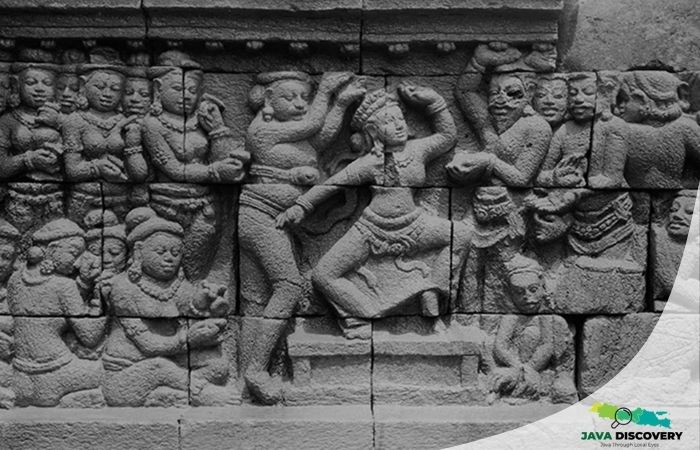
Visitors to Candi Sukuh and Candi Cetho, two enigmatic temples on the slopes of Mount Lawu, often find themselves startled by carvings of genitalia displayed openly on stone reliefs. But to the Javanese of the 15th century, these were not obscene images—they were prayers carved in stone. Sukuh’s reliefs depict human copulation alongside symbols of fertility, emphasizing rebirth and cosmic balance.
“For Javanese mystics, the sexual act mirrored the creation of the cosmos,” says historian I Made Wirawan. “It was a meditative event, not a moral sin. Only later did these images become ‘indecent’ under foreign eyes.”
Gowok: The Forgotten Teachers of Intimacy
Few outside Central Java have heard of the gowok—women who once played a unique role in preparing young men for marriage. In places like Purworejo and Banyumas, a family might send their son to stay with a gowok before his wedding. Her duty was not just to teach about sexual relations, but about responsibility, tenderness, and respect.
She was, in a sense, a teacher of harmony. A gowok would guide her pupil through the subtleties of household life: how to care for a wife, how to communicate, and how to recognize pleasure as mutual, not selfish. After the instruction, she would report to the parents that the young man was “ready” to become a husband.
To modern ears, the idea sounds shocking. But in its original context, the gowok tradition was not exploitation—it was pedagogy, a way to ensure marital harmony in a culture that valued balance above all else. “It was an educational system rooted in compassion and realism,” explains cultural researcher Sri Handayani. “The gowok existed because Javanese culture acknowledged sexuality as a skill requiring wisdom, not repression.”
Erotic Symbolism in Art and Literature
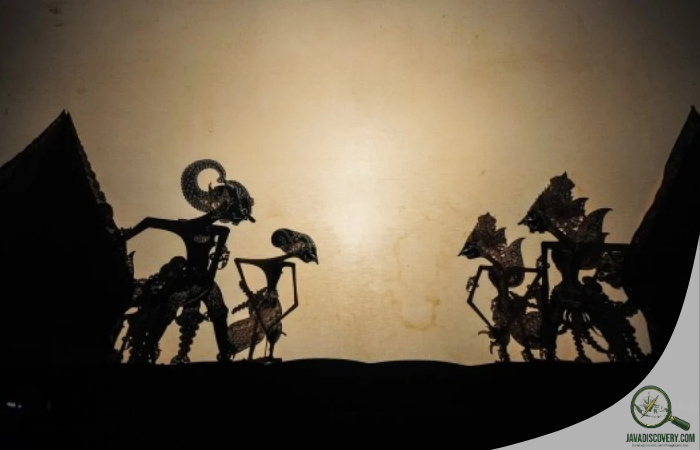
Eroticism also found its voice in Javanese art—subtle, symbolic, and poetic. In wayang stories, heroes and heroines express desire through refined metaphors: longing eyes, trembling hands, the moon obscured by clouds. Passion is present, but disciplined—channeled through aesthetics and self-control.
The Panji tales, for example, narrate the separation and reunion of Raden Panji and Dewi Sekartaji—symbols of human desire and divine order. Their love, often sensual but pure, reflects the journey of the soul seeking union with the divine. The same themes appear in classical tembang macapat, whose verses blend erotic undertones with moral instruction. “To read a Javanese poem of love,” writes scholar Benedict Anderson, “is to walk a fine line between erotic and spiritual devotion.”
Rituals of Fertility and Earth Worship
Across rural Java, fertility rituals remain the living memory of this ancient worldview. In wiwitan ceremonies before harvest, offerings of rice, flowers, and coconut are made to Dewi Sri—the rice goddess, embodiment of feminine abundance. In some villages, couples are encouraged to sleep together in the fields before planting, a symbolic union between human and earth to ensure prosperity.
In coastal areas, the larung sesaji—the offering of goods to the sea—is a reminder that the fertility of land and the generosity of water depend on mutual respect between masculine and feminine forces. Even today, elders speak of bumi lan langit (earth and sky) as lovers who must remain in harmony for life to flourish.
These rituals are not relics of superstition—they are ecological prayers encoded in sensual symbolism. They remind communities that desire and creation, body and nature, are inseparable threads in the same cosmic weave.
When Morality Changed
The perception of sexuality in Java began to shift with the arrival of new moral frameworks: first from colonial Christianity, later from conservative modernity. The Dutch saw open depictions of genital symbols as “primitive,” while missionaries denounced them as immoral. Islamic reform movements of the 20th century also introduced stricter codes around modesty and gender segregation.
By the time Indonesia entered the modern era, the sensual had been replaced by shame. The temples of Sukuh and Cetho were labeled “pornographic,” the gowok tradition quietly disappeared, and fertility rituals were reframed as folklore rather than faith. The sacred became profane, the natural became forbidden.
“Colonialism didn’t just change our politics,” observes anthropologist Achmad Rifa’i. “It changed our sense of the body. We inherited shame that was never ours.”
Echoes in the Modern Age
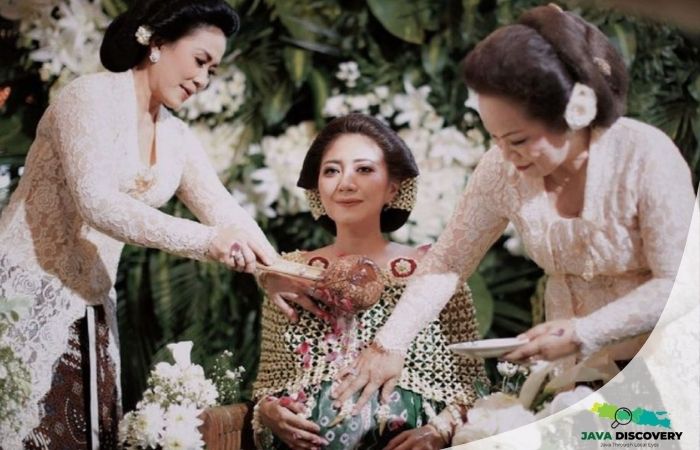
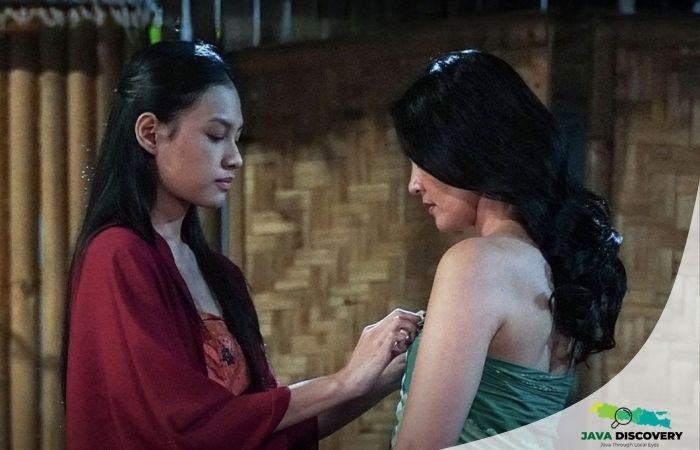
Yet fragments of that old worldview survive. Javanese dance forms like bedhaya and srimpi retain sensual grace beneath their discipline—hips that sway in devotion, eyes that speak without words. Traditional bridal rituals still echo the symbolic “union” of sky and earth through offerings and incense.
Some contemporary artists have begun reclaiming these symbols. Sculptor Dolorosa Sinaga, for instance, reinterprets the yoni as a form of empowerment; poets in Yogyakarta revive the erotic metaphors of old tembang. They are part of a quiet renaissance that seeks to remember what was once sacred before it was silenced.
Understanding the Sacred in the Sensual
To study Javanese eroticism is not to romanticize it, but to understand that ancient cultures often saw no contradiction between holiness and desire. In the Javanese cosmology, every act of creation—whether planting a seed, carving a statue, or making love—was part of sembah, an offering to the universe.
Modern society may prefer to forget this, yet the stones of Sukuh still whisper it, and the songs of Panji still hint at it: that love, when grounded in respect and harmony, is itself a form of prayer.