The Silent Power of Javanese Dance and Inner Expression

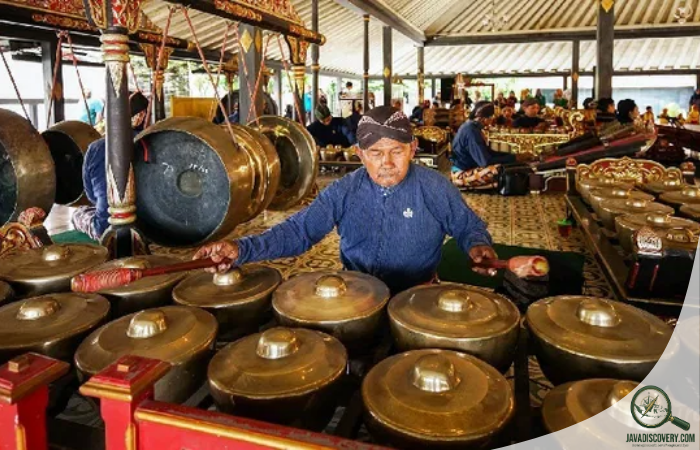
javadiscovery.com – In the dim light of a pendopo just before dusk, the air feels heavy with anticipation. Incense smoke drifts upward in slow, curling lines. A gamelan ensemble sits motionless, mallets resting on bronze keys. When the first note finally sounds, it is not loud. It does not command. It invites. In Java, dance begins not with spectacle, but with restraint.
Movement That Refuses to Rush
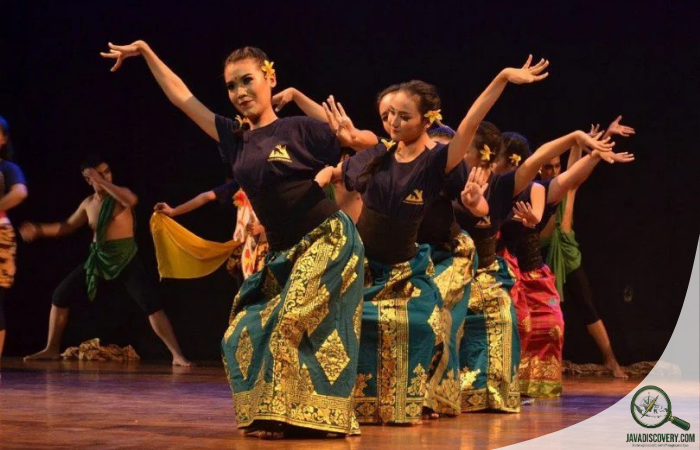
To an untrained eye, Javanese dance may appear almost static. The steps are measured, the gestures restrained, the tempo unhurried. Yet within this stillness lies a philosophy that has shaped Javanese life for centuries. Here, power is not expressed through force, but through control. Emotion is not expelled outward, but held, refined, and transformed.
Every lifted hand, every angled wrist, every downward gaze is intentional. Nothing is wasted. Nothing is accidental. In Javanese dance, speed is suspicion, excess is imbalance. What matters is not how much the body moves, but how deeply the movement is felt.

This is a tradition born from courts, temples, and long nights of contemplation. It reflects a worldview that values harmony over dominance, inner composure over outward display.
The Body as a Vessel of Philosophy
Javanese dance is inseparable from Javanese ethics. The concept of alus—refinement, subtlety, inner calm—governs not only movement, but speech, posture, and social interaction. Dancers train their bodies to become vessels of this refinement.
The spine remains upright but relaxed, symbolizing moral integrity without rigidity. The eyes lower gently, avoiding confrontation while maintaining awareness. Even the feet seem to touch the ground with caution, as if asking permission before stepping.
A senior dance instructor in Yogyakarta once described it simply: “If your heart is noisy, your body will betray you.” For dancers, technical mastery is meaningless without emotional discipline.
Breath as the Hidden Rhythm
Unlike many global dance traditions that emphasize visible rhythm, Javanese dance is guided by breath. Inhale and exhale shape transitions between movements. The dancer learns to slow the breath until it aligns with the deep, cyclical pulse of the gamelan.
This internal rhythm creates an illusion of effortlessness. Movements seem to float rather than strike. Tension dissolves into continuity.
Court Dances and Sacred Origins
The most revered forms of Javanese dance emerged within royal courts, particularly in Yogyakarta and Surakarta. Dances such as Bedhaya and Srimpi were never meant for entertainment alone. They were rituals of power, legitimacy, and cosmic balance.
The Bedhaya dance, traditionally performed by nine women, carries layers of symbolism tied to the Javanese cosmology. The number nine reflects cardinal directions and spiritual completeness. Each dancer represents a force within the human body and the universe itself.
Historically, these performances were restricted to palace interiors, witnessed only by royalty and select guests. Silence was mandatory. The dance was believed to invite unseen presences, including the mythical Queen of the Southern Sea.
Even today, dancers approach these works with reverence. Rehearsals often begin with moments of quiet reflection. Some refuse to speak loudly near the practice space.
Gesture as Language
Javanese dance communicates without narrative excess. Unlike theatrical traditions that rely on dramatic expression, this dance speaks through codes.
A slight tilt of the head can signal humility or longing. The opening of fingers may suggest acceptance or surrender. The angle of the elbow determines whether a character embodies strength or grace.
These gestures are learned through repetition, observation, and correction. Teachers do not shout. They demonstrate, then wait. The student adjusts, slowly, often in silence.
Gendered Energy Without Rigidity
Traditional roles distinguish between putri (female) and putra (male) styles, yet the distinction is not about strength versus weakness. Male dances emphasize grounded energy and controlled tension, while female dances highlight fluidity and continuous flow.
Both require immense physical endurance. Holding a pose for several minutes while maintaining breath control demands discipline equal to any athletic performance.
Music That Breathes With the Dancer
The gamelan does not accompany the dance; it converses with it. Bronze gongs, metallophones, drums, and flutes weave a soundscape that mirrors the dancer’s internal state.
The tempo shifts subtly. Drummers respond to micro-movements, adjusting rhythm to the dancer’s breath and balance. In traditional settings, no single element dominates. Sound and motion exist in mutual respect.
Silence itself becomes part of the composition. Pauses are not empty; they are charged with presence.
Training the Invisible Muscles
Behind the serene exterior lies years of rigorous training. Dancers begin young, often before adolescence. They practice basic walking patterns for months, sometimes years, before advancing.
Flexibility is developed slowly to avoid injury. Strength comes from sustained stillness rather than explosive motion. Mental endurance is trained through repetition and patience.
Corrections are subtle. A teacher might adjust a finger by a few millimeters. That difference matters.
Dance Beyond the Palace
While court traditions remain influential, Javanese dance also lives in villages, ceremonies, and communal gatherings. Folk forms adapt classical principles to local stories and social contexts.
At weddings, harvest rituals, and commemorative events, dance becomes a shared language. Performers may not wear royal costumes, but the values remain: respect, balance, restraint.
In these spaces, dance reconnects with everyday life, reminding communities that grace is not reserved for elites.
Modern Challenges and Quiet Persistence
In a fast-moving digital era, Javanese dance faces challenges. Short attention spans clash with slow tempos. Visual spectacle often overshadows subtlety.
Yet the tradition persists, not by competing with speed, but by offering refuge from it. Young dancers continue to seek meaning in slowness. Studios remain active, especially in Central Java.
Some contemporary choreographers experiment with form while preserving core principles. Others focus on preservation, ensuring that gestures, music, and philosophy are transmitted intact.
Why Silence Still Matters
To watch Javanese dance attentively is to recalibrate one’s senses. It demands patience. It rewards presence.
The power of this dance lies not in what it shows, but in what it withholds. Emotion is suggested, not imposed. Meaning emerges through observation rather than explanation.
In a world increasingly defined by noise and urgency, Javanese dance stands as a reminder that depth does not need volume, and strength does not need aggression.
It is a silent power, refined over centuries, still moving—quietly—across wooden floors beneath the open roofs of Java.