The Role of Doors and Windows in Social Interaction in Java

javadiscovery.com – In the quiet, humid afternoons of a Javanese “kampung,” the role of doors and windows in social interaction begins with a subtle, non-verbal invitation. A heavy teak door is left slightly ajar, not by accident, but as a silent signal of “mampir”—an invitation for a passing neighbor to stop and share a moment of conversation. In Javanese culture, these physical openings are the primary valves of “rukun,” the social harmony that sustains the community. The role of doors and windows in social interaction is a delicate dance between the “batin” (the private inner soul) and the “lair” (the public outer world). A closed door is a rare sight during the day, signifying a withdrawal that the community finds unsettling, while a wide-open window is a democratic gesture of transparency and trust. These architectural features are the unsung moderators of Javanese life, governing how gossip travels, how hospitality is offered, and how the individual remains inextricably woven into the fabric of the collective.
The Open Door: A Signal of Social Availability
To understand the role of doors and windows in social interaction, one must first look at the “pintu” or door of a traditional Javanese home. Unlike the fortressed entries of Western architecture, the Javanese door is a flexible boundary. In the “joglo” or “limasan” houses of Central Java, the main door is often composed of “gebyok”—intricately carved wooden panels that can be folded or removed entirely. When the gebyok is open, the interior of the house becomes an extension of the street. This physical openness is a manifestation of the Javanese value of “blaka suta”—openness and honesty. By removing the physical barrier, the household declares that they have nothing to hide and are ready to receive the “tamu” (guest) at any moment.
The act of leaving a door open is a form of social currency. It facilitates the “sapaan,” the brief but vital verbal exchanges that happen throughout the day. As a neighbor walks by, the open door allows for a quick “Monggo” (Please/Go ahead) or “Badhe tindak pundi?” (Where are you going?). These micro-interactions are the glue of the village. They ensure that everyone is accounted for and that the social hierarchy is being respected through the use of “krama,” the polite register of the Javanese language. The role of doors and windows in social interaction here is to create a low-friction environment for the “tepo seliro” (mutual respect) that prevents conflict before it can even begin.

Local voices in the ancient city of Kotagede describe the door as the mouth of the house. An old “abdi dalem” (palace servant) explains that a closed door in the middle of the day suggests “sepaneng”—a state of tension or illness. If a house remains shut for too long, the neighbors will naturally gather at the threshold to check on the residents. This is not seen as an intrusion but as a duty. The role of doors and windows in social interaction is thus a security system based on community care rather than locks and keys. The door is the gatekeeper of the family’s “aura,” and its position tells the story of the family’s standing in the village at any given hour.
Windows as the Eyes of the Community
If the door is the mouth of the house, the “jendela” or windows are its eyes. In the evolution of the Javanese home, windows have served as the primary observation deck for the “ibu-ibu” (the women of the house) who manage the village’s social intelligence. The role of doors and windows in social interaction is most active during the “ngobrol sore,” the afternoon chats. A woman might lean against her window sill to call out to a street vendor or to a neighbor hanging laundry. These windows are often fitted with “krepyak”—wooden slats that can be angled to allow the breeze and the gaze to pass through while keeping the harsh tropical sun at bay.
The krepyak window is a masterpiece of social engineering. It allows the resident to see out into the street without being fully seen themselves. This facilitates a passive form of social interaction where the resident remains “eling” (mindful) of the street’s rhythm. They know when the “bakso” vendor is coming, when the children are returning from “ngaji” (religious study), and who is visiting whom. This constant, quiet observation is not “ngintip” (peeping) in a negative sense; it is the maintenance of “kewaspadaan,” a state of community awareness that ensures the safety of the neighborhood. The role of doors and windows in social interaction is to provide a safe vantage point for the “batin” to monitor the “lair.”
In the evening, the windows play a different role. As the “diyan” (oil lamps) are lit inside, the light spills out through the windows onto the dark village paths. This “cahaya” (light) serves as a beacon of safety for travelers and a sign of life for neighbors. The role of doors and windows in social interaction at night is one of silent companionship. Even if no words are exchanged, the sight of a neighbor’s window glow provides a sense of “tentrem” (tranquility). It is a reminder that even in the darkness, the community is awake and watching over one another. The window becomes a bridge of light in a landscape of shadows.
The Veranda: The Neutral Zone of Hospitality
Between the door and the street lies the “teras” or veranda, a space that is neither fully private nor fully public. This is where the role of doors and windows in social interaction is most physically embodied. In Java, a guest is rarely invited directly into the “dalem” (the inner sanctum) of the house upon arrival. Instead, they are seated on the veranda, often on a “lincak” (bamboo bench) located near the main door or a large window. This transitional space allows for a gradual “pemanasan” (warming up) of the social interaction. The physical proximity to the open door and window ensures that the conversation remains visible and audible to the community, upholding the standard of “pantas” (propriety).
The veranda acts as a filter. If the interaction is formal or brief, it begins and ends at the threshold. If the interaction deepens into “kekeluargaan” (familial intimacy), the guest is then invited through the door into the interior. The role of doors and windows in social interaction is to mark these stages of intimacy. A neighbor might lean through a window to hand over a plate of “jajan pasar” (market snacks), a gesture that bypasses the formal entry but reinforces the bond. This “short-circuiting” of the house’s architecture is a sign of high social trust, where the window acts as a shortcut for the heart.
During the “Slametan” or communal feasts, the distinction between inside and outside often vanishes entirely. The doors are folded back, and the windows are thrown wide. The house literally “breathes” the community in. The role of doors and windows in social interaction during these events is to expand the capacity of the home. The mats are spread from the inner room out onto the veranda and even into the yard. The thresholds are blurred, reflecting the Javanese belief that during a blessing, the more people who can witness and participate, the “barokah” (blessing) the event becomes. The architecture surrenders to the social need for unity.
Symbolism and the Spiritual Threshold
Beyond the social, the role of doors and windows in social interaction has a deep spiritual dimension. In Javanese mysticism, the threshold is a “tempat wingit”—a sacred and sensitive space. This is why you will often see “sesaji” (offerings) of flowers and incense placed at the foot of the door or on the window sill. These offerings are meant to “sapa” (greet) the spirits that guard the entrances, ensuring that only “energi positif” (positive energy) enters the home. The interaction is not just between humans, but between the inhabitants and the guardian spirits of the “pekarangan” (the yard).
The “gebyok” carvings on doors often feature the “Kala” head—a fierce, demonic face meant to ward off evil. However, the Kala is also a reminder of the passage of time. To pass through a Javanese door is to be reminded of one’s mortality and the need for “taubat” (repentance) and “kesabaran” (patience). The role of doors and windows in social interaction thus includes a moral instruction. A person enters a home with the “Kala” watching, reminding them to leave their “kasar” (coarse) behavior outside and to bring only “alus” (refined) intentions into the domestic space. The door is a filter for the character.
Windows, too, are often decorated with symbolic motifs. The “gunungan” or mountain shape is common, representing the axis of the universe. When a Javanese person looks through their window, they are not just seeing the street; they are seeing a world that is part of a divine order. The role of doors and windows in social interaction is to remind the individual of their place within this cosmic hierarchy. Even a simple chat through a window is conducted within the context of these spiritual symbols, grounding the gossip or the greeting in a sense of ancient permanence.
Modernity and the Closing of the Threshold
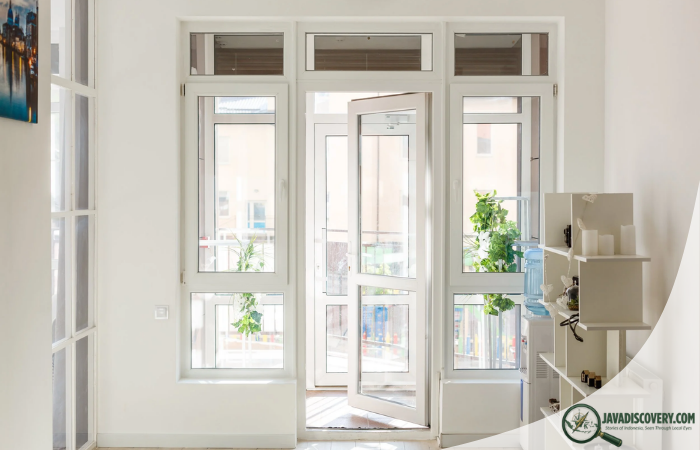
In the modern, urban landscapes of Jakarta or Surabaya, the role of doors and windows in social interaction is facing significant pressure. The rise of “perumahan” (gated housing complexes) and the increasing use of air conditioning have led to a “closing” of the Javanese home. Doors are now kept shut and locked for security, and windows are sealed with glass and heavy curtains to keep the cool air in and the city noise out. This “apartemenisasi” of Javanese life is slowly eroding the traditional valves of social harmony.
When the door is closed, the “sapaan” disappears. The neighbor no longer knows if the family is home or if they are “sepaneng.” The role of doors and windows in social interaction is being replaced by digital thresholds—the smartphone screen and the social media feed. However, many urban Javanese still feel a sense of “kangen” (longing) for the open thresholds of the village. This is why “lesehan” restaurants and open-air cafes remain so popular; they recreate the “semilir” (gentle breeze) and the visual transparency of the traditional home, allowing for the “gayeng” (cheerful) social interaction that a closed room forbids.
The resilience of Javanese culture is found in its ability to adapt. Even in modern homes, the “teras” remains a vital space. You will see urbanites sitting on their small porches in the evening, keeping their front doors open as long as the mosquitoes allow. They are trying to maintain the role of doors and windows in social interaction against the tide of modern isolation. They know that a closed house is a lonely house, and that the health of the “batin” depends on its ability to communicate with the “lair” through the openings in the wall.
Conclusion: The Architecture of the Heart
The role of doors and windows in social interaction in Java is a testament to a civilization that prioritizes the collective over the individual. These architectural elements are not just functional holes in a structure; they are the facilitators of “guyub,” the spirit of togetherness that defines Javanese identity. Through the open door, hospitality flows out; through the open window, the community’s care flows in. These thresholds are the lungs of the Javanese home, allowing it to breathe in the social energy of the village and exhale the peace of a well-ordered life.
As the evening call to prayer, the “Adzan,” echoes through the trees, the doors are finally pushed shut and the window slats are angled down. The house turns inward for the night. But tomorrow morning, with the first light of the sun, the “gebyok” will be opened once again. The “sapaan” will resume, the “bakso” vendor will be spotted through the “krepyak,” and the cycle of social harmony will continue. The role of doors and windows in social interaction remains as vital as ever, a reminder that in Java, the most beautiful part of a house is not the wood or the stone, but the way it opens its heart to the world outside.