Ritual Speech vs Daily Speech Across Islands

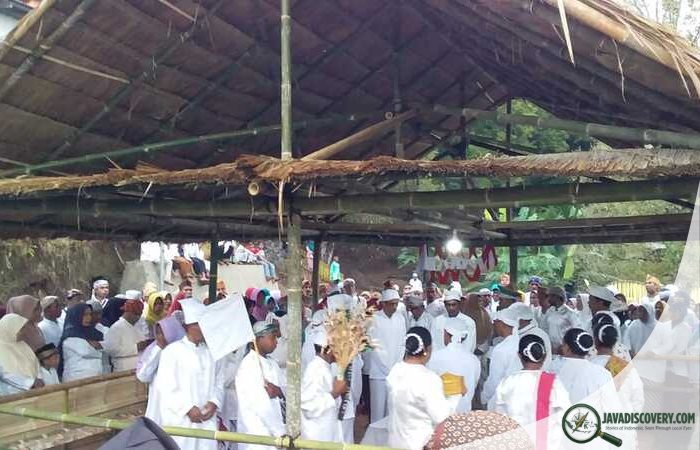
javadiscovery.com — In the high, thatched council houses of Sumba, a village orator stands, his voice shifting from the casual cadence of the market to a rhythmic, archaic chant that sounds more like a song than a sentence. This transformation marks the threshold of Ritual Speech vs Daily Speech Across Islands, a linguistic divide that defines the spiritual boundaries of the Indonesian archipelago. While daily speech is the language of “pasar” (market) and “dapur” (kitchen)—fluid, informal, and pragmatic—ritual speech is the “bahasa langit” (language of the sky). It is a highly structured, metaphor-heavy dialect used to communicate with ancestors, settle blood feuds, or seal a marriage. In the sophisticated courts of Java, this manifests as the rigid transition from Ngoko to Kromo Inggil, whereas in the Eastern islands like Flores and Sumba, it involves “parallelism”—couplets of wisdom that must be delivered with poetic precision. To understand Ritual Speech vs Daily Speech Across Islands is to witness the “dualitas” (duality) of the Indonesian soul: one foot in the messy reality of the present, and the other in the timeless, echoing halls of the forefathers.
The Parallelismo of the East: Couplets of the Ancestors
In the islands of East Nusa Tenggara, the most striking aspect of Ritual Speech vs Daily Speech Across Islands is the use of binary structures. In Sumba and Flores, ritual speech—often called li’i marapu—requires every statement to be made in a pair. One does not simply say “land”; one says “the earth that has no end, the soil that has no limit.” This formal repetition is not merely for flair; it is a “segala” (seal) of truth. Within the framework of Ritual Speech vs Daily Speech Across Islands, if a ritual orator fails to provide the second half of a couplet, the prayer is considered “batal” (void).
This ritualized tongue acts as a “jembatan” (bridge) to the supernatural. Daily speech is considered too “kotor” (dirty) or “enteng” (light) to reach the ears of the Marapu or the Nitu. By shifting into ritual speech, the speaker adopts a new “persona,” becoming a vessel for the collective “hikmah” (wisdom) of the tribe. In the comparison of Ritual Speech vs Daily Speech Across Islands, the daily tongue is for “manusia” (humans), but the ritual tongue is the only frequency the spirits can tune into.

Javanese Levels: The Social Architecture of Sound
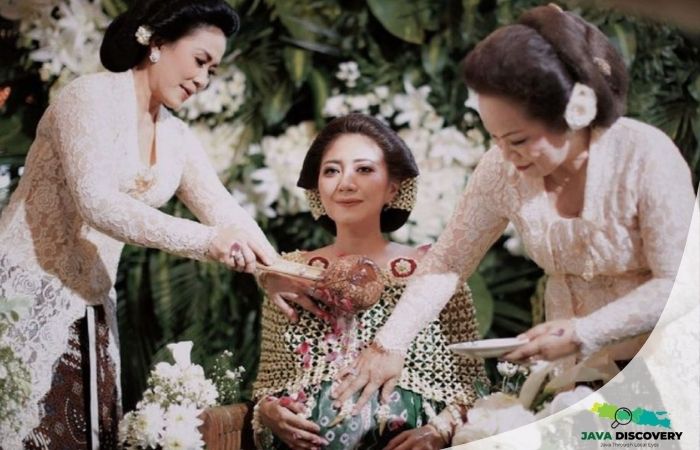
On the island of Java, Ritual Speech vs Daily Speech Across Islands takes a more hierarchical form. The transition is not necessarily into a poetic couplet, but into the “halus” (refined) realms of Kromo Inggil. When a Javanese person enters a “selametan” (communal feast) or a wedding ceremony, their vocabulary undergoes a complete “penyaringan” (filtering). The blunt, democratic Ngoko of the street is discarded in favor of a speech that is “lemu” (supple) and “ngajeni” (respectful).
In the context of Ritual Speech vs Daily Speech Across Islands, Javanese ritual speech is an exercise in “unggah-ungguh” (etiquette). The speaker must navigate a complex map of social status, choosing words that elevate the listener while humbling the self. This “bahasa kromo” acts as a ritual shield, preventing “gesekan” (friction) between individuals. Here, Ritual Speech vs Daily Speech Across Islands reveals that for the Javanese, the “ritual” is the maintenance of “rukun” (social harmony), and the language is the primary tool to build that harmony.
“In the market, I am just a man buying tobacco. But in the ‘adat’ house, I am the voice of ten generations. My daily words are like water, but my ritual words are like stones—they do not move, and they do not break.” — Ama Kuta, Ritual Orator from West Sumba.
The “Taboo” Words: Linguistic Danger Zones
A fascinating layer of Ritual Speech vs Daily Speech Across Islands is the existence of “forbidden” daily words during sacred times. In many Dayak tribes of Kalimantan or the mountain people of Timor, during a harvest or a hunt, certain daily names for animals or tools must be replaced with “ritual substitutes.” To use the daily word is to invite “pamali” (sacred taboo) or to alert the prey to the hunter’s presence. Within Ritual Speech vs Daily Speech Across Islands, the ritual language is a “kode” (code) that keeps the community safe.
This linguistic “camouflage” proves that Ritual Speech vs Daily Speech Across Islands is not just about aesthetics; it is about “power” (kuasa). Ritual speech is seen as having suwuk or mantra—the ability to physically change reality. Daily speech can describe a tree, but ritual speech can command its spirit. This distinction ensures that the most powerful “alat” (tools) of the culture remain in the hands of the “sepuh” (elders) who have the “mental” strength to wield them.
| Region | Ritual Style | Social Function |
|---|---|---|
| East Nusa Tenggara (Sumba/Flores) | Parallel Couplets | Legalizing “Adat” contracts & prayers. |
| Java (Central/East) | Kromo Inggil (High Speech) | Showing respect and maintaining social rank. |
| South Sulawesi (Toraja) | Kada Tominaa (Poetic Lore) | Guiding souls in funeral rites (Rambu Solo). |
| Sumatra (Batak) | Umpasa (Formal Proverb) | Blessing families during clan gatherings. |
The Loss of the “High Tongue” in the Digital Age
As Indonesia becomes increasingly “urban” and “connected,” the gap in Ritual Speech vs Daily Speech Across Islands is narrowing, often to the detriment of the ritual side. The “Bahasa Indonesia” of television and social media is a democratic, simplified daily tongue that lacks the “jiwa” (soul) and complexity of ritual speech. Younger generations often find Ritual Speech vs Daily Speech Across Islands to be a “beban” (burden), as they no longer master the archaic vocabulary needed for “adat” ceremonies.
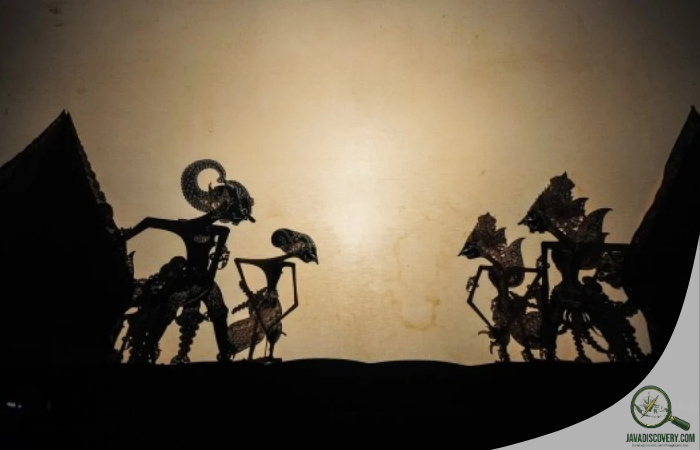
In many villages, the “Rato” or the “Dalang” are the last “penjaga” (guardians) of these ritual dialects. When they pass away, the Ritual Speech vs Daily Speech Across Islands risks collapsing into a single, flat daily speech. However, there is a growing “gerakan” (movement) among regional poets and activists to “revitalisasi” (revitalize) these sacred tongues. They argue that without ritual speech, the Javanese wedding or the Sumbanese funeral loses its “sakral” (sacred) weight, becoming a mere “pertunjukan” (show) rather than a cosmic event.
Conclusion: The Vibration of the Sacred
Ritual Speech vs Daily Speech Across Islands is a testament to the Javanese and broader Indonesian belief that “sabda” (the word) is a creative force. It proves that a society needs two languages: one to navigate the “dunia” (world) and another to honor the “akhirat” (afterlife/spirit). Ritual Speech vs Daily Speech Across Islands reminds us that “komunikasi” (communication) is not just about the exchange of information, but about the “getaran” (vibration) of the soul.
As the “matahari” (sun) sets and the “upacara” (ceremony) begins under the shadow of a volcanic peak or a carved teak roof, the daily chatter fades. The orator clears their throat, and the air grows heavy with the ancient sounds of the ritual tongue. In the comparison of Ritual Speech vs Daily Speech Across Islands, we find the “authentic soul” of the archipelago: a people who know when to speak with their neighbors and when to speak with the stars. To preserve ritual speech is to ensure that the islands never lose their “napas” (breath) or their “cerita” (story). In the silence between the couplets, the ancestors are still listening.