The Ritual of Tumpeng Meaning Behind the Rice Cone

javadiscovery.com — In the heart of every significant Javanese celebration, from the birth of a child to the inauguration of a skyscraper, stands a towering golden pyramid of rice. The Ritual of Tumpeng Meaning Behind the Rice Cone is the most iconic culinary expression of the Indonesian philosophy of life. It is not merely a dish but a vertical map of the cosmos, representing the relationship between humans, nature, and the Divine. In a world that is rapidly modernizing, The Ritual of Tumpeng Meaning Behind the Rice Cone remains a steadfast anchor of communal identity, ensuring that no milestone is passed without acknowledging the spiritual forces that govern the universe. To witness the cutting of the cone is to see the Javanese heart in its most generous and humble form, serving as a reminder that all blessings flow from a single, higher peak.
The Sacred Mountain A Geography of the Spirit
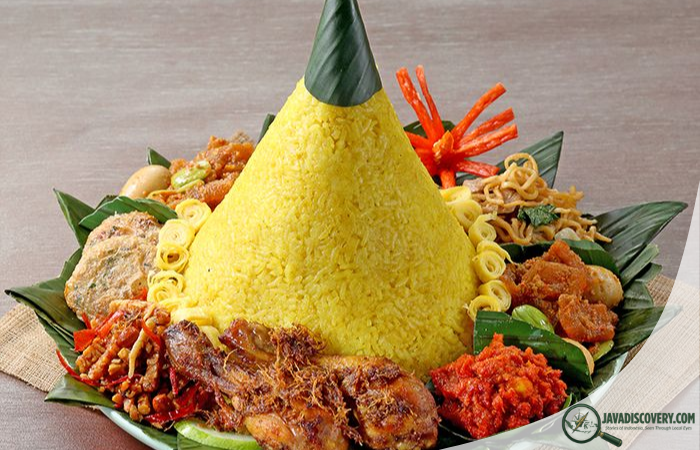
The primary symbolism in The Ritual of Tumpeng Meaning Behind the Rice Cone is the shape itself. The cone represents a mountain—specifically Mount Meru, the sacred center of the universe in Hindu-Buddhist mythology, which later merged with Islamic and indigenous Javanese beliefs. The mountains of Java are seen as the dwellings of ancestors and gods, and by shaping rice into a peak, the community creates a physical link to the heavens.
In The Ritual of Tumpeng Meaning Behind the Rice Cone, the height of the rice symbolizes the aspiration to reach a higher state of consciousness and morality. The base represents the earthly realm, while the tip points toward the Almighty. This verticality is a visual prayer, a silent plea for protection and prosperity. For the Javanese, the mountain is the source of water and life, and thus the tumpeng is a celebration of the earth’s fertility.

The Seven Side Dishes The Seven Helpers
A true tumpeng is never lonely; it is always surrounded by a variety of side dishes, usually totaling seven. In The Ritual of Tumpeng Meaning Behind the Rice Cone, the number seven (pitu in Javanese) is a linguistic pun for pitulungan, which means help or assistance. Each dish placed around the rice cone carries its own symbolic weight.
Commonly, The Ritual of Tumpeng Meaning Behind the Rice Cone includes land animals (chicken), sea creatures (anchovies), and ground plants (vegetables). The Urap (mixed vegetables with coconut) symbolizes a harmonious community, while the red chili garnish on the tip often represents the fire of the volcano or the light of guidance. This diversity of ingredients signifies that for a human to succeed, they need the “pitulungan” of all elements of the natural and social world. No one reaches the peak alone.
Tumpeng is our way of saying that we are small in the eyes of the mountain, but great when we share its bounty together. — Mbah Darmo, Cultural Elder
The Art of Cutting Who Receives the Tip
The climax of The Ritual of Tumpeng Meaning Behind the Rice Cone is the ceremony of Pemotongan Tumpeng. Tradition dictates that the tip of the cone should be cut by the host or the most respected person in the room and given to the guest of honor. This act is a profound gesture of respect and gratitude.
In the framework of The Ritual of Tumpeng Meaning Behind the Rice Cone, this distribution of food is a performance of social harmony. By giving away the highest point, the leader demonstrates humility and the willingness to serve others. Once the tip is served, the rest of the mountain is shared among everyone present, breaking down hierarchies and reinforcing the bond of Gotong Royong (mutual cooperation). In The Ritual of Tumpeng Meaning Behind the Rice Cone, the meal is the ultimate social equalizer.
| Element | Symbolic Meaning | Life Lesson |
|---|---|---|
| Cone Shape | The Sacred Mountain (Meru) | Focus on spiritual goals and God |
| Yellow Color | Gold and Prosperity | Gratitude for wealth and health |
| Seven Side Dishes | Pitulungan (Help) | Success requires communal support |
| Banana Leaf Base | The Earthly Foundation | Stay grounded and humble |
Tumpeng Varieties Different Cones for Different Occasions
Not all tumpeng are created equal. The Ritual of Tumpeng Meaning Behind the Rice Cone adapts to the specific intention of the ceremony. While the yellow Tumpeng Kuning is used for joyful celebrations like birthdays or grand openings, there is also the Tumpeng Putih (white rice), which symbolizes purity and is often used in more solemn or sacred religious rituals.
There is even the Tumpeng Robyong, which is highly decorated with greenery and sprouts, symbolizing fertility and used during weddings or agricultural festivals. In The Ritual of Tumpeng Meaning Behind the Rice Cone, the visual details of the cone communicate a specific message to the spirits and the community. The rice is the medium, but the arrangement is the language.
Slametan The Spiritual Context
The Ritual of Tumpeng Meaning Behind the Rice Cone is the centerpiece of the Slametan, a Javanese communal feast intended to bring about slamat (safety and peace). The underlying belief is that by gathering, praying, and sharing a tumpeng, the community can ward off misfortune and align themselves with the cosmic order.
In The Ritual of Tumpeng Meaning Behind the Rice Cone, the act of eating together is a form of spiritual defense. It reinforces the idea that an individual is safe only when their community is at peace. As Jakarta grows into a megacity, these slametans and their tumpengs provide a necessary psychological space for connection and calm. The Ritual of Tumpeng Meaning Behind the Rice Cone is the ancient antidote to modern stress.
Conclusion The Edible Philosophy
The Ritual of Tumpeng Meaning Behind the Rice Cone is a masterpiece of cultural synthesis. It has survived the transition from ancient kingdoms to the modern republic because its message is universal. It speaks of gratitude, community, and the humble recognition of a power greater than ourselves.
The next time you see a golden rice cone, look past the turmeric and the side dishes. See The Ritual of Tumpeng Meaning Behind the Rice Cone for what it truly is—a mountain of hope. It is an edible philosophy that feeds both the body and the soul. As long as the Javanese people continue to shape their rice into peaks, the spirit of the Nusantara will remain elevated, grounded, and deeply connected to the divine rhythm of the earth. The mountain remains, and so does the ritual. The Ritual of Tumpeng Meaning Behind the Rice Cone is the flavor of Javanese wisdom.