Night Watch Culture (Ronda) and Community Safety

javadiscovery.com — In the indigo stillness of a Javanese midnight, when the tropical heat finally yields to a cool mountain breeze, the resonance of night watch culture (ronda) and community safety begins with the sharp, rhythmic “kothokan” of a hollowed bamboo tube. This sound, known as the kentongan, is the heartbeat of the Javanese “kampung” (neighborhood) after dark. To an outsider, the sight of men wrapped in sarongs huddling in a small wooden pavilion might look like a casual social gathering, but night watch culture (ronda) and community safety is a sophisticated, centuries-old system of grassroots security and social cohesion. It is the physical manifestation of gotong royong (communal labor), where the responsibility for protection is not outsourced to a faceless state apparatus but held collectively by the palms of the residents. Night watch culture (ronda) and community safety is more than a patrol; it is a journey into the “guyub” (togetherness) of the Javanese soul, a ritual that guards not only the physical “harta” (property) of the village but also the “tentrem” (inner peace) of its sleeping inhabitants.
The Pos Kamling: The Sacred Architecture of Vigilance
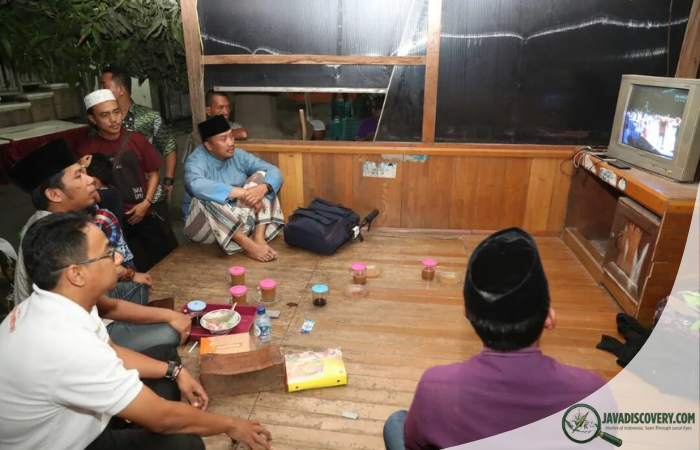
At the center of night watch culture (ronda) and community safety is the Pos Kamling (Neighborhood Security Post). These structures range from simple bamboo lean-tos in rural rice-growing regions to elaborate brick pavilions in urban Yogyakarta. Regardless of their aesthetic, their function remains the same: a “basecamp” for the evening’s guardians. Within the Pos Kamling, the hierarchy of the day dissolves. A high-ranking civil servant may find himself pouring coffee for a local laborer, both united by the “jadwal ronda” (patrol schedule) taped to the wooden wall.
The atmosphere of the Pos Kamling is defined by the scent of clove cigarettes, the steam from a shared pot of ginger tea, and the click of dominoes on a weathered table. This “ruang” (space) serves as a vital informal parliament. Between patrols, the men discuss everything from local politics to the health of a neighbor’s child. Night watch culture (ronda) and community safety transforms the act of policing into an act of “paseduluran” (brotherhood). It ensures that every man in the neighborhood knows the “wajah” (face) and the “nasib” (fate) of his neighbor, creating a psychological barrier against crime that no CCTV camera could ever replicate.

The Language of the Kentongan: A Sonic Security Network
A primary element of night watch culture (ronda) and community safety is the use of the kentongan. This percussion instrument is used to transmit coded messages across the darkness. There is a specific “irama” (rhythm) for a fire, another for a theft, and a different one for a natural disaster or the arrival of a suspicious stranger. In the silence of the night, these sounds can travel for kilometers, jumping from one Pos Kamling to the next in a human-powered “api unggun” (signal fire) of information.
This sonic tradition represents the “teknologi” (technology) of the ancestors. It is a decentralized communication network that does not rely on electricity or a cellular signal. For those involved in night watch culture (ronda) and community safety, the kentongan is a voice of authority. When the “thok-thok” echoes through the teak forests or the narrow urban “gangs” (alleys), it signals to the “warga” (citizens) that they are not alone. It is a reminder that the community is “eling lan waspodo” (mindful and vigilant), a phrase that serves as the philosophical backbone of Javanese security. This auditory presence is often enough to deter “maling” (thieves), who know that the sound of one kentongan will soon be answered by fifty more.
“Ronda is not about catching thieves; it is about making sure the thieves know we are awake. If the neighborhood is noisy with the sound of laughter and the ‘kentongan,’ the bad intentions go away.” — Pak Sukardi, 60, a veteran ronda captain in Solo.
The Jimpitan Ritual: A Micro-Economy of Care
Perhaps the most fascinating aspect of night watch culture (ronda) and community safety is the jimpitan. As the men walk their “keliling” (rounds), they stop at each house to collect a tiny amount of uncooked rice or a small coin placed in a container by the front door. This practice, while appearing insignificant at a glance, is a powerful economic tool. For the residents, it is a “sedekah” (charity) that guarantees their protection. For the community, it is a “tabungan” (savings) that can be used for “keperluan sosial” (social needs).
The jimpitan funds are often used to repair village roads, help a family with funeral expenses, or provide scholarships for local children. Night watch culture (ronda) and community safety thus bridges the gap between security and social welfare. It turns the patrol into a ritual of “ngrumat” (caring) for the community’s resources. The collectors are not tax officials; they are “sedulur” (siblings) ensuring that the “lumbung” (granary) of the neighborhood remains full. This micro-financial system ensures that night watch culture (ronda) and community safety is self-sustaining and deeply rooted in the daily survival of the village.
| Modern Security (Satpam) | Traditional Ronda (Siskamling) |
|---|---|
| Paid Professional Guards | Voluntary/Rotational Residents |
| Surveillance via Technology (CCTV) | Surveillance via Presence & Sound (Kentongan) |
| Individualized/Privatized Safety | Guyub / Communal Solidarity |
| Fixed Costs / Salaries | Jimpitan (Micro-Donations) for Community Use |
Superstition and the Unseen Guardians
In the Javanese worldview, night watch culture (ronda) and community safety involves more than just guarding against human intruders; it involves acknowledging the “gaib” (mystical) inhabitants of the night. Javanese folk beliefs are rich with stories of “Gendruwo” or “Kuntilanak” that emerge during the “maghrib” (twilight) and “tengah wengi” (midnight). For those on duty, the ronda is a period of “prihatin”—a form of asceticism where staying awake is a way to maintain spiritual strength.
Men on ronda often share stories of “lelembut” (spirits) encountered on their patrols. These stories are not just ghost tales; they serve as a moral framework for the community. They reinforce the idea that the “lingkungan” (environment) must be respected and that “kebersihan” (cleanliness/purity) of the heart is as important as the locks on the door. Night watch culture (ronda) and community safety thus acts as a cultural “benteng” (fortress), maintaining a balance between the seen and unseen worlds. To walk the “ronda” is to be a guardian of the “kosmos,” ensuring that the human and spiritual realms do not clash in a way that brings “sengkolo” (misfortune).
The Digital Transition: Ronda in the Age of WhatsApp
As Java urbanizes, night watch culture (ronda) and community safety is facing a digital “evolusi.” In many “perumahan” (housing estates) in Jakarta and Surabaya, the ronda schedule is now managed via WhatsApp groups. The “kentongan” has, in some places, been replaced by an emergency alert on a smartphone. However, the “jiwa” (soul) of the practice remains surprisingly resilient. Even when the patrol is supplemented by a paid “Satpam” (security guard), the residents still gather at the Pos Kamling to maintain their “silaturahmi” (social bonds).
This digital layer allows night watch culture (ronda) and community safety to be more “efisien,” but it also carries the risk of “individualisme.” If a resident can simply check a group chat rather than walking the streets, the “srawung” (socializing) aspect of the ritual is diminished. The challenge for modern Javanese communities is to use these tools without losing the “kehangatan” (warmth) of face-to-face interaction. The most successful neighborhoods are those that treat the digital app as a “tambahan” (addition) to, rather than a replacement for, the midnight cup of coffee and the shared walk under the stars.
Conclusion: The Eternal Watch of the “Wong Cilik”
Night watch culture (ronda) and community safety is a testament to the Javanese belief that “selamet” (well-being) is a collective achievement. It proves that a community is safest when its members are “rukun” (harmonious) and “peduli” (caring). In the rhythm of the kentongan and the ritual of the jimpitan, we find the “jati diri” (true identity) of an island that refuses to let the anonymity of the modern world dictate its safety.
As the first “adzan” of the dawn begins to echo from the minarets and the “ronda” participants return to their homes, there is a profound sense of “lega” (relief). The night has passed, the village is safe, and the social bonds have been reinforced for another day. Night watch culture (ronda) and community safety is not a chore; it is a “darmo” (duty) to the ancestors and to the future. In the heart of Java, the night is never truly silent, and it is never truly empty, for it is always watched over by the hands and the hearts of the community. It is a journey through time, faith, and humanity that continues every night, one “kothokan” at a time.