The Last Traditional Shipbuilders of Lasem

javadiscovery.com – On the quiet northern coast of Central Java, where the sea meets the old town of Lasem, time seems to move with the rhythm of the tide. Here, in a place better known for its Chinese-Javanese batik and ancient temples, a few men still keep alive one of Java’s oldest maritime traditions — the art of building wooden ships by hand.
Legacy of the Lasem Shipwrights
Centuries ago, Lasem was a bustling port city, a gateway where Chinese junks and Arab dhows once anchored along the Java Sea. The town’s name appeared in old maps and sailor tales, long before Rembang’s coastline began to change with modern docks. It was in this maritime crossroads that the people of Lasem became master shipwrights, crafting vessels that carried spices, textiles, and people across the Indonesian archipelago.
In those days, building a ship was not just a trade — it was a calling. The shipbuilders of Lasem were respected for their precision, endurance, and their mysterious ability to “read” the wood. From their hands came vessels that could endure monsoon storms and sail for months across the open sea.

The Art of Building Without Blueprints
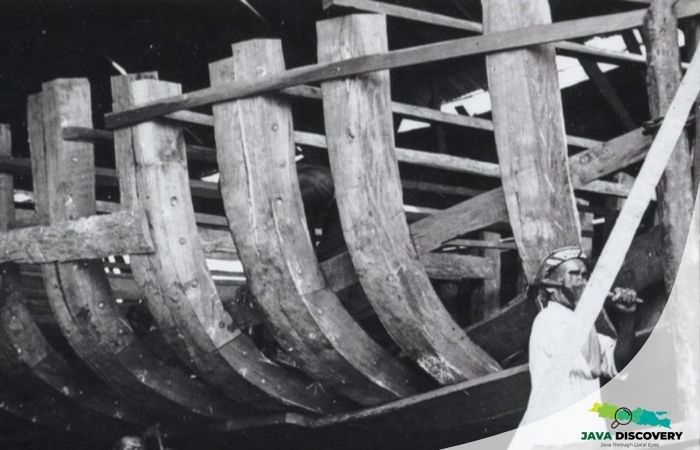
In a narrow workshop facing the sea, the air is thick with the scent of teak and salt. The rhythmic sound of chisels striking wood echoes like a heartbeat. Here, the builders still use simple tools — hand saws, hammers, ropes, and fire to bend planks — guided not by blueprints, but by memory and instinct passed down through generations.
“We don’t need drawings,” says an elder craftsman, smiling as he wipes the sweat from his brow. “Our eyes are our rulers.” He gently traces the curve of a hull with his hands, as if reading the ship’s soul. Every piece of wood has its own character — some stubborn, some gentle — and the builder must understand each one before it becomes part of the whole.
Guardians of a Fading Craft
Among the last shipbuilders in Lasem are men like Pak Suyono and Pak Rono, who learned the trade from their fathers and grandfathers. They begin work at dawn, cutting, sanding, and fitting massive wooden beams under the open sky. The sound of hammering mixes with the calls of seabirds, a daily symphony they have heard for decades.
But the world around them has changed. Younger generations prefer to work in cities, and the cost of teak has soared. Fiberglass boats, cheaper and easier to make, have taken over the market. For these aging craftsmen, each new commission feels like a reprieve — a small proof that someone, somewhere, still values the old way of doing things.
Between Tradition and Survival
Today, the Lasem shipbuilders build fewer boats, often working on repairs for local fishermen or restoring old vessels for collectors. The earnings are modest, but for them, it’s not just about money. It’s about preserving dignity — and identity. Each plank nailed into place is a quiet act of resistance against forgetting.
“When I stop, it ends,” says Pak Rono softly, looking out at the horizon. “My father told me, as long as someone can still build a ship, Lasem will never drown.”
Keeping the Tide from Receding
The tide comes and goes, but the shipbuilders of Lasem remain, working in the same yards their ancestors once did. Their craft stands as a bridge between sea and land, past and present. In every line of the hull, every groove of wood, there is a story — of storms endured, of trade routes crossed, of a Java that once ruled the sea through skill and courage.
In the end, these craftsmen are more than builders. They are keepers of memory — shaping not only ships, but the soul of an island that refuses to forget its maritime heart.