The Social Life of Small Warungs

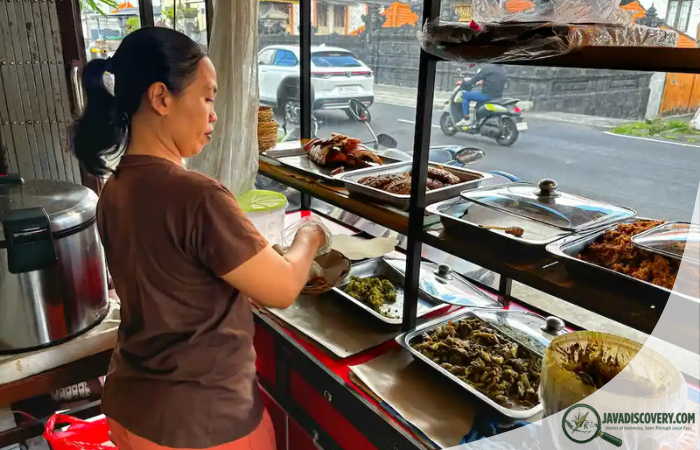
javadiscovery.com — In the humid afternoon air of a roadside “kampung” (neighborhood) in Yogyakarta, the social life of small warungs begins with the clink of a glass “teh nasgithel” (thick, hot, and sweet tea) against a wooden table. To the casual traveler, these humble shacks of bamboo and corrugated iron might appear as mere convenience stores, but to the Javanese, they are the “jantung” (heart) of the community. The social life of small warungs represents a unique form of “demokrasi” (democracy) where the CEO of a local firm and a “tukang becak” (pedicab driver) sit side-by-side on a shared “lincak” (bamboo bench) to discuss everything from the price of chili to the latest village gossip. In these spaces, the “warung” is not just a place of transaction; it is a sacred site of “guyub” (togetherness) and “srawung” (socializing). The social life of small warungs acts as a vital social glue, preserving the Javanese values of “rukun” (harmony) and “tepo seliro” (tolerance) in an increasingly fragmented and digital world. It is a journey through the everyday humanity of Java, where a thousand small stories are told over a single plate of “gorengan” (fried snacks) and a shared bowl of “sambal.”
The Warung as a “Living Room” for the Public
Unlike the sterile, air-conditioned convenience stores that now dot the main roads of Java, the social life of small warungs thrives on a lack of formality. The “ibu warung” (the female proprietor) is often more than a shopkeeper; she is a community psychiatrist, a local news anchor, and a guardian of the “batin” (inner peace) of her customers. She knows exactly how much sugar a regular wants in their coffee and which family in the “gang” (alleyway) is currently going through a “prihatin” (difficult) time. In the social life of small warungs, the customer is not a “client,” but a “sedulur” (sibling).
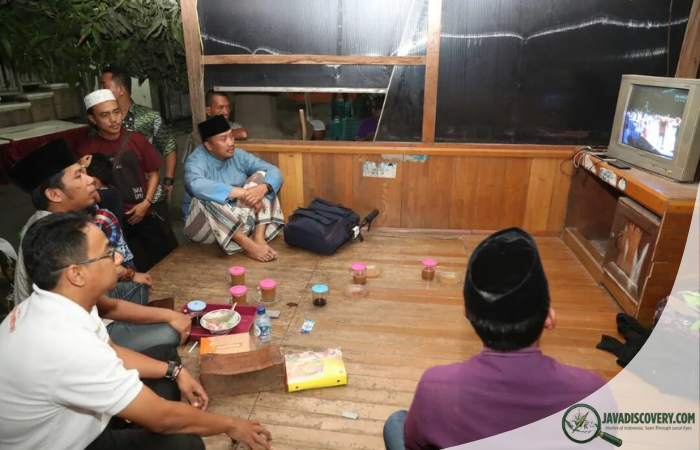
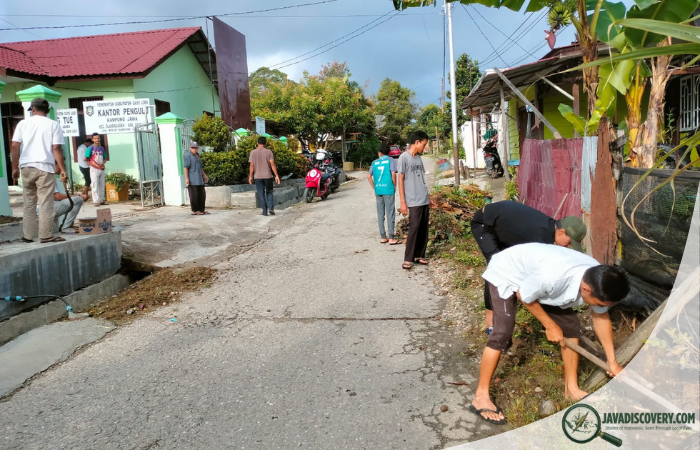
This atmosphere creates a “third space” that bridges the gap between the private home and the public street. Men often gather at the “Warung Kopi” (coffee stall) after the “Isya” prayer to engage in “rasan-rasan” (gossip) or to plan the next “gotong royong” (communal labor) project. For those living in cramped urban quarters, the social life of small warungs provides the “ruang” (space) for relaxation and reflection that their own homes might lack. It is a place where one can be “santai” (relaxed) without the pressure of “unggah-ungguh” (strict etiquette) that governs more formal Javanese gatherings.

The Ritual of “Nangkring” and Oral News
The practice of “nangkring” (perching or sitting casually) is the primary activity within the social life of small warungs. One does not simply buy and leave; one must “mampir” (drop by). This slow pace of life allows for the transmission of “berita lisan” (oral news). Long before a story hits a WhatsApp group or a local news site, it has already been thoroughly analyzed and debated within the social life of small warungs. From political changes in Jakarta to the mysterious disappearance of a neighbor’s chicken, the “warung” serves as the primary filter for local information.
This oral tradition ensures that even those who are “gaptek” (technologically illiterate) remain connected to the collective consciousness of the village. The social life of small warungs levels the playing field of information. In the “Warung Pojok” (corner stall), knowledge is shared freely over “nasi kucing” (tiny portions of rice). This exchange fosters a sense of “keamanan” (security); you know your neighbors because you have shared a “gorengan” with them. In the social life of small warungs, “sepi” (loneliness) is a foreign concept, as there is always a voice to greet you and a story waiting to be heard.
“If I want to know if the harvest will be good or if the village chief is happy, I don’t check the internet. I just sit at Ibu Sumi’s warung for an hour. The walls of a warung have ears, and the tea has a way of making people tell the truth.” — Pak Jatmiko, 55, a resident of a South Malang kampung.
The Micro-Economy of Trust: “Kasbon” Culture
Perhaps the most profound aspect of the social life of small warungs is the “kasbon” (informal credit) system. In many Javanese “warungs,” there is a small, grease-stained notebook kept behind the counter. This book is a testament to the “kepercayaan” (trust) that underpins the Javanese social fabric. When a neighbor is short on “duit” (money) before payday, they can still eat and take home basic necessities, with the understanding that they will “nyaur” (pay back) when they can.
This is not a cold financial transaction; it is a moral contract. The social life of small warungs survives because of this reciprocity. The “warung” owner provides a safety net, and the community responds with “loyalitas” (loyalty). This system of “utang-piutang” (debt and credit) is a practical application of the Javanese value of “paseduluran” (brotherhood). It proves that the social life of small warungs is built on human relationships rather than capital. In an age of digital banking and faceless transactions, the “kasbon” notebook remains a powerful symbol of “kemanusiaan” (humanity).
| Modern Mini-Market | Traditional Warung |
|---|---|
| Transactional & Anonymous | Social & Communal |
| Fixed Prices / Digital Payment | Negotiable / Kasbon (Credit) |
| Efficiency & Speed | Slow Tempo / Nangkring Culture |
| Standardized Global Goods | Local Flavors / Homemade Snacks |
The Changing Face: Angkringan and Urban Warungs
As Java urbanizes, the social life of small warungs is adapting to new environments. In cities like Solo and Yogyakarta, the “Angkringan”—a mobile cart version of the warung—has become a cultural icon for the youth. Here, the traditional social life of small warungs is infused with a modern, “indie” vibe. Students and creative workers gather around the “ceret” (kettle) to debate philosophy, art, and politics until the early hours of the morning. This evolution shows that the Javanese need for communal “srawung” remains as strong as ever, even among the digital generation.
The “Warung Burjo” (mung bean porridge stall), often run by migrants from Kuningan, West Java, provides a similar “home-away-from-home” for students and low-wage workers. The social life of small warungs in these urban settings acts as a “buffer” against the loneliness of the city. It allows people from different “daerah” (regions) to find a sense of “guyub” through shared food and shared stories. Even in the shadow of skyscrapers, the “warung” remains a “benteng” (fortress) of Javanese cultural values, refusing to let the city’s “individualisme” take over.
Challenges: Modernity and the Threat of Disappearance
Despite their resilience, the social life of small warungs faces significant “ganjalan” (obstacles). The rapid expansion of corporate convenience chains and the rise of food delivery apps are changing the way people consume. Younger generations, accustomed to the “instant” nature of modern life, sometimes see the “warung” as “kuno” (ancient) or “kurang bersih” (less clean). As “ibu warungs” age, many of their children choose professional careers in the city rather than taking over the family “bisnis.”
When a warung closes, a piece of the village’s “nyawa” (soul) goes with it. The loss of a “warung” means the loss of a public forum, a local historian, and a safety net for the poor. To combat this, some communities are attempting to “modernize” the social life of small warungs by adding Wi-Fi or improving hygiene without losing the “guyub” atmosphere. These efforts recognize that the “warung” is a cultural heritage site as important as any “candi” (temple). It is a living museum of Javanese social interaction that must be preserved for future generations.
Conclusion: The Eternal Harmony of the “Lincak”
The social life of small warungs is the ultimate expression of the Javanese art of living. It is a place where “pait” (bitterness) and “legi” (sweetness) are found not just in the tea, but in the conversations. In the simple act of “nangkring,” the Javanese people find a sense of “selamet” (well-being) that cannot be bought in any high-end mall. The social life of small warungs proves that “kebahagiaan” (happiness) is found in the connection between humans, not in the accumulation of things.
As the “lampu teplok” (oil lamp) or the dim LED bulb flickers to life in the evening, and the steam rises from the “teko,” the social life of small warungs continues its nightly rhythm. Someone tells a joke, another sighs about the weather, and a third reaches for another “tempe mendoan.” In this quiet, unassuming ritual, the “jiwa” (soul) of Java remains safe. The social life of small warungs is not a relic of the past; it is a vibrant, breathing sanctuary where the “perantau” find home and the local finds “tentrem.” It is the eternal “pendopo” of the common people, always open, always warm, and always ready to listen.
Category: People
Writer: Nizam Hamidan
A. SEO Title
The Social Life of Small Warungs
B. Meta Description
Explore the social life of small warungs in Java, where community trust, informal credit, and local gossip create the authentic soul of Javanese village life.
C. Meta Keywords
The Social Life of Small Warungs, Javanese culture, warung kopi, angkringan, guyub, local wisdom, Java social life, Indonesian street food, community trust
D. Excerpt
Uncovering the hidden heart of Java through the social life of small warungs.
F. Focus Keyword
The Social Life of Small Warungs