How Different Islands Understand Time and Tradition in Indonesia

javadiscovery.com – In the golden haze of a late afternoon in a Javanese village, the concept of a ticking clock feels like a foreign imposition. Time here is not a relentless, linear march of seconds, but a rhythmic pulse felt in the changing angle of the sun against the veranda and the lengthening shadows of the banyan tree. How Different Islands Understand Time is a complex, kaleidoscopic study of a nation that exists in multiple eras at once. While Jakarta’s high-frequency traders live by the millisecond, the salt-farmers of Madura or the weavers of Flores operate on cycles of tides and moon phases that have remained unchanged for a thousand years. To explore How Different Islands Understand Time is to discover that in Indonesia, time is often viewed as a circle rather than a line—a “Jam Karet” (rubber time) philosophy that prioritizes human connection and cosmic alignment over the rigid tyranny of the schedule. From the intricate “Wetonan” cycles of Java to the ritual-heavy “Pawukon” of Bali, the archipelago offers a masterclass in temporal diversity, reminding us that how we measure our days ultimately defines how we value our lives.
The Javanese Weton: The Geometry of the Soul
In the Javanese heartland, How Different Islands Understand Time is centered on the “Weton,” a sophisticated system that combines the international seven-day week with the traditional five-day “Pasaran” market week (Legi, Paing, Pon, Wage, Kliwon). This creates a unique 35-day cycle called a “Selapan.” For a Javanese person, their “Weton”—the specific day and market day on which they were born—is their spiritual fingerprint. It dictates their character, their fortune, and even their compatibility with a future spouse.
Time in Java is qualitative, not just quantitative. Certain days are “keramat” (sacred) or “sengkolo” (unlucky), and no major life event—be it a wedding, a house-moving, or a business deal—is undertaken without consulting a “Primbon” (almanac). Within the framework of How Different Islands Understand Time, the Javanese believe that time has a “flavor.” To act against the flavor of the day is to invite “mudarat” (harm). This cyclical understanding creates a sense of “nrimo”—a calm acceptance of fate—because if today is difficult, the cycle will eventually turn back to a day of “rejeki” (blessing).

The Balinese Pawukon: A Symphony of Cycles
Crossing to Bali, the complexity of How Different Islands Understand Time reaches its zenith with the “Pawukon” calendar. This 210-day cycle is a dizzying arrangement of ten different week-lengths, ranging from a one-day week to a ten-day week, all running simultaneously. While the Javanese focus on the 35-day alignment, the Balinese navigate a landscape where every day is a different intersection of spiritual energies. The “Galungan” festival, celebrating the victory of Dharma over Adharma, happens once every 210 days, meaning the Balinese year is a constant preparations for the next sacred peak.
In Bali, How Different Islands Understand Time is inseparable from the concept of “Dewasa Ayu,” or the search for the right time. A priest must determine the exact moment to harvest rice or to perform a “Ngaben” cremation. This creates a society that is hyper-aware of the present moment. Time is a ritual performance; it is the rhythm of the gamelan, which does not have a “conductor” but relies on the collective pulse of the players. For the Balinese, time is not something to be saved or spent—it is something to be “flowed with” to maintain the balance of the universe.
The Porhalaan of North Sumatra
Among the Batak people of North Sumatra, How Different Islands Understand Time was historically managed through the “Porhalaan,” a bark-cloth calendar used by the “Datu” (shaman). Unlike Western calendars that track history, the Porhalaan was a tool for divination, tracking the movements of the “Pane Na Bolon” (a cosmic dragon). It divided the year into twelve months of 30 days, focusing on the moon’s phases to determine the best times for war, farming, or planting the “Huta” (village) gates.
Seasonal Time: The Breath of the Eastern Islands
In the eastern islands of Flores, Sumba, and Timor, How Different Islands Understand Time is dictated by the “Musim Kemarau” (dry season) and “Musim Hujan” (rainy season). Here, time is measured by the flowering of the “Sankat” trees or the arrival of the “Nyale” sea worms. In Sumba, the year begins with the Pasola festival, which marks the transition from the lean months to the planting season. This is “Ecological Time,” where the calendar is written in the soil and the behavior of animals.
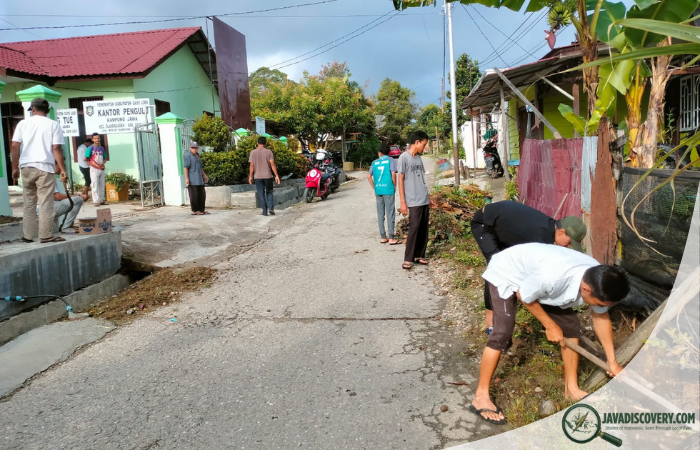
Within How Different Islands Understand Time in these regions, there is a concept of “Time as Debt.” Labor is shared through “Gotong Royong,” and time spent helping a neighbor build a stone tomb is a deposit in a communal bank. This social time is far more valuable than the chronological time found on a wristwatch. To be “on time” in Sumba is to arrive when the “sirih pinang” (betel nut) is being served, regardless of what the sun says. The “past” is never truly gone; it is represented by the massive megaliths that sit in the center of the village, ensuring that the ancestors are part of every “current” conversation.
“The clock is a tool for the body, but the ‘Weton’ is a tool for the soul. The clock tells you when to work, but the soul tells you when to be still.” — Mbah Joyo, 80, Village Elder in Yogyakarta.
The Bajau Sea Nomads: The Vertical Clock
For the Bajau people, How Different Islands Understand Time is not a horizontal measurement across a page, but a vertical measurement of the tides. Their lives are dictated by the “Bulan” (moon) and its effect on the currents. Time is divided into “air pasang” (high tide) and “air surut” (low tide). When the tide is low, time is for gathering shellfish; when the tide is high, time is for navigating the coral reefs. There is no “weekend” in the Bajau world—there is only the phase of the moon that determines the movement of the fish.
In the context of How Different Islands Understand Time, the Bajau experience a deep “Present-Tense” existence. Because they historically lived on boats (Lepa), their “home” moved with the time. They do not store time in archives or diaries; they carry it in the calluses of their hands and their uncanny ability to predict a storm by the smell of the air. This fluid understanding of time allows for immense resilience; when the environment changes, the Bajau simply shift their rhythm to match the new “time” of the sea.
| Island / Culture | Calendar System | Primary Temporal Focus |
|---|---|---|
| Java | Wetonan / Primbon | Cosmic character and 35-day spiritual cycles. |
| Bali | Pawukon & Saka | Ritual rhythm and maintenance of universal balance. |
| Sumatra (Batak) | Porhalaan | Divination and identifying auspicious days for action. |
| Eastern Islands | Seasonal / Solar | Agricultural survival and ancestral presence. |
| Sea Nomads | Tidal / Lunar | Environmental synchronization and fishing cycles. |
Jam Karet: The Philosophy of Elasticity
One cannot discuss How Different Islands Understand Time without addressing the infamous “Jam Karet” (Rubber Time). While Western visitors often see this as a lack of discipline, it is actually a profound cultural statement on the priority of the human element over the mechanical one. If an Indonesian is on their way to a meeting and encounters a neighbor who needs help, or a friend who hasn’t been seen in years, the “time” belongs to that human interaction. To ignore the person for the sake of the clock would be considered “sombong” (arrogant) or cold.
Within How Different Islands Understand Time, “Jam Karet” is a social lubricant. It acknowledges that life is unpredictable—the rain might fall, the motorbike might break, or a family emergency might arise. By allowing time to be “elastic,” Indonesians reduce the stress of modern living. It is a form of collective patience. In the villages, people don’t say “I will meet you at 4:00 PM”; they say “Habis Ashar” (after the afternoon prayer). This ties the social clock to the spiritual clock, ensuring that How Different Islands Understand Time remains grounded in the communal and the divine.
The Digital Collision: Smartwatches vs. Ancestors
As the “Gig Economy” and global remote work reach the islands, the traditional ways of How Different Islands Understand Time are clashing with the requirements of the 24/7 digital world. A young graphic designer in Bandung might be working for a client in New York, living in a “Western” time zone during the night while still participating in her family’s “Wetonan” rituals during the day. This creates a “Temporal Dualism” that is unique to modern Indonesia.
Despite the prevalence of smartphones, How Different Islands Understand Time remains stubbornly traditional in the domestic sphere. Even the most tech-savvy Jakartans will still download “Weton” apps to check the best day to buy a car or start a renovation. The digital age has not destroyed the cyclical understanding of time; it has simply given it a new platform. This resilience proves that for Indonesians, time is not a resource to be “exploited” but a medium to be “lived in.” The smartphone tells the time, but the “rasa” (feeling) tells the truth.
Conclusion: The Tapestry of a Thousand Rhythms
How Different Islands Understand Time is the secret key to understanding the resilience of the Indonesian people. It is a philosophy that allows for “Sabar” (patience) and “Syukur” (gratitude). While the rest of the world rushes toward an invisible finish line, the people of the archipelago are content to stay within the cycle, knowing that every sunset is followed by a sunrise, and every “Kemarau” is followed by the “Hujan.”
From the sacred, mathematical precision of Java and Bali to the tidal rhythms of the Bajau and the agricultural patience of the eastern islands, How Different Islands Understand Time is a testament to the diversity of the human experience. It reminds us that there is no “correct” way to measure a life. Whether we count our days in seconds, in market cycles, or in the blooming of a tree, the goal remains the same: to be present in the moment and in harmony with those around us. As the night falls over the seventeen thousand islands, and the “kentongan” (drum) sounds the hour in the villages, the archipelago breathes together. In Indonesia, time is not a master; it is a companion, a winding path that leads us through the beauty of the world and back to the wisdom of our ancestors. To understand How Different Islands Understand Time is to finally stop watching the clock and start listening to the heart of the islands.