The Role of Myth in Modern Indonesian Identity

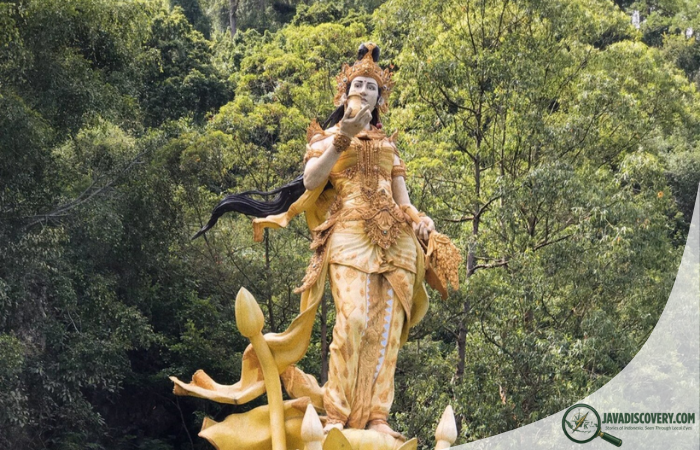
javadiscovery.com – In the gleaming boardrooms of Jakarta’s “SCBD” skyscrapers, where high-speed fiber optics and global capital dictate the pace of life, a curious observer might notice a small, inconspicuous offering of jasmine and incense tucked into a corner, or a manager wearing a ring set with a specific agate stone for protection. This is the heartbeat of the Nusantara: a place where the cutting edge of the 21st century does not overwrite the ancient, but rather vibrates alongside it. The Role of Myth in Modern Indonesian Identity is not a relic of a bygone era; it is the invisible scaffolding upon which the modern state, its politics, and its social mores are built. While the West often treats myth as “fiction,” the Indonesian soul treats it as “hakekat”—an underlying reality that explains the unexplainable. From the shadow-play of politics to the blockbuster horror films that dominate the malls, The Role of Myth in Modern Indonesian Identity acts as a psychological bridge, allowing a diverse nation of 17,000 islands to find common ground in a shared supernatural vocabulary. To understand Indonesia today, one must look past the statistics and the infrastructure and peer into the mist of legends that still guide the hands of the powerful and the dreams of the many.
The Garuda: From Celestial Mount to National Icon
Nowhere is The Role of Myth in Modern Indonesian Identity more visible than in the very symbol of the Republic: the Garuda Pancasila. In Hindu-Buddhist mythology, the Garuda is the golden-winged bird, the loyal mount of Lord Vishnu, symbolizing power, speed, and the eternal struggle against the serpent of chaos. By adopting this mythic creature as the national emblem, Indonesia’s founding fathers performed a profound act of “mythic engineering.” They took a symbol deeply embedded in the “sanubari” (inner heart) of the people and transformed it into a modern vessel for unity.
In the framework of The Role of Myth in Modern Indonesian Identity, the Garuda is not just a bird on a coat of arms; it is a declaration of sovereignty that transcends religious boundaries. It provides a “Luhur” (noble) ancestry for a young nation, grounding its modern aspirations in a timeless, heroic past. Every time an Indonesian sees the Garuda, they are subtly reminded that their identity is not just a political construct of 1945, but a continuation of a celestial narrative that has existed for millennia. This is the power of The Role of Myth in Modern Indonesian Identity—it turns a flag into a living spirit.

Ratu Kidul: The Queen in the Modern Cabinet
On the southern coast of Java, the crashing waves of the Indian Ocean are the domain of Nyi Roro Kidul, the Queen of the South Sea. While she is a figure of ancient legend, her influence on The Role of Myth in Modern Indonesian Identity remains staggeringly contemporary. It is widely whispered that every Indonesian president, from Sukarno to the present day, must maintain a spiritual “diplomacy” with the Queen to ensure the stability of the island. A specific room, Room 308 at the Grand Inna Samudra Beach Hotel, is kept perpetually vacant and decorated in her favorite color—green—to host her spirit.
Within The Role of Myth in Modern Indonesian Identity, the Queen represents the untamable power of nature and the feminine divine. Her presence in the national consciousness serves as a check on purely secular power. Politicians and military leaders often perform “larung” (sea offerings) to seek her blessing. This demonstrates that The Role of Myth in Modern Indonesian Identity is a vital component of political legitimacy. The modern leader is not just a technocrat; they are a mediator between the “Sekala” (the seen world of policy) and the “Niskala” (the unseen world of spirits). To ignore the Queen is to risk the “wahyu”—the divine mandate to rule.
“We build our trains and our satellites, yes. But we also know that the sea has its laws and the mountains have their kings. To forget our myths is to lose our ‘adat’—and without ‘adat,’ we are just people living on a piece of land with no soul.” — Ki Ageng, 72, Traditional Scholar in Solo.
The Satrio Piningit: The Myth of the Hidden Leader
Every election cycle in Indonesia is haunted by the myth of the “Satrio Piningit,” the “Hidden Warrior” or “Just King” prophesied by the 12th-century Javanese King Jayabaya. This mythic figure is expected to appear during times of “Goro-Goro” (chaos) to restore order and justice. The Role of Myth in Modern Indonesian Identity ensures that the electorate is always looking for a candidate who fits this mythic archetype—someone humble, perhaps of “common” origin, but possessing a hidden “kesaktian” (spiritual power).
In the context of The Role of Myth in Modern Indonesian Identity, the Satrio Piningit prophecy provides a sense of hope and a moral compass. It allows the public to frame political change not as a messy democratic process, but as a predestined cosmic event. This mythic lens colors how leaders are perceived, analyzed, and criticized. Even in the age of Twitter and TikTok, Indonesian political discourse is often coded in Javanese “pasemon” (allusions) to these ancient prophecies. The Role of Myth in Modern Indonesian Identity acts as a filter through which the modern citizen interprets the shifting sands of power.
Myth in the Digital Age: The Horror Revival
Interestingly, The Role of Myth in Modern Indonesian Identity has found its most aggressive modern expression in the cinema. Indonesia’s horror film industry is one of the most vibrant in the world, fueled by a domestic audience that has an insatiable appetite for stories about “Kuntilanak,” “Pocong,” and “Tuyul.” These films are not just entertainment; they are a modern “Wayang” (shadow play) where the anxieties of urban life—poverty, corruption, and social decay—are projected onto mythic monsters.
In the digital landscape, The Role of Myth in Modern Indonesian Identity is being “remixed.” Viral “creepypasta” threads on social media often blend traditional folklore with modern settings, such as a “KKN” (student internship) in a cursed village. This proves that myth is not dying; it is adapting. The smartphone has become the new campfire around which ancient fears are shared. For the modern Indonesian youth, these myths provide a way to process the “seram” (eerie) contradictions of a rapidly developing society. Within The Role of Myth in Modern Indonesian Identity, the ghost is often a symbol of a past that has been suppressed but refuses to stay buried.
| Mythic Archetype | Traditional Origin | Modern Manifestation |
|---|---|---|
| Garuda | Hindu-Buddhist deity mount. | National emblem and symbol of unity. |
| Satrio Piningit | Jayabaya Prophecies. | Expectations for political leadership and reform. |
| Nyi Roro Kidul | Queen of the South Sea. | Spiritual legitimacy for Javanese governance. |
| Kuntilanak / Pocong | Traditional village ghosts. | Modern horror cinema and urban legends. |
Beyond Java: The Tiger of Sumatra and the Dayak Spirits
While Javanese myths often take center stage, The Role of Myth in Modern Indonesian Identity is enriched by the legends of the outer islands. In Sumatra, the “Harimau Cindaku” (man-tiger) myth still dictates how local communities interact with the rainforest. The tiger is not just an animal; it is a “Datuk” (ancestor/elder) that enforces the moral code of the forest. In Kalimantan, the Dayak spirits of the “Hutan” (jungle) are consulted by modern environmental activists and local leaders to protect ancestral lands from corporate encroachment.
In these regions, The Role of Myth in Modern Indonesian Identity acts as a shield for indigenous rights. Myth becomes a legal and moral argument against the destructive forces of globalization. When a community says “this mountain is sacred,” they are using myth to exert control over their identity and their future. This proves that The Role of Myth in Modern Indonesian Identity is a dynamic, living force that provides the marginalized with a voice that is louder than the sound of bulldozers. The myth is the guardian of the land’s “marwah” (dignity).
The Moral Compass: Wayang and Personal Character
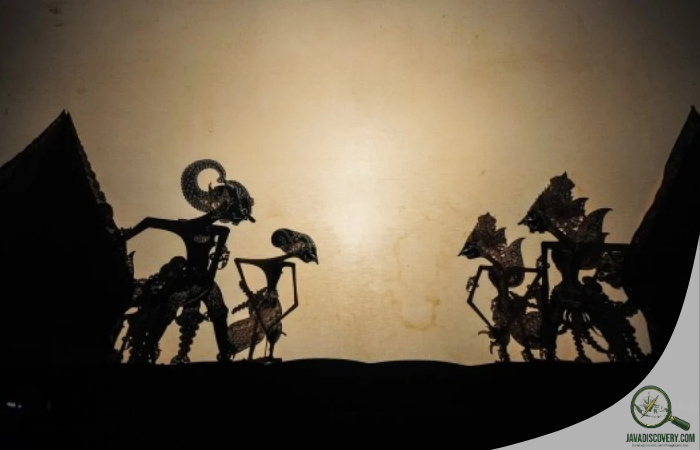
The “Wayang Kulit” (leather shadow puppets) stories from the Mahabharata and Ramayana are the primary sources of moral education in Java and Bali. Characters like Bima (the stoic warrior) or Yudhistira (the truthful king) are the psychological blueprints for The Role of Myth in Modern Indonesian Identity. Even today, an Indonesian might describe a colleague or a politician as being “like Sengkuni” (the devious schemer) or having the “refined spirit of Arjuna.”
Through these stories, The Role of Myth in Modern Indonesian Identity provides a sophisticated framework for conflict resolution and personal ethics. The myth of the “Kurusetra” war is used to explain the necessity of difficult decisions and the concept of “Dharma” (duty). In modern offices, the “Wayang” archetypes help people navigate complex social hierarchies. By seeing themselves as characters in an eternal cosmic play, Indonesians are able to maintain “Rukun” (harmony) even in high-pressure environments. The myth is the “cermin” (mirror) in which the modern self is reflected and refined.
Conclusion: The Mythic Shield
The Role of Myth in Modern Indonesian Identity is the “secret sauce” of the archipelago’s resilience. In a world that is becoming increasingly homogenized and secular, Indonesia remains a bastion of the “Ajaib” (the miraculous). Myth provides the meaning that science cannot; it provides the connection that technology often severs. Whether it is a Garuda on a passport or a spirit in a skyscraper, The Role of Myth in Modern Indonesian Identity ensures that the nation is never disconnected from its “akar” (roots).
As the “senja” (twilight) falls over the cities and the “desa,” and the flickering lights of the smartphones match the flickering of the traditional oil lamps, The Role of Myth in Modern Indonesian Identity continues to evolve. It is not a burden of the past, but a shield for the future. It allows the Indonesian people to face the uncertainties of the modern world with the confidence of a civilization that has survived for eons. In the end, the myth is the story we tell ourselves to remember who we are. For Indonesia, that story is a vibrant, terrifying, and beautiful tapestry that proves that even in the age of the algorithm, the spirit still reigns supreme. To live in Indonesia is to walk with ghosts, to speak with legends, and to recognize that The Role of Myth in Modern Indonesian Identity is the very thing that makes this nation truly, eternally, unique.